Segmented Sleep: Helpful for Some, Harmful for Others
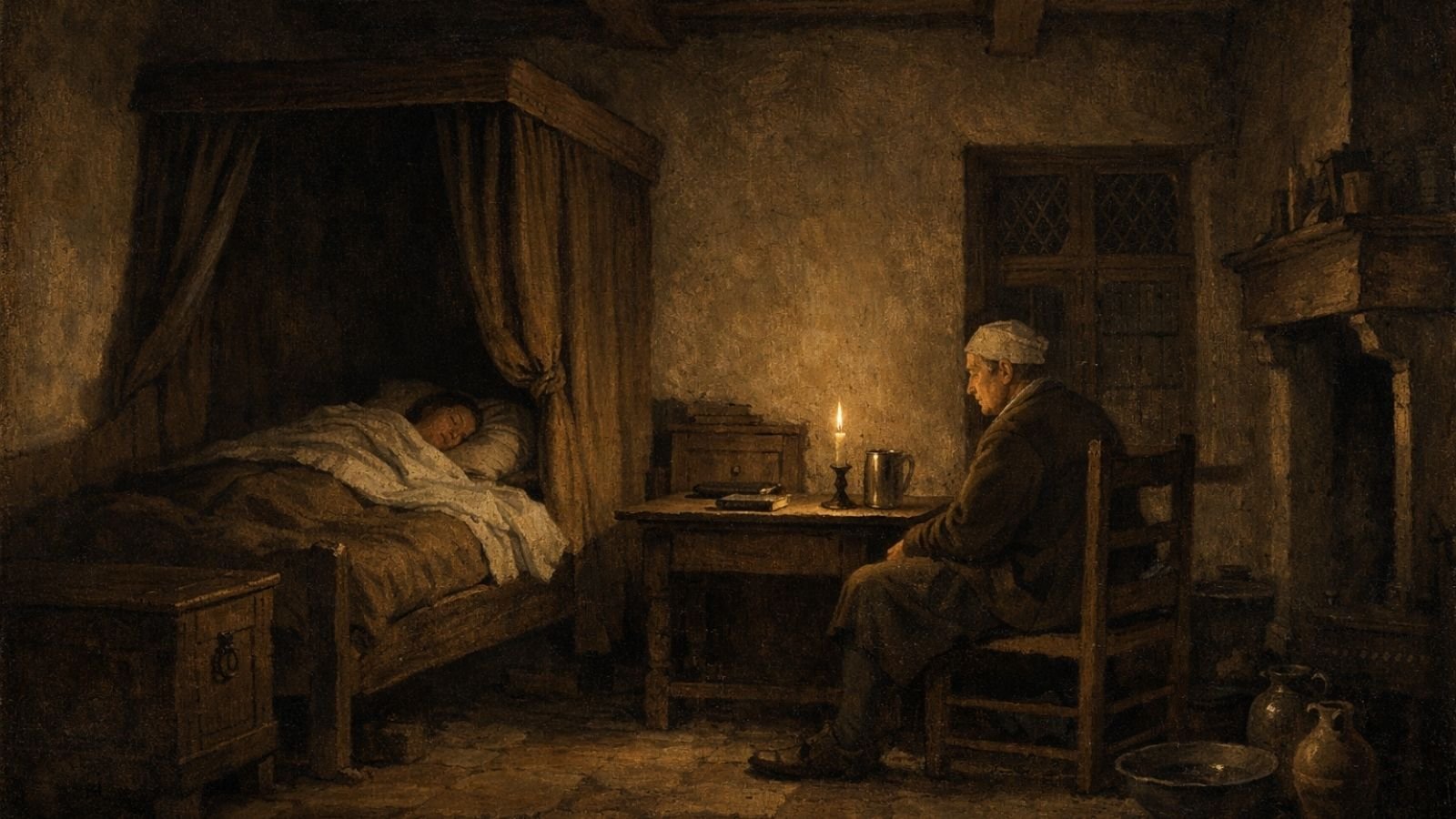
For most of human history, sleeping through the night in one neat, uninterrupted block would have sounded suspicious, if not unhealthy. Instead, people went to bed early, woke in the middle of the night without alarm or panic, stayed awake for a while, then returned to sleep until morning. Nobody checked the time. Nobody worried about productivity. And nobody Googled their symptoms at three in the morning. This pattern, now known as segmented sleep, once structured nights across Europe, parts of Africa, the Middle East, and the Americas. Moreover, it shaped how people prayed, talked, thought, had sex, and understood rest itself. Only very recently did it become a problem.
Night used to begin much earlier. After sunset, candles were expensive and weak, so darkness carried social authority. As a result, people ate, talked, and drifted toward bed not because they were exhausted but because there was little else to do. The first stretch of sleep arrived quickly. It was heavy, deep, and unambiguous. This was the sleep people trusted.
Then waking appeared. Not as a jolt. Not as anxiety. Rather, eyes opened, the body stayed calm, and the mind felt clear. The house was quiet. Outside, animals moved. Inside, people lay still for a moment, then rose. This interval between sleeps often lasted an hour or two. Some prayed. Others read by candlelight. Some visited neighbours. Many couples treated this as the most intimate part of the night.
Historical records mention this waking period casually, which is precisely why it matters. For example, court transcripts note crimes committed “after first sleep.” Doctors warned against strenuous labour during the watch. Diaries describe conversations held before returning to second sleep. Nobody explained what first and second sleep were, because nobody needed to.
The night had texture. Second sleep followed naturally. It felt lighter, dreamier, and closer to morning. Eventually, people rose at dawn, not feeling short-changed, but finished. Sleep ended when it was done.
This rhythm did not vanish overnight. Instead, it faded slowly, pushed aside by light and clocks. As candles grew cheaper, evenings stretched. Later, as gas lamps arrived, then electricity, darkness lost its authority. Meanwhile, work schedules hardened. Factories demanded punctuality. Schools followed. Morning became fixed, while night remained flexible, which meant sleep had to compress.
Over time, the waking interval became awkward. There was no longer space for it. Consequently, when people still woke, they began to worry.
By the nineteenth century, medical language shifted. Night waking turned from neutral fact into symptom. Doctors began to describe continuous sleep as ideal. Anything else looked like failure. This change did not happen because biology shifted, but because society did.
Modern sleep science, somewhat awkwardly, has had to rediscover this. In laboratory conditions designed to mimic long pre-industrial nights, people often slip into a segmented pattern without being told to do so. When evening light disappears and nights lengthen, sleep pressure behaves differently. Instead of staying flat, it rises, dips, and resets.
Hormones tell a similar story. During the waking interval, melatonin often remains high. The body does not switch into daytime mode. Stress hormones do not spike. From a physiological point of view, this is not insomnia. Rather, it is rest with eyes open.
This distinction matters, because modern insomnia often begins as interpretation rather than malfunction. Someone wakes at three in the morning, feels alert, and immediately labels the experience as wrong. Then they check the time. Then they calculate lost hours. Anxiety arrives. Cortisol follows. What might have been a calm interval becomes a battle.
Segmented sleep offers an inconvenient suggestion: perhaps some night waking is normal. That does not mean it is always benign. Contemporary life loads nights with stimulants that did not exist before. Screens shine like artificial suns. Caffeine lingers. Alcohol fragments sleep. Stress brings deadlines. Under these conditions, waking can feel wired rather than reflective.
This is where romanticising the past becomes dangerous. Pre-industrial nights were darker, quieter, colder, and slower. People did not scroll. Their waking interval was not flooded with information or obligation. Attempting to recreate segmented sleep while keeping modern habits usually leads to less sleep overall.
Still, the historical perspective changes the emotional tone of night waking. In other words, it reframes it. Instead of asking “Why am I broken?”, a different question appears: “What is my body doing?”
The answer varies. Some people genuinely sleep better when they stop fighting the waking interval. For instance, they read quietly. They meditate. They think. Eventually, sleep returns. Others discover that their waking masks anxiety, depression, hormonal shifts, or breathing disorders that need attention. Segmented sleep does not excuse poor sleep health. Instead, it complicates it.
Cultural habits once buffered this complexity. Night prayer existed partly because people were awake. Storytelling filled dark hours. Silence was expected. Sleep was not a performance.
Today, sleep is measured, tracked, scored, and optimised. Wearables praise uninterrupted nights and scold fragmentation. However, they cannot tell the difference between peaceful wakefulness and stress. Data flattens experience.
This has consequences. People begin to fear their own nights. The bed becomes a test. Ironically, this fear often produces the very sleep problems it tries to prevent.
Segmented sleep reminds us that human rest evolved to be flexible. In some environments, consolidation made sense. In others, fragmentation offered safety or social opportunity. Therefore, the body adapted accordingly.
Seasonal darkness still reveals this flexibility. In northern latitudes, winter lengthens nights. As a result, many people notice earlier bedtimes, heavier first sleep, and spontaneous waking. Spring reverses the pattern. Artificial light hides these shifts, but it does not erase them.
There is also a social dimension worth noticing. The disappearance of the waking interval coincided with the moralisation of sleep. Sleeping became private, efficient, and silent. Night lost its shared quality. The hours between midnight and dawn emptied of communal meaning.
Some historians argue that something psychological vanished with it. The waking interval offered a sanctioned space for thought that did not belong to work or daylight identity. It was unproductive by design.
That idea sits badly with modern culture. Yet the popularity of meditation apps, sleep podcasts, and middle-of-the-night journalling suggests a quiet hunger for that lost space. In effect, people are recreating fragments of it without knowing its history.
The scientific consensus remains careful. No one recommends deliberately breaking sleep into segments as a universal solution. Most adults still function best with sufficient total sleep, however it arrives. What matters more than structure is duration, regularity, and emotional response.
Segmented sleep, therefore, is not a prescription. Instead, it is an explanation. It explains why night waking does not automatically signal failure. And it explains why older texts speak about sleep in a different language. It explains why anxiety about sleep is historically new.
Most importantly, it offers permission to stop panicking at three in the morning. Night does not always need fixing. Sometimes it only needs witnessing. In a world obsessed with efficiency, segmented sleep stands as a reminder that rest was once spacious, slow, and forgiving. Not better in every way, but less judgmental. Perhaps that, rather than the schedule itself, is what many people are really missing.