Sand Cat: The Ninja of the Desert
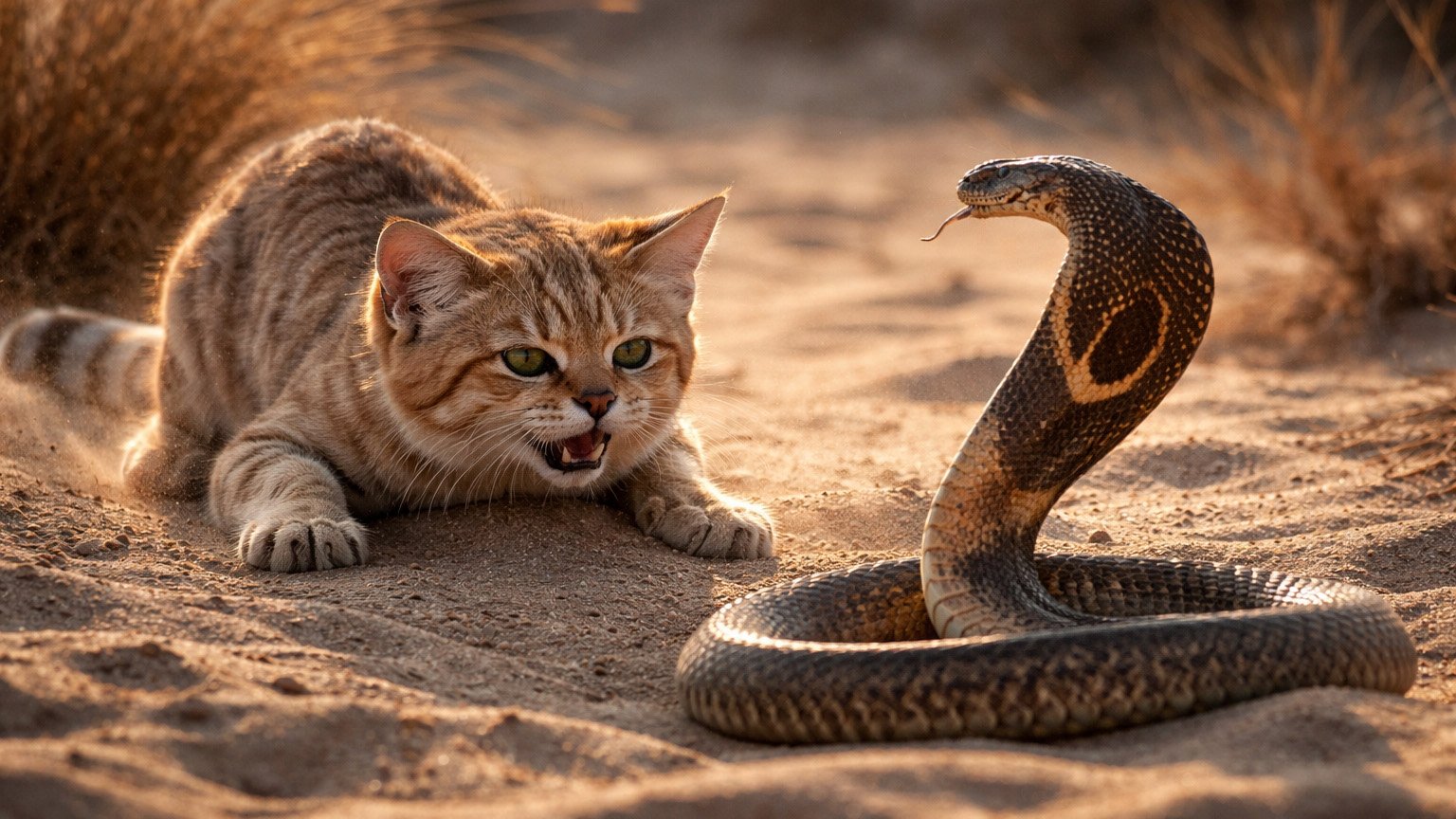
Picture this: a pint-sized feline with oversized ears, wiry black fur on its footpads, and the stealth of a ninja. This isn’t some fictional character from a children’s book—it’s the sand cat. These are among the smallest wild cats on Earth. Weighing a mere three to seven pounds, they’ve carved out a living in Earth’s harshest landscapes. Yet they’re locked in a perpetual survival game against foxes, snakes, and raptors who all want the same meagre resources.
Life in the desert isn’t exactly a walk in the park. Temperatures soar to 50°C during the day and plummet below freezing at night. Naturally, resources are scarce. Prey populations fluctuate wildly with rainfall patterns. Therefore, every creature competes for the same handful of rodents, lizards, and insects. What makes this competition fascinating is that it’s not about who’s bigger or faster. Rather, it’s about who’s smarter, sneakier, and better adapted to brutal conditions.
Sand cats have developed extraordinary tricks to stay in the game. Those furry feet aren’t just adorable; they’re functional insulation against scorching sand. Additionally, they muffle footsteps. This allows them to creep up on prey without leaving so much as a footprint. Their exceptionally large ears can detect the faintest underground movements. Indeed, the ear canal is roughly twice the size of a domestic cat’s. They’ll crouch near the sand surface, listening for a gerbil or jerboa beneath. Consequently, they rapidly excavate the creature before it knows what’s happened.
Here’s where things get tricky. Sand cats aren’t the only predators craving a midnight snack of desert rodent. Fennec foxes, with equally impressive ears and social hunting groups, prowl the same dunes. These diminutive canids have evolved remarkably similar adaptations. Furry feet, massive ears for heat dissipation, and the ability to survive without drinking water. Both species are primarily nocturnal. They hunt similar prey and prefer the same semi-stable areas of dunes where vegetation provides just enough cover to ambush victims.
You’d think this would lead to constant brawls over territory and dinner. However, research suggests the competition might be less direct than you’d imagine. Fennec foxes are omnivores, supplementing their diet with fruits, roots, and vegetation. Thus, dietary flexibility gives them an edge when rodent populations crash. They’re social animals that hunt cooperatively in family groups. In contrast, sand cats are solitary hunters who prefer to avoid confrontation. Different hunting strategies, slightly different dietary preferences, and mutual avoidance seem to keep the peace—most of the time.
Then there’s the snake situation, which is frankly bonkers. Sand cats actively hunt venomous vipers, particularly the Saharan horned viper. Imagine being the size of a house cat and deliberately seeking out a creature that could kill you with one bite. Nevertheless, sand cats have earned themselves a reputation as “fearless snake hunters.” They stun vipers with rapid blows to the head before delivering a lethal bite. Moreover, this predatory relationship gets even more ironic when you realise that these same vipers also hunt many rodents that sand cats depend upon.
Horned vipers are ambush predators. They bury themselves in the sand near rocks or vegetation, waiting for prey to wander past. Naturally, they’re fond of gerbils, jerboas, and other small rodents. These are precisely the same menu items that sand cats prefer. Consequently, both predators occupy similar microhabitats. The semi-stable areas of dunes offer enough plant cover for shelter but still plenty of loose sand for hunting. Studies on horned viper habitat use show they concentrate foraging efforts in these zones. That’s where rodent activity is highest.
This creates a rather peculiar dynamic. Sand cats and horned vipers are simultaneously competitors for the same prey and each other’s potential meals. Certainly, vipers can take down young or inexperienced sand cats. Kittens are especially vulnerable targets. Meanwhile, adult sand cats view snakes as just another protein source in their diet. It’s a relationship that would make any ecologist’s head spin.
Overhead, another threat looms. Desert raptors patrol the skies with exceptional eyesight and silent flight. Eagle-owls, golden eagles, and various hawk species all hunt here. Furthermore, great horned owls have been documented hunting small cats. Their nocturnal schedule puts them in direct conflict with sand cats. Therefore, these aerial predators create an additional layer of complexity. They’re not just competing for rodents; they’re also predating on the predators themselves.
Young sand cats are especially vulnerable. Kittens grow rapidly during their first few months. However, until they’ve mastered staying hidden and moving silently, they’re easy pickings for a swooping owl or eagle. This predation pressure might explain why sand cats are so secretive. Their sandy-coloured coats blend seamlessly with the desert substrate. Furthermore, their habit of crouching low makes them harder to spot from above.
Raptors and sand cats don’t compete as directly for prey as you might think. Certainly, there’s overlap—both hunt rodents, birds, and reptiles. Still, raptors tend to be more opportunistic in their hunting methods. They’ll take whatever they can spot from their vantage points. Insects, snakes, and even carrion are fair game. Meanwhile, sand cats are highly specialised hunters that rely on acute hearing to locate prey underground. They’re not good at catching birds in flight. Besides, they rarely scavenge.
What truly makes this competition precarious is the fragility of desert ecosystems. Unlike forgiving environments where predators might have multiple prey options, desert food webs are remarkably simple and linear. When drought strikes and vegetation dies off, herbivore populations crash. Subsequently, when herbivores disappear, predators starve. There’s little buffer, minimal redundancy in the system. Indeed, every thread in this ecological web is pulled taut. Removing even one strand can cause the entire structure to unravel.
Research on desert mammal populations has revealed something troubling. Introduced predators can suppress native prey populations more effectively than climate change or habitat loss. Domestic dogs, feral cats, and red foxes don’t belong in the ecosystem. Yet they’re competing with sand cats, fennec foxes, and raptors for the same limited resources. Worse still, feral cats can transmit diseases to sand cats. Feline leukaemia virus has been detected in wild populations.
Human activity compounds these challenges. Livestock grazing depletes vegetation that supports rodent populations. Additionally, fencing meant to protect conservation areas has inadvertently trapped sand cats. Some became stuck trying to cross barriers. Sand cats are killed in traps set for foxes and jackals. Others are captured for the illegal pet trade. In countries like Iraq and the United Arab Emirates, sand cats have been sold as exotic pets. Many die within weeks because their highly specialised needs cannot be met in captivity.
The irony is almost painful. Sand cats have survived in Earth’s harshest deserts for millennia. They’ve evolved extraordinary adaptations to handle extreme temperatures, water scarcity, and fierce competition. Obviously, they can go weeks without drinking, obtaining all necessary moisture from their prey. They’ve mastered the art of hunting venomous snakes. They can detect prey moving beneath several centimetres of sand. Yet habitat degradation, human persecution, and competition from introduced species now threaten their populations. Evolutionary adaptation cannot easily address these challenges.
Conservation efforts are underway. Hunting is prohibited in several countries including Algeria, Iran, Israel, Kazakhstan, Mauritania, Niger, Pakistan, and Tunisia. Protected areas have been established across portions of their range. Nevertheless, the sand cat remains poorly understood because they’re so difficult to study. Their nocturnal habits, excellent camouflage, and tendency to crouch when lights shine on them make them nearly impossible to track. Scientists still don’t know their wild lifespan, population dynamics, or precise ecological requirements.
What we do know is this: sand cats aren’t just competing with individual species like fennec foxes or horned vipers. Instead, they’re navigating a complex web of interactions. Multiple predators, shared prey, introduced competitors, and an ecosystem increasingly destabilised by human activity all play a role. Every desert predator faces similar challenges. Ultimately, this creates a situation where the strongest competitor isn’t necessarily the one who wins. Sometimes it’s simply the one who can adapt fastest to rapidly changing conditions.
The most remarkable aspect of this story is that it’s happening largely out of sight. Remote desert regions where few humans venture harbour these daily battles. These tiny cats with their enormous ears and stealthy hunting methods fight for survival in ways most of us will never witness. They’re part of an ancient ecological drama that’s been playing out for millions of years. Within a few human generations, we’ve managed to tip the scales in ways that evolution never anticipated.
Sand cats continue their nightly hunts across the dunes. They listen for the telltale scratching of a gerbil underground. They’re doing so in an increasingly crowded and dangerous landscape. Fennec foxes are listening nearby. Vipers lie buried in ambush positions. Owls scan from above. Somewhere in the background, human activities continue reshaping the desert in ways both subtle and profound. It’s a competition that none of these creatures chose. One they’re all forced to navigate if they want to survive.