Roald Amundsen at the South Pole: The Calm Conquest of a Frozen World
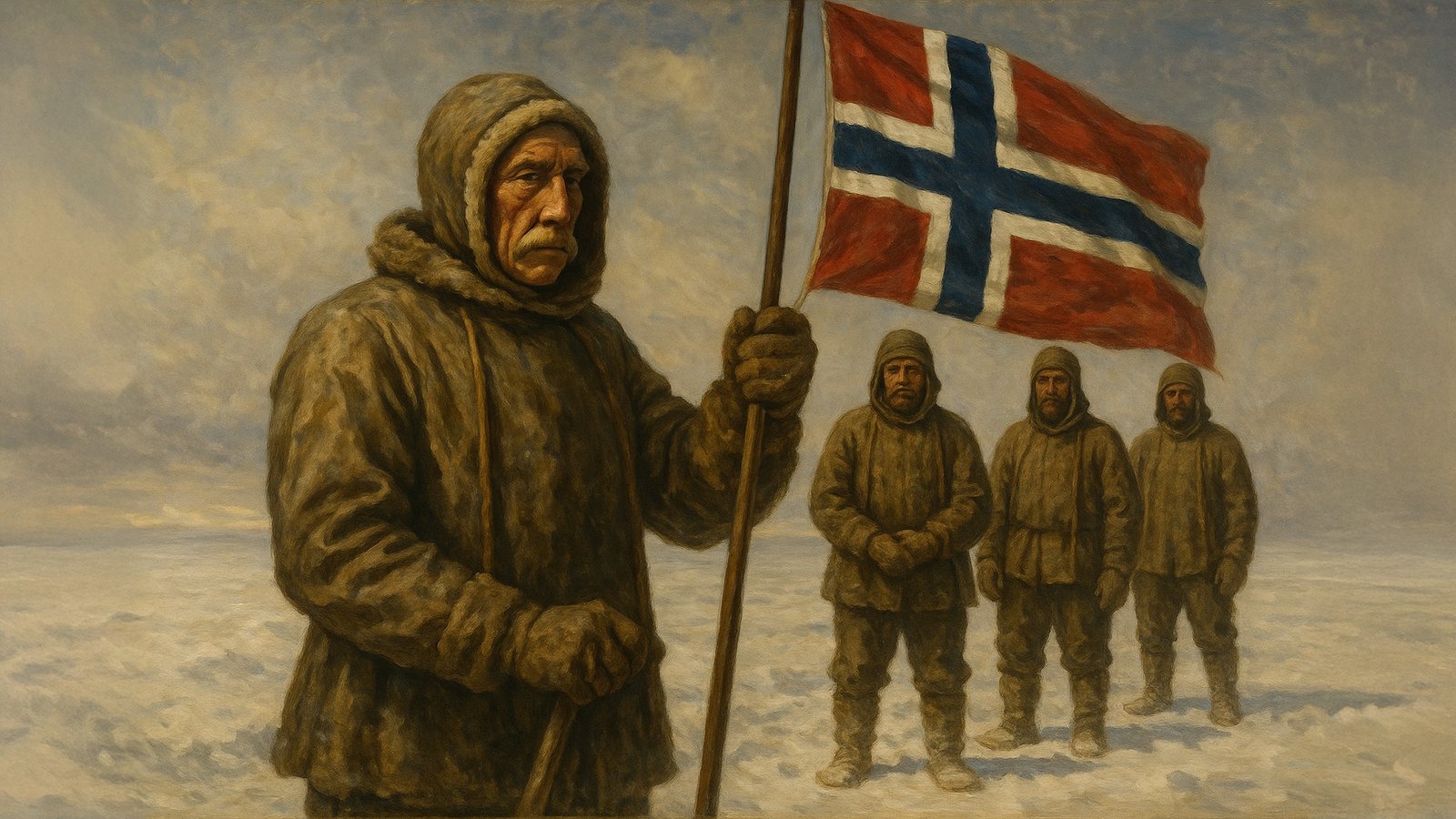
Roald Amundsen at the South Pole reads like a masterclass in how to treat the planet’s harshest places with both respect and a quietly competitive streak. He left Norway in June 1910 on the Fram with a plan so secretive that even his crew didn’t know the truth. Officially, they were headed for the Arctic. Unofficially, he intended to put his boots on the South Pole before anyone else, preferably before the British expedition that had already captured the public imagination. He waited until the ship reached Madeira to break the news. Surprise, gentlemen: we’re going south. The shock didn’t last long. The crew knew Amundsen well enough to understand that if he said this was the right course, then the ice would eventually agree.
Roald Amundsen at the South Pole begins long before the flag‑planting moment. It starts with his decision to pick an unconventional base. He chose the Bay of Whales, a spot many dismissed as unstable, yet he saw a strategic advantage. It sat closer to the Pole than Scott’s chosen point on Ross Island and offered a cleaner route to the plateau. The place looked like the Antarctic equivalent of a short cut. Framheim rose out of the snow as a compact world of huts, tunnels and workshops. Inside, sledges were built and adjusted, clothing was stitched and resewn, skis glided across test surfaces and the dogs enjoyed the sort of purposeful atmosphere they were bred for.
Amundsen trusted dogs more than he trusted anything designed by recent human invention. Motor sledges and ponies might impress a fundraising committee, but dogs, skis and fur clothing impressed the ice. He had lived with Inuit communities and absorbed their techniques. He adopted their understanding that cold punishes arrogance but rewards preparation. Clothing needed breathability. Diets needed fat. Dogs needed exercise and clear commands. His team practised over and over until every movement felt as natural as walking.
Roald Amundsen at the South Pole almost didn’t happen as smoothly as the legend suggests. The first attempt to depart in September 1911 collapsed under temperatures so low that even the dogs protested. The men turned back with frozen beards and slightly bruised pride. The Antarctic had delivered its reminder that it made the rules. A few weeks later, with conditions slightly less hostile, Amundsen launched the real push.
On 19 October 1911, five men, four sledges and fifty-two dogs slid away from Framheim. Everything about the plan aimed at speed and efficiency. Loads were light. Schedules were strict. Dogs that tired too quickly became food for the others, a reality that still unsettles modern audiences but served its purpose. To Amundsen, this was the brutal mathematics of survival. His job wasn’t to sentimentalise the cold. It was to get everyone home.
They skimmed across the Ross Ice Shelf under skies so clear they felt deliberately arranged. Black flags marked their path, ensuring they could return with unbroken confidence. At the foot of the Axel Heiberg Glacier—a route Scott had not considered—Amundsen found his secret advantage. The glacier delivered them to the plateau with a grace no one had predicted. The climb felt steep, wild and risky, yet it worked. Every competitor in every race wishes for such a stroke of luck, though Amundsen would argue it wasn’t luck. He had studied maps, conditions and the terrain with the sort of obsession most people reserve for complicated romances.
The Antarctic Plateau gave them wind, cold and monotony. The men pressed on anyway. Roald Amundsen at the South Pole depended on navigation as much as stamina. He insisted on repeated observations, careful calculations and meticulous note‑taking. Anyone could plant a flag somewhere white. Amundsen wanted no debates later. The Pole meant the Pole.
On 14 December 1911, they reached a place that looked like every other place around it. The South Pole offered no convenient signposts. Just endless white stretching out in all directions. The team measured their location, checked it again and then checked it a third time. Only then did they allow themselves the moment: raising the Norwegian flag, pitching a tent named Polheim and leaving letters behind, including one addressed to Scott. History would later find this letter tucked neatly inside the tent, a perfectly courteous reminder that they had arrived first.
They spent three days taking readings to eliminate any lingering doubt. The calmness of those days still fascinates historians. They had just made history, yet they moved around the camp with quiet practicality, as though tidying up a workshop rather than redefining exploration.
The return journey lasted just over a month. They made it back to Framheim on 25 January 1912 looking lean, sunburnt and triumphant. No one had died. The dogs, despite the brutal necessities of the journey, remained strong. Equipment held. Morale held. The expedition became a case study in how to outthink a problem rather than simply endure it.
Scott and his men reached the Pole on 17 January 1912. They found Amundsen’s tent and the flag that had already caught the wind. Their disappointment deepened into tragedy as the return journey deteriorated. Scott’s death, along with his companions, gripped the British public. It overshadowed the Norwegian triumph for decades. The narrative of noble suffering proved more emotional than the narrative of competent success.
Time eventually balanced the story. Roald Amundsen at the South Pole now sits beside Scott’s expedition as the remarkable achievement it was. His mastery of logistics, weather, dogs, navigation and human psychology created a formula that later explorers quietly adopted. Efficiency replaced drama. Local knowledge replaced guesswork. Proper clothing replaced bravado.
Amundsen did not retire into comfortable fame. He went north instead, experimenting with new ways to explore the Arctic. He took to the air in planes and airships, chasing new records. His life ended in 1928 during a rescue mission, swallowed by the same wilderness he spent his life interpreting.
Yet nothing eclipsed that moment in December 1911. Roald Amundsen at the South Pole remains a story that feels oddly modest for such a colossal achievement. He treated the Earth’s final frontier as a solvable puzzle, using skill where others used grit. He fought no dramatic battles against the ice. He simply outpaced it.
The route, the dogs, the glacier, the calm measurements, the tidy tent left behind for Scott—these fragments shaped one of the most efficient expeditions ever attempted. The South Pole still feels unreachable to most of us, yet Amundsen’s example suggests that even the most intimidating landscapes bend to those who plan well and move with intention. His legacy rests not only on being first. It rests on proving that the frozen unknown becomes manageable when approached with humility, intelligence and the right pair of skis.