Riads in the Medina: How Inward-Facing Houses Survive Inside a Living City
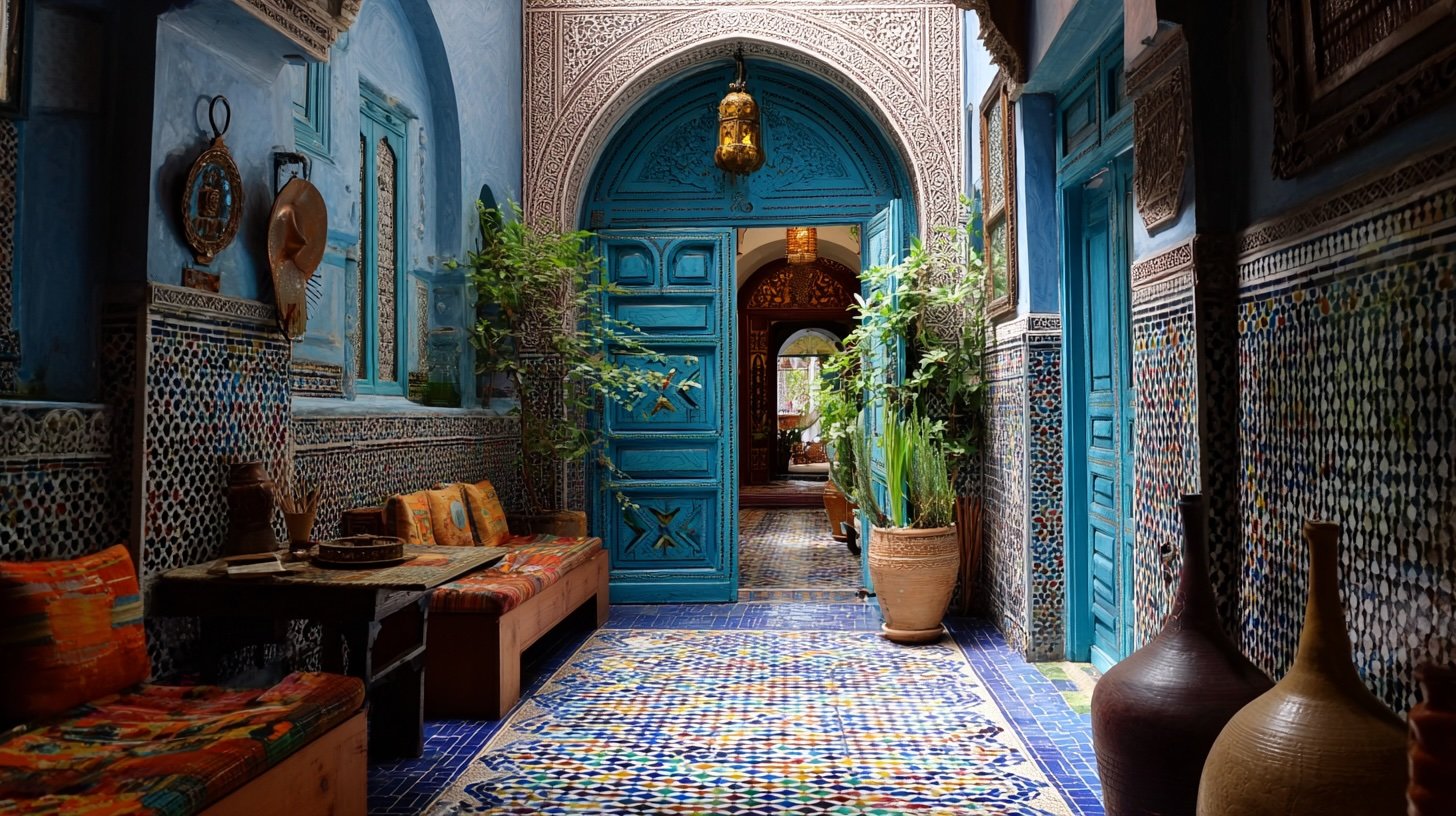
Riads in the medina survive by doing something that feels counter‑intuitive in a city: they turn away from it. Behind unremarkable doors and blank walls sit inward‑facing houses organised around courtyards, light, shade, and silence. The medina, meanwhile, presses in tightly with narrow alleys, shared walls, neighbours who notice everything, and daily life designed for feet rather than wheels. These two ideas grew up together. The riad did not retreat from the medina; it learned how to live inside it, absorbing pressure from the street and transforming density into calm.
Riads in the medina are not boutique inventions or architectural curiosities. They are traditional urban houses designed to function inside one of the densest historic city forms ever built. A riad is an inward‑facing home organised around a central courtyard, while the medina is the compact, pre‑modern city that makes such a design practical. The story of riads in the medina is a shared one. These houses evolved specifically to work inside narrow alleys, shared walls, layered privacy, and daily life shaped by walking rather than vehicles.
A medina is the historic core of a North African city. Long before zoning, traffic planning, or modern infrastructure, the medina evolved as a compact, walkable environment organised around mosques, markets, fountains, and neighbourhood alleys. Streets narrow as they move away from commercial routes, eventually turning into derbs that serve only a handful of households. The medina is not chaotic by accident. It follows social rules rather than maps.
The riad and the medina developed together. One does not explain itself without the other. The inward-facing house makes sense only inside a city designed for density, shade, and proximity. The medina, in turn, relies on houses that do not compete for street space or attention. What looks confusing to an outsider is in fact a finely tuned balance between movement and retreat.
A riad never announces itself. You can walk past one ten times and never know it hides a courtyard, a fountain, orange trees, and three floors of carved plaster. From the street, it looks like every other door in the medina: plain wood, metal studs, maybe a number painted slightly crooked. This is not modesty. This is urban logic.
Riads belong to medinas in the same way organs belong to bodies. Remove them from the system and they stop making sense. The medina is not a neighbourhood you stroll through; it is a living infrastructure built for heat, privacy, faith, trade, and foot traffic long before cars, zoning laws, or delivery apps. The riad sits inside this density like a pocket of calm, not because it isolates itself, but because the city around it absorbs the noise.
From the outside, the medina feels chaotic. Alleys twist, open suddenly, then narrow again. Shops spill into the street. Donkeys, scooters, children, tourists, and carts negotiate space without rules anyone could write down. Inside that apparent disorder sits a strict hierarchy of access. Main streets handle commerce. Secondary streets serve mixed use. Derbs serve families. Riads almost always live at the end of these chains, never on the spine.
Reaching a riad usually involves a sequence of small decisions. You leave the busy street, turn past a bakery, pass a mosque wall, step into a lane that feels quieter, then into another that feels private. The last stretch often belongs to the residents. People know who should be there. A new face gets noticed, not with hostility, but with curiosity. This is how security works when walls are shared and doors stay unlocked.
A riad does not face the street because the street is not where life happens. Life happens around the courtyard. The central garden regulates temperature, captures light, and creates a social core. Rooms open inward, not outward. Windows face each other, not passers-by. This inward logic allows homes to stack tightly together without feeling exposed. It also allows neighbours to coexist at distances that would feel unbearable in a modern city.
Shared walls are the rule, not the exception. A single riad may touch five or six other buildings. Rooflines align. Drainage systems overlap. Sounds travel vertically and diagonally. Someone cooking three houses away becomes part of your evening soundtrack. Calls to prayer echo through courtyards rather than streets. Silence comes from thickness, not distance.
Neighbours matter because they are unavoidable. A riad owner or guest becomes part of a micro-community whether they want to or not. The woman next door knows when you arrive because she hears the door. The man across the alley notices deliveries. Children learn quickly which houses welcome conversation and which prefer distance. These relationships rarely appear in guidebooks, yet they shape daily comfort far more than thread count or breakfast menus.
Running a riad inside a medina requires fluency in local logistics. No vans pull up outside. No lifts move supplies. Everything arrives by hand, cart, or animal. Laundry travels out in bundles and returns folded. Gas bottles get carried on shoulders. Furniture enters piece by piece. Builders learn to cut materials to fit corners before they even leave the workshop.
Timing keeps the system working. Early mornings belong to deliveries. Late afternoons belong to residents. Fridays reshape the rhythm around prayer. Festivals compress movement and expand sound. A good riad adapts to this cadence instead of fighting it. Staff learn which routes clog at which hours and which neighbours prefer warnings before large items pass their doors.
Maintenance inside a medina is never generic. Electrical systems grow over decades. Pipes follow paths no plan records. Renovations hide modern comforts inside walls designed centuries earlier. Fixing one problem often reveals two others. The people who handle this best are rarely engineers by training. They are specialists by memory. They remember what lies behind which wall because they have opened it before.
Water and electricity exist, but reliability varies. Power cuts still happen. Pressure drops during peak hours. Courtyards become buffers again, storing cool air when systems fail. Riads that survive comfortably do so because their original design assumed inconsistency. Modern additions improve convenience, but the old logic carries the load when technology stumbles.
Waste works differently too. There is no anonymous bin collection. Rubbish leaves the house daily, carried to shared points. Neighbours notice who cleans and who does not. Clean alleys earn respect. Blocked passages earn complaints delivered politely but firmly. Social pressure replaces regulation.
Noise follows its own rules. Absolute silence does not exist. Acceptable noise does. Conversations drift. Radios play briefly. Children shout, then disappear. Late-night parties stand out immediately. Successful riads learn restraint not from contracts, but from feedback. A raised eyebrow from a neighbour often says more than a written warning.
The arrival of guesthouse riads added a new layer to this ecosystem. Visitors come and go, often unaware they occupy a residential web. When handled well, this creates income, employment, and renewed maintenance of historic buildings. When handled badly, it creates friction. The difference lies in behaviour, not architecture.
Riads that thrive long-term behave like temporary custodians. They employ locally. They buy nearby. They respect prayer times. They warn neighbours before renovations. They keep doors clear. They understand that hospitality inside a medina begins with those who live there permanently.
Some riads fail not because of location, but because of attitude. Treating the medina as a backdrop rather than a system leads to conflict. Loud guests, blocked alleys, impatient demands, and ignorance of daily rhythms erode goodwill quickly. Once trust fades, operations become harder, slower, and more expensive.
From a guest’s perspective, the medina-ri ad relationship often feels magical. Silence after noise. Cool air after heat. Calm after confusion. This contrast works precisely because the riad does not stand apart. It absorbs the city, filters it, and releases it gently.
Stepping onto a rooftop makes the system visible. Hundreds of roofs touch. Laundry dries. Satellite dishes lean at odd angles. Minarets rise just enough to orient the eye. From above, the medina reveals itself as a dense carpet rather than a maze. Each riad becomes one tile among thousands.
Outside the medina, riads lose this context. Built alone, they become aesthetic replicas without function. Courtyards still look beautiful, but their silence feels staged. The logic that justified inward living disappears when cars, setbacks, and open plots surround them.
Inside the medina, the riad remains practical. Shade reduces heat. Density saves energy. Proximity sustains social life. Everything about it responds to constraint. That is why riads endure, not as nostalgia, but as working urban solutions.
Living in or running a riad means accepting that comfort comes from cooperation. Walls stay thick. Doors stay discreet. Relationships stay close. The medina provides the pressure. The riad provides the pause.
Together, they form one of the most resilient urban ecosystems still in use. Not preserved behind ropes. Not frozen in time. Walked, argued with, repaired, negotiated, and lived in every single day.