Rewilding Versus Rural Livelihoods
Rewilding is one of those ideas that sounds serene until a practical question lands. You picture rivers uncoiling themselves, birds returning, forests spreading like a slow exhale. Then someone asks who owns the field, who loses the rent, who fixes the fence when the deer walk straight through it, and the tone quietly changes.
At its simplest, rewilding means allowing natural processes to take more control. That usually involves cutting back mowing, drainage, chemicals, and straight lines. Sometimes it brings back species that once shaped landscapes. Sometimes it amounts to little more than choosing not to interfere. Because of that simplicity, the idea feels seductive. After centuries of managing, extracting, improving and correcting, stepping back can feel almost radical.
Yet landscapes are not blank pages. Instead, they carry memory, labour, and habit. Across much of Britain, what looks like wild countryside actually functions as a working system shaped deliberately over hundreds of years. Moorland exists because sheep kept trees out. Meadows exist because people cut and grazed them in rhythm. People planted hedges rather than nature gifting them by chance. When rewilding proposes change, therefore, it does not enter empty space. It enters someone’s life.
Here the argument sharpens. Supporters of rewilding usually begin with a stark diagnosis. Britain has lost vast proportions of its wildlife. Engineers straightened rivers into drains. Farmers exhausted soils in many places. The disappearance of species that once shaped ecosystems has left systems brittle and simplified. From this perspective, continuing as before looks irresponsible. Something must give, and soon.
Farmers, particularly in upland and marginal areas, often hear something else entirely. They hear that land which already produces little income should now produce none. They hear that grazing animals, which may be the only viable use of that terrain, have suddenly become a problem rather than a solution. And they also hear plans discussed in distant offices, using maps and metrics, with little sense of how a place behaves in winter.
Economics sit just below the surface of every conversation. Rewilding rarely happens without money. Grants, carbon payments, biodiversity credits, philanthropic funding, or tourism income usually sit in the background. For a large estate or a well-capitalised landowner, these routes can replace agricultural income. For a tenant farmer or a small family holding, access often remains patchy or temporary. A scheme might pay for ten years, while a farm must survive for generations.
Alongside this sits a fear of dependency. Many rural communities remember earlier waves of policy enthusiasm. Governments announce incentives with fanfare, then withdraw or reshape them when political priorities change. As a result, decisions feel risky. A choice to reduce livestock numbers or abandon a traditional system can prove irreversible. Once skills fade and infrastructure disappears, restarting rarely proves simple. That memory breeds caution, which outsiders sometimes misread as hostility.
Language plays a surprisingly large role in the conflict. Rewilding implies that something is currently wrong, even unnatural. For people whose families have worked the same land for centuries, that implication stings. The hills they know are not scars but achievements. They represent survival in poor soils, harsh climates, and long isolation. Being told that the land would be better without you delivers a hard message, however carefully phrased.
Supporters of rewilding often reply that the idea does not assign blame. Instead, they frame it as recognising limits. Some land produces food inefficiently while causing disproportionate environmental harm. In those areas, they argue, society gains more by restoring ecosystems than by squeezing out marginal yields. Flood prevention, cleaner water, carbon storage and biodiversity function as public goods that justify public support.
This argument grows stronger when climate change enters the picture. Wetter winters, hotter summers and more erratic weather expose the fragility of highly managed systems. Allowing rivers to spill into floodplains, forests to cool landscapes, and wetlands to absorb water can look less like romanticism and more like insurance. From that angle, rewilding becomes adaptation rather than retreat.
Still, the question of who decides refuses to disappear. Conservation organisations or wealthy landowners launch many rewilding projects with a clear vision. Even when consultation takes place, it often feels symbolic rather than influential. Project leaders draw maps, set targets, and only then invite local voices in. Participation offered at the end rarely feels like partnership.
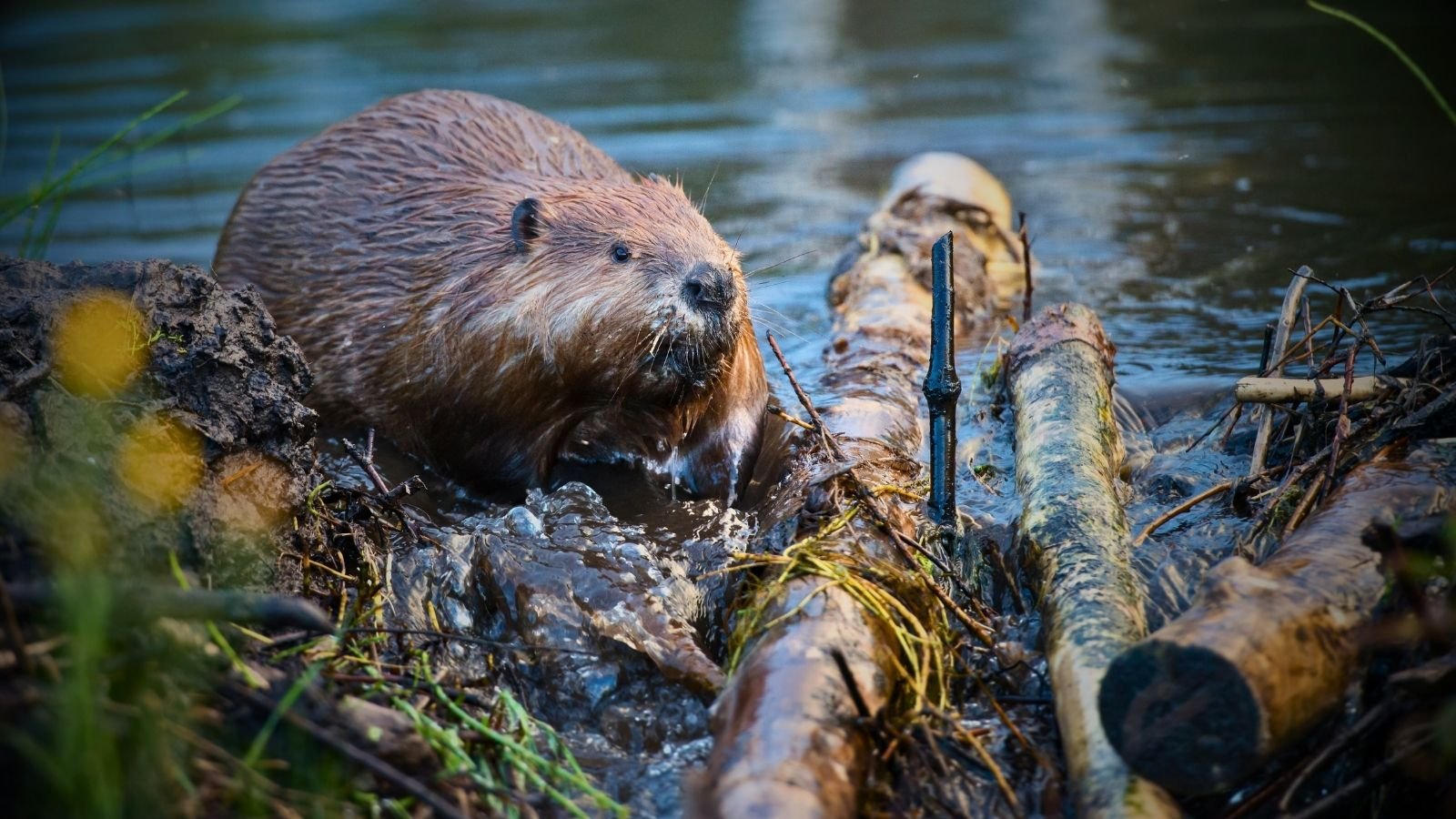
The tension deepens when species reintroductions enter the frame. Animals that shape ecosystems do so by causing disruption. Beavers flood fields. Deer browse young trees. Predators alter grazing patterns by spreading fear. Ecologically, this disruption forms the point. Socially, however, it demands acceptance of loss, uncertainty and mess. Without clear compensation and shared management, tolerance erodes quickly.
Food security complicates matters further. Recent shocks have reminded policymakers that global supply chains remain fragile. In that context, deliberately reducing domestic production feels risky to many. Farmers argue that if people do not grow food here, producers will grow it elsewhere, often with lower standards and higher emissions. Rewilding, in this view, risks exporting environmental damage rather than reducing it.
Advocates respond that this framing oversimplifies the issue. Not all land contributes equally to food security. Low-yield uplands add little volume but occupy vast areas. Redirecting some of that land towards ecological recovery does not necessarily threaten national supply. Instead, it can free resources to farm the best land better, with less pressure to intensify everywhere.
Between these positions lies a quieter reality. Most landscapes are not destined to become either wilderness or factory farms. Instead, they remain mixed and negotiated. Hedges may thicken while fields stay productive. Rivers may wander in some places and remain constrained in others. Grazing may continue, but differently. In these hybrid models, rewilding becomes a direction of travel rather than a fixed destination.
Where such approaches succeed, relationships matter more than ideology. Farmers who feel respected and listened to tend to show more openness to change. Schemes that allow experimentation without punishment build confidence over time. Long-term agreements offer security that short funding cycles cannot. Crucially, recognising farmers as stewards with deep ecological knowledge shifts the tone from confrontation to collaboration.
There is also a cultural dimension that policy often overlooks. Farming is not merely an economic activity. It acts as social glue. It keeps schools open, maintains paths, sustains local shops, and anchors communities. A landscape that looks healthy on an ecological survey can still feel empty if people leave. Rewilding that ignores this risks creating beautiful places that nobody truly belongs to.
Equally, some rural residents welcome rewilding. For them, it offers relief from relentless pressure to produce more with less. Others feel drawn by new income streams or by the chance to work with nature rather than against it. Younger farmers, in particular, sometimes see rewilding as an opportunity to diversify and recover a sense of purpose beyond volume and margins.
The future may depend on whether rewilding remains a label or becomes a toolkit. As a label, it invites tribal arguments and defensive reactions. As a toolkit, it offers methods that local people can adapt. River restoration here, woodland expansion there, grazing adjusted elsewhere. The difference lies less in ecology than in governance.
Ultimately, rewilding versus rural livelihoods is a false binary that survives because it feels emotionally neat. It allows one side to speak for nature and the other for people, as if those interests were separate. In reality, landscapes endure only when human and ecological needs align closely enough to survive political cycles and economic shocks.
The real challenge is not choosing between wildness and work. It is deciding how much control to loosen, and who gets a say when that happens. Until rewilding answers that question convincingly, it will continue to inspire hope in some fields and suspicion in others, often separated by little more than a fence.