Prague in Winter Is Quieter, Darker, and Strangely Perfect
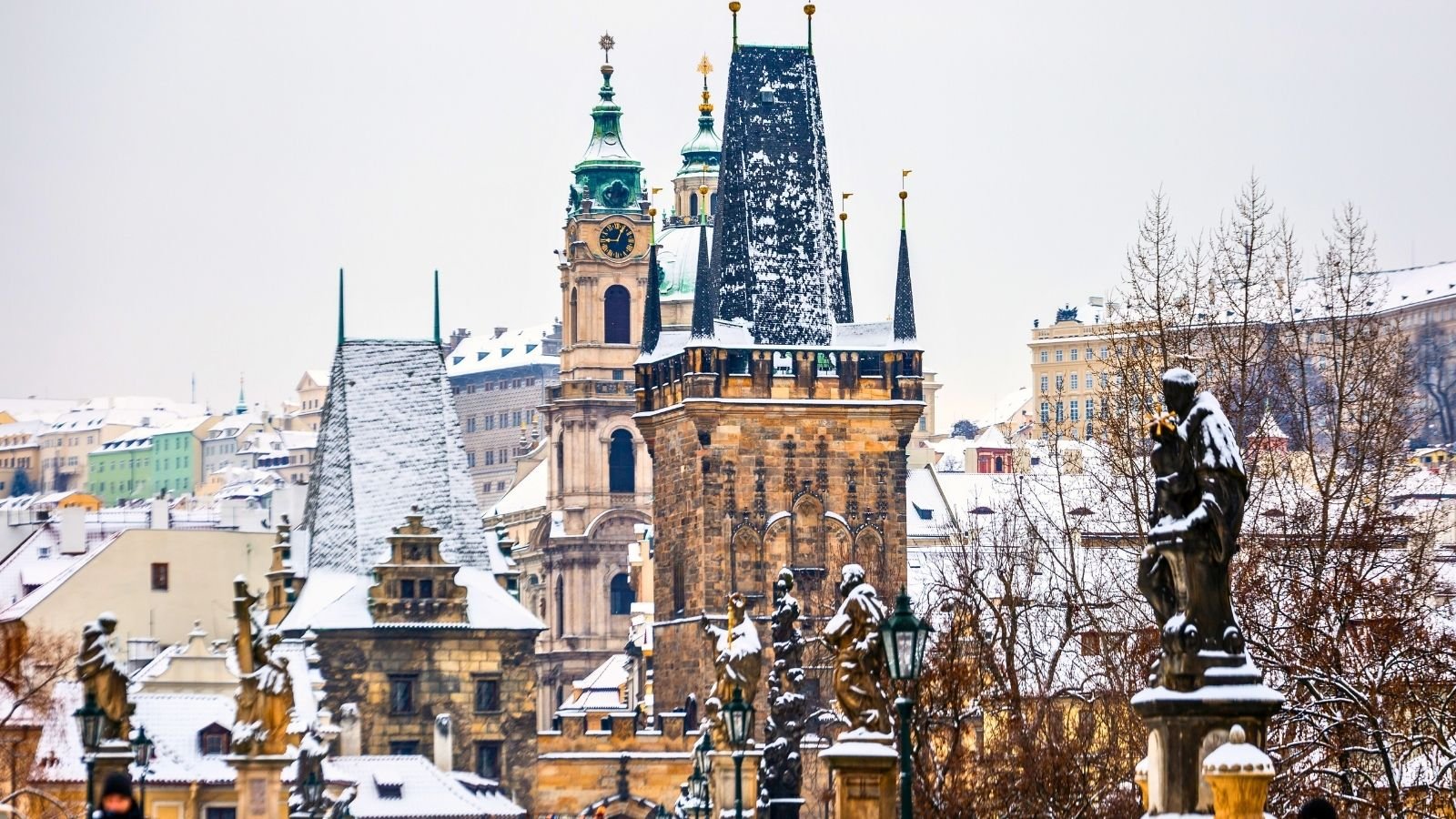
Winter Prague feels like a private conversation. The fog arrives first, rolling in from the Vltava, softening the city’s sharp Gothic outlines until everything looks half-remembered. Then the silence settles. Not complete silence, but the kind that lets you hear your own footsteps and notice how old stone reacts to cold air. Prague in winter doesn’t try to impress you. It waits.
This is a city that makes far more sense once the crowds thin out. Summer turns Prague into a stage set. Winter removes the scenery and leaves the structure behind. Bridges stop being transit corridors and start behaving like bridges again. Streets feel narrower, more deliberate. The city reveals its proportions when nobody is rushing through them.
Charles Bridge before sunrise in January looks like it belongs to another century entirely. Without the choreography of tour groups, the statues appear less decorative and more supervisory, as if they are quietly monitoring who is allowed to cross. The river moves slowly under a lid of mist, unbothered by the season. You can stand in the middle of the bridge and do nothing at all, which is a small luxury in a place so heavily photographed.
Early darkness works in Prague’s favour. The city was never built for long, bright evenings. It was built for lamplight, for interiors, for the understanding that night arrives early and stays. By four in the afternoon, windows glow and streets feel enclosed rather than exposed. The architecture tightens around you, turning wandering into something almost domestic.
Malá Strana changes character entirely once winter takes hold. In summer it feels ornamental, carefully framed for postcards. In winter it becomes lived-in. Laundry hangs from balconies. Locals walk with purpose, not curiosity. The narrow streets stop serving as picturesque routes and return to their original role as shortcuts between home, work, and warmth.
The castle benefits from restraint. Seen under low cloud and pale light, it loses some of its theatrical dominance and becomes part of the city rather than a monument hovering above it. Courtyards echo. Stone absorbs sound. You feel the weight of history not because it is explained to you, but because it presses gently from all sides.
Prague in winter has better interiors. Beer halls make sense again when they are used for their original purpose rather than as cultural exhibits. Wooden tables feel warmer. Conversations slow down. Nobody is timing their visit around a list. You drift in because the cold pushes you, and you stay because leaving would be foolish.
Food follows the same logic. Menus shorten, which is usually a good sign. Heavier dishes appear without apology. Soup matters. Dumplings return to their rightful place as sustenance rather than curiosity. Eating becomes practical and comforting, not performative.
Cafés turn inward. In summer, people sit facing the street, watching. In winter, they turn towards each other or towards nothing in particular. Condensation creeps down the windows in slow, irregular lines. Time stretches. Nobody brings you the bill unless you ask for it. The city allows you to linger.
The absence of crowds recalibrates distance. The historic centre feels compact rather than overwhelming. You walk more, but slower. Not because the pavements are icy, but because there is nothing pushing you forward. Prague stops behaving like a checklist and starts acting like a place you can exist in.
There is a psychological shift that happens when you visit Prague in winter. You stop expecting constant stimulation. The city doesn’t reward impatience. It rewards attention. Small details come into focus. The sound of a tram rounding a corner. The way breath hangs in the air for a second longer than expected. The faint smell of coal smoke on particularly cold evenings.
Tourist logic collapses quickly here. Attractions feel less urgent. You realise that seeing fewer things more slowly is not a compromise. It is an upgrade. Museums feel calmer. Churches regain their original atmosphere of quiet rather than reverence-by-appointment.
Prague’s humour also returns in winter. It has always been a city with a dry, slightly sceptical edge. Summer smooths that out for visitors. Winter sharpens it again. Locals complain about the cold while clearly preferring it to the alternative. There is a shared understanding that the city belongs to those willing to endure it.
Snow, when it arrives, feels incidental rather than essential. Prague doesn’t rely on it. A light dusting is enough to emphasise rooftops and soften tram lines. Heavy snowfall can slow things down, but even then the city adjusts rather than stops. This is a place used to adapting quietly.
Shops change rhythm. Opening hours shorten. Windows become more important than displays. The act of browsing turns into something purposeful. You are either looking for warmth, food, or distraction, and sometimes all three at once.
Nightlife becomes more local by default. Fewer visitors means fewer venues trying to cater to everyone. Bars feel specific again. Music choices narrow. Conversations grow louder because nobody worries about overhearing strangers who will vanish tomorrow.
Walking along the river in winter feels almost meditative. The Vltava reflects very little light this time of year. It absorbs it instead. Bridges loom rather than sparkle. The city looks heavier, more grounded, as if gravity has been turned up slightly.
Photography becomes easier and harder at the same time. Easier because you don’t need to avoid people. Harder because the city refuses obvious angles. Winter Prague does not pose. It expects you to work a little.
What surprises most visitors is how comfortable the city feels once expectations drop. You stop chasing perfect views and start noticing how functional beauty can be. Doors close properly. Buildings hold heat. Public transport keeps moving regardless of mood or weather.
Prague in winter reveals its true scale. It is not a vast metropolis, nor a fragile museum. It is a compact, stubborn city that prefers routine to spectacle. That preference becomes visible once the performance ends.
Evenings arrive quietly. You don’t mark time by sunsets so much as by the need for another layer. Streets empty early, but not abruptly. People disappear gradually, peeling off towards familiar routes and habitual stops.
The city feels older in winter, but not tired. Age shows differently when it is not polished for visitors. Stone darkens. Paint fades. Details blur. What remains feels more honest.
Winter strips Prague down to its working parts. It removes the urgency, the noise, the constant need to be seen. In return, it offers coherence. Everything feels aligned. The architecture, the pace, the weather, the mood.
This is why Prague in winter feels like the real Prague. Not because it is better in any obvious way, but because it is more itself. It doesn’t ask for admiration. It tolerates your presence, quietly, as long as you don’t ask it to perform.
You leave with fewer photographs and more memory. Fewer highlights and more texture. The city doesn’t follow you home loudly. It stays with you in fragments. A bridge in fog. A warm table. A street that made sense once it emptied.