Panacea and the Ancient Dream of a Perfect Remedy
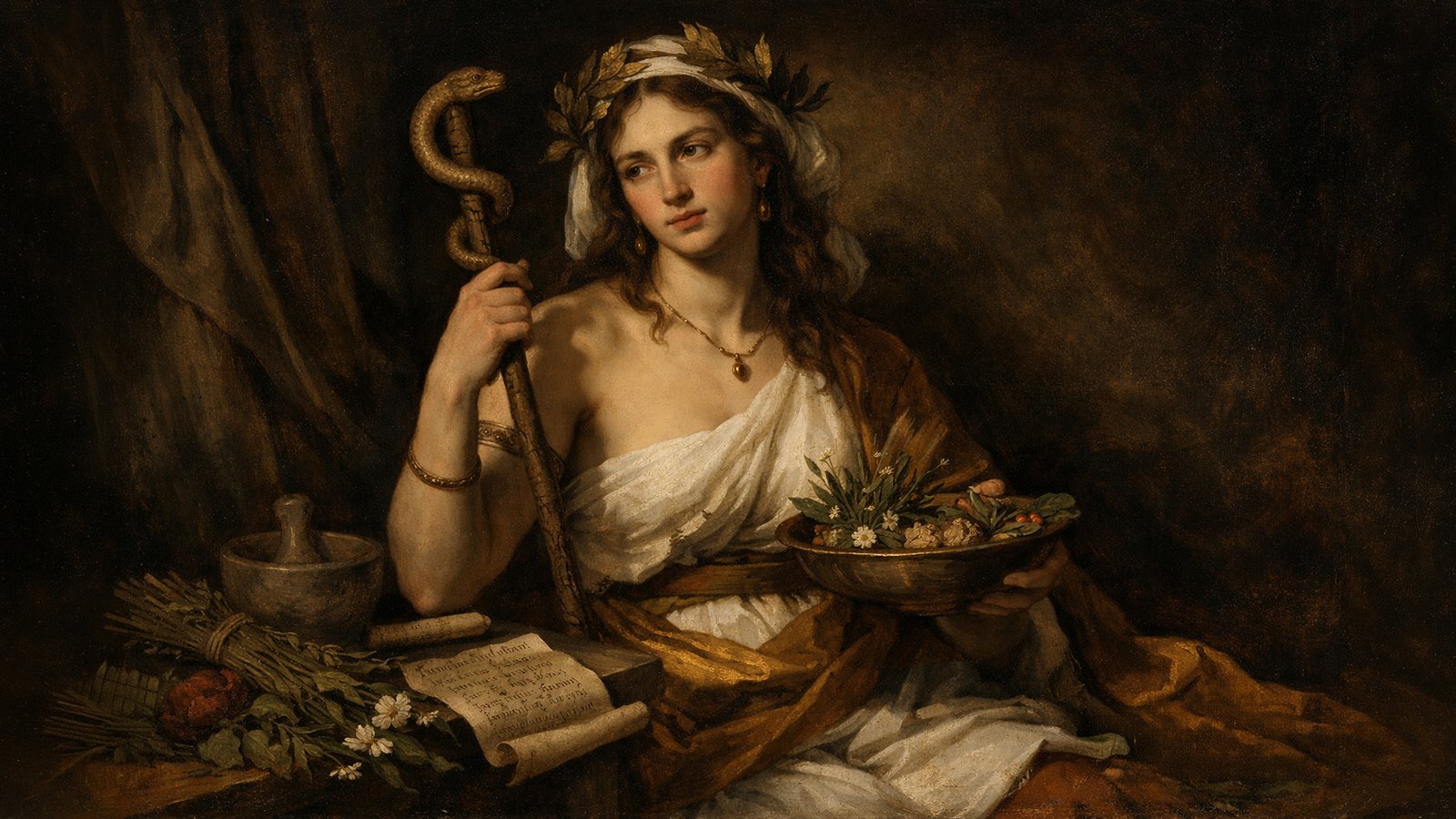
Most people use the word panacea as a polite way of rolling their eyes. A politician promises one. A wellness brand sells it in a glass bottle. A founder insists his app will be it. The room usually goes quiet for a second, and then someone sensible mutters that there is no such thing as a cure-all. Panacea, in Greek mythology, was the goddess of universal healing and the origin of the modern idea of a cure-all.
That scepticism is modern. The word itself is ancient, and it began not as a metaphor but as a divine figure. Panacea, or Panakeia, belonged to the most medically gifted family in mythology. She was the daughter of Asclepius, the god of medicine, and Epione, whose name is linked with soothing pain. Her sisters represented other corners of healing. Hygieia stood for health and prevention, which still lingers in our word hygiene. Iaso was associated with recovery. Aceso was tied to the healing process itself. In that household, medicine did not look like one dramatic miracle. Instead, it looked suspiciously like a system.
That detail matters because Panacea was never really the whole story. She personified the dream of the perfect remedy, yet the Greeks placed her beside other figures who covered prevention, recuperation, and gradual repair. Even in myth, healing came with departments. That feels almost funny now, because modern culture often remembers Panacea and forgets the rest, as if ancient religion itself wanted one magic fix. In fact, the family portrait suggests the opposite.
Her name tells the tale with almost comic bluntness. It comes from Greek elements meaning something close to “all-healing”. You can see why the word had a long career ahead of it. It is bold, tidy, and dangerously attractive. Anyone selling certainty would be foolish not to borrow it. Over time, the divine figure slipped into language and became the common noun we still use for a solution that claims to solve everything.
Ancient sources suggest she was more than a poetic idea. Writers such as Pausanias place Panacea among healing deities worshipped alongside figures like Hygieia and Aphrodite. At sanctuaries such as Oropos, she appeared in ritual settings, which is a useful reminder that ancient medicine blended religion, observation, and public ceremony with very little concern for our modern categories.
That is where the story becomes more interesting than the usual summary. Panacea did not simply embody medicine. Rather, she embodied a very specific medical fantasy: the possibility that one remedy could cut through the chaos of illness and make the body obedient again. Disease is messy, expensive, frightening, and rude enough to arrive without notice. Faced with that, people rarely long for complexity. They long for one answer.
Meanwhile, the wider mythology around Asclepius makes the family even more revealing. Asclepius was such a powerful healer that later traditions say he could raise the dead, which alarmed Zeus enough to strike him down with a thunderbolt. The myth is dramatic, yet it hints at a boundary. Healing was admirable. Total mastery over death looked suspiciously like an offence against cosmic order. Panacea sits close to that line, representing medicine at its most hopeful and at its most ambitious.
There is another irony here. The ancient world never stopped producing remedies that aspired to be universal, and neither did the medieval or early modern worlds after it. The name Panacea drifted beyond mythology and attached itself to medicinal plants, elixirs, and later miracle products. By the eighteenth and nineteenth centuries, whole industries thrived on the promise of cure-alls. Patent medicines claimed to treat a frankly ambitious range of complaints. They soothed, purified, invigorated, strengthened, restored, and no doubt improved one’s moral character while they were at it. Panacea had become branding.
However, the word gradually picked up a sharper tone. Today, calling something a panacea usually means you do not trust it. The term still suggests a universal remedy, yet it often carries the smell of overreach. That shift says a lot about how modern societies think. We still adore simple answers, but we are trained to distrust them. A proposal that claims to fix education, healthcare, productivity, ageing, and loneliness in one tidy move sounds less like genius and more like marketing in a blazer.
Still, it would be too easy to laugh at people who wanted a panacea. The longing itself is entirely understandable. Illness makes human beings impatient philosophers. When pain arrives, most of us do not ask for nuance. Instead, we ask for relief, then speed, then certainty. Panacea survives because she represents the emotional side of medicine as much as the practical one. People do not merely want treatment. They want the feeling that someone, somewhere, has finally found the answer.
Besides, the myth carries a useful contrast with Hygieia. Panacea is the cure. Hygieia is the preservation of health. One rushes in after the damage, while the other tries to stop the damage from happening in the first place. That pair has never really stopped arguing. Modern healthcare systems still wrestle with the same balance: dramatic interventions versus prevention, miracle therapies versus slow public-health work, bold rescue versus boring maintenance. Rescue stories usually get better headlines. Prevention, unfortunately, rarely comes with a trumpet section.
So Panacea is not just an ancient goddess with a conveniently reusable name. She is the patron figure of a recurring human habit. We keep inventing new versions of her. Sometimes they arrive as patent medicines. Sometimes they arrive as diets, supplements, gadgets, ideologies, or technologies that promise to simplify a stubborn reality. The packaging changes, certainly, but the emotional pitch stays familiar: one answer, one fix, one clear road out of discomfort.
And yet the old mythology quietly resists that fantasy. Panacea belonged to a group. Healing had siblings. Recovery needed stages. Health required maintenance. Relief from pain had its own logic. Even the goddess behind the idea of the cure-all was never standing alone in the original cast list. So is there such a thing as a true panacea? Medicine, ancient or modern, has never quite believed in one.
Post Comment
You must be logged in to post a comment.