No Bob, No Reggae, No Hope: Imagining a World Without Bob Marley
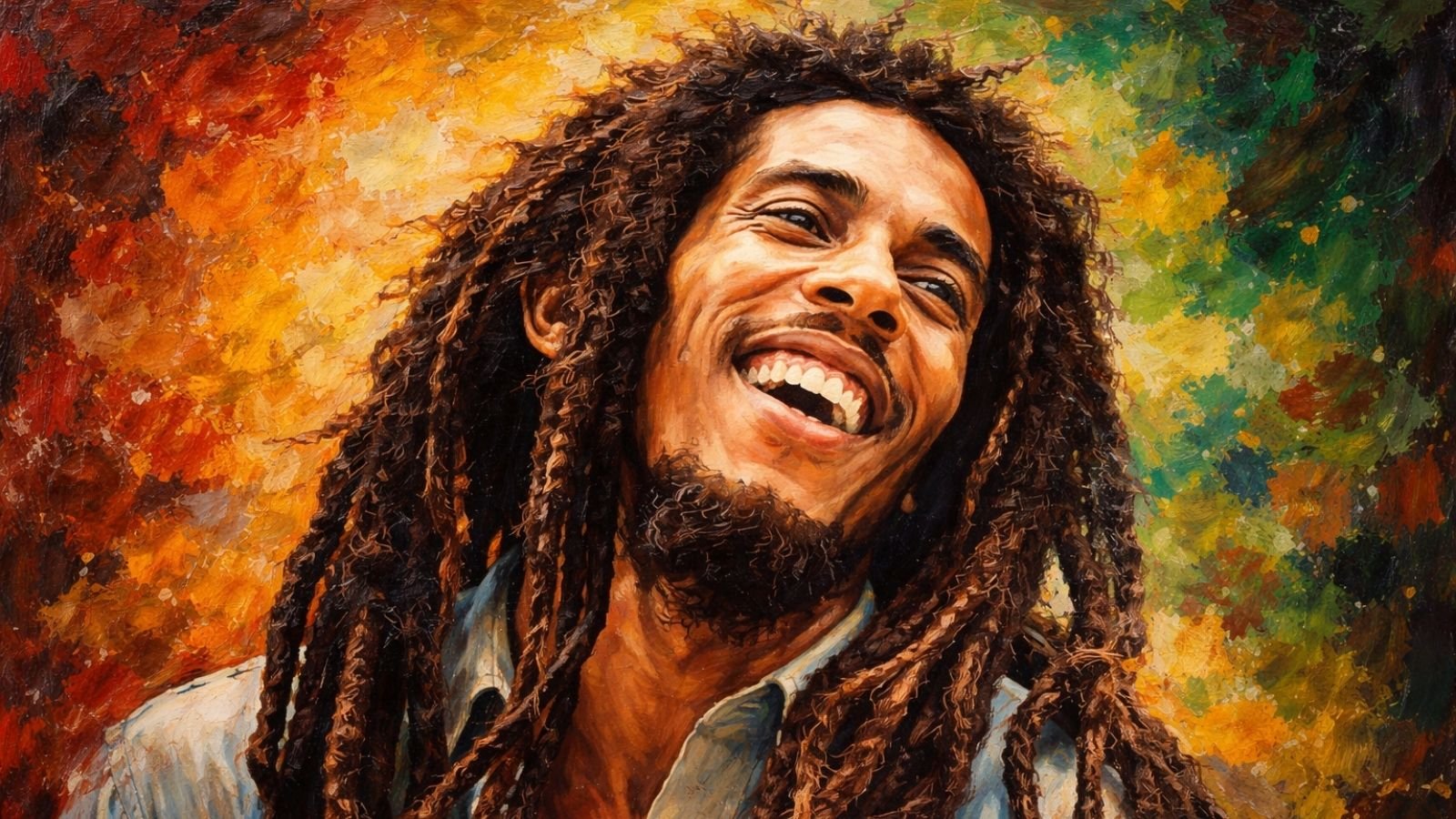
Imagine waking up tomorrow and discovering that reggae simply doesn’t exist. Not merely absent in a watered-down, tourist-shop form, but entirely missing from the musical landscape. In that world, there’s no “One Love” drifting through wedding receptions, no dreadlocked icon taped to university dorm walls, and certainly no global awareness of Rastafarianism beyond Jamaica’s shores. In other words, this isn’t a dystopian fantasy so much as a plausible alternative history: what might have unfolded if Robert Nesta (Bob) Marley had never drawn breath on that February morning in 1945.
At first glance, the loss might seem musical. However, the ripple effects would stretch far beyond missing a few beloved songs. Without Marley, the trajectory of popular music would have shifted decisively. Reggae, while it would almost certainly still exist in Jamaica, would likely remain largely confined there. Although the genre might have continued evolving through ska and rocksteady, it would lack the crucial bridge to the wider world. Crucially, without Marley’s rare ability to package social justice, spirituality, and resistance into irresistibly melodic songs, reggae would probably remain a local treasure—deeply cherished at home, yet largely invisible elsewhere.
From there, the consequences cascade. Consider, for instance, the artists who built entire careers on reggae’s foundations. Without Marley, Eric Clapton’s 1974 chart-topping version of “I Shot the Sheriff” never happens. As a result, The Clash never immerse themselves in Jamaican music, meaning their sound evolves differently—leaner, more orthodox punk, and far less hybrid. Similarly, The Police might still form, yet “Walking on the Moon” loses its reggae backbone. Stevie Wonder’s “Master Blaster (Jammin’)” becomes unthinkable. Even Keith Richards’ long Jamaican obsession fades before it begins, and The Rolling Stones never spend dozens of studio takes attempting reggae versions of “Start Me Up”. Without Marley’s gravitational pull, they simply wouldn’t have bothered.
Meanwhile, hip-hop develops along a subtly altered path. Early pioneers such as Grandmaster Flash and Afrika Bambaataa drew heavily on reggae rhythms, sound systems, and toasting traditions. Without that influence, rap still emerges, but its early form leans more heavily on funk and soul alone. Consequently, later figures feel the shift too. Lauryn Hill’s musical and spiritual framework changes fundamentally. Damian Marley never fuses reggae with contemporary hip-hop because, quite simply, Damian Marley never exists. Nor do his ten siblings, whose combined Grammy wins represent an entire erased dynasty of musical innovation.
Beyond sound, the cultural vacuum deepens. Rastafarianism, now practised by roughly one million people worldwide, remains largely confined to Jamaica. Without Marley’s global visibility, ideas such as Ital diets, dreadlocks as spiritual symbols, and reverence for Haile Selassie I rarely travel. As a result, the philosophy of resistance, unity, and African consciousness embedded in Rastafari never reaches a mass audience. Scholars who later analysed its global adaptations find little to study beyond the Caribbean context.
Fashion, too, shifts in quieter ways. Dreadlocks never become an international symbol of resistance and identity. Ruud Gullit appears with a different hairstyle. The laid-back aesthetic of spiritual rebellion—earthy colours, simplicity, deliberate nonconformity—never coheres into a recognisable visual language. Consequently, brands look elsewhere for inspiration, students pin up different heroes, and an entire countercultural look never quite materialises.
Politically, the absence registers in subtle but meaningful moments. The 1978 One Love Peace Concert, where Marley famously brought Michael Manley and Edward Seaga together on stage, never takes place. Without that symbolic gesture, Jamaica’s violent political tensions of the 1970s lack a rare moment of public unity. Likewise, the anti-apartheid movement loses a resonant voice. Songs like “War” and “Africa Unite” never amplify the struggle internationally, and although activism continues, its soundtrack sounds different—arguably less universal.
Similarly, Zimbabwe’s independence celebrations in 1980 unfold without Marley and the Wailers. The historic announcement introducing them to the crowd is replaced by something else, someone else. Liberation fighters who drew strength from Marley’s music seek inspiration elsewhere, if they find it at all. Meanwhile, in New Zealand, Māori communities lose an unexpected but profound cultural bridge. Marley’s music, now woven into Waitangi Day commemorations, never becomes part of that shared emotional language.
Even the music industry itself looks different. Chris Blackwell’s Island Records follows another course altogether. Without Marley as a global anchor after Jimmy Cliff’s departure, Blackwell’s strategy of marketing reggae with the ambition and production values of rock never fully takes shape. As a consequence, other reggae artists struggle even more to gain international traction. Peter Tosh and Bunny Wailer, despite their talent, likely remain regional figures rather than global ones.
Academia notices the absence as well. Courses examining reggae’s global influence shrink or vanish. Ethnomusicologists lose one of the clearest examples of how a small island genre reshaped world music. Documentaries about music as political force lack their most persuasive case study. Time magazine never names “Exodus” the album of the century in 1999, because, quite simply, the album never exists.
At the same time, social justice movements worldwide sound quieter. “Get Up, Stand Up” never becomes a universal rallying cry. Protesters in Manchester, students in California, and workers across continents turn to different songs—often less immediately shared, less emotionally cohesive. The particular balance Marley struck between confrontation and unity leaves no template behind.
Economically, Jamaica feels the loss too. The Bob Marley Museum in Kingston never opens its doors. Bob Marley Boulevard remains unnamed. Marley Coffee, launched by Rohan Marley with Fairtrade Jamaican beans, never enters the market. The West End musical “Get Up, Stand Up!” tells another story instead. Forbes never lists Marley among the highest-earning dead celebrities, because there is no estate generating revenue from licensing, merchandise, and myth.
Unexpectedly, the void even alters everyday stereotypes. The ganja-smoking, peace-loving archetype associated with Marley never solidifies. As a result, neither does the later correction—the effort to unpack his political seriousness, his contradictions, his personal flaws, his relationships, or his naive moments. Without Marley, we lose not only the myth, but also the chance to challenge it.
Finally, some losses are intensely practical. Johnny Nash’s career diverges without Marley’s songwriting. Vincent Ford’s soup kitchen in Kingston loses its steady funding stream from “No Woman, No Cry” royalties, affecting real lives in tangible ways.
Even the story of illness changes slightly. Marley’s refusal to amputate his cancerous toe, rooted in Rastafarian belief, later became a widely cited case in discussions about faith and medicine. Without his death at 36, that particular cautionary tale never enters public consciousness. His final words—“Money can’t buy life”—never echo as a stark reminder of mortality.
Over time, the absence compounds. Without Marley proving that non-Western music could achieve massive global success, record labels become more cautious. Investment in African, Latin American, and Asian artists slows. World music remains further from the mainstream, more marginal, more easily ignored.
Most importantly, generations lose access to a specific form of hope. Marley’s journey—from a poor, mixed-race boy in Nine Mile, caught between communities, to a global voice for unity—offered a way beyond rigid identities. Without that example, some people searching for meaning find other, narrower paths.
Ultimately, the injustices Marley sang about still exist in this alternate world. Oppression, inequality, and conflict remain stubbornly present. Yet something vital is missing. Millions of people no longer have the soundtrack that helped them endure, interpret, and resist those realities. The music is silent, the message never spoken, and the world, in consequence, is unmistakably quieter.