Neon, Noise and No Illusions: The Strange Appeal of Cyberpunk
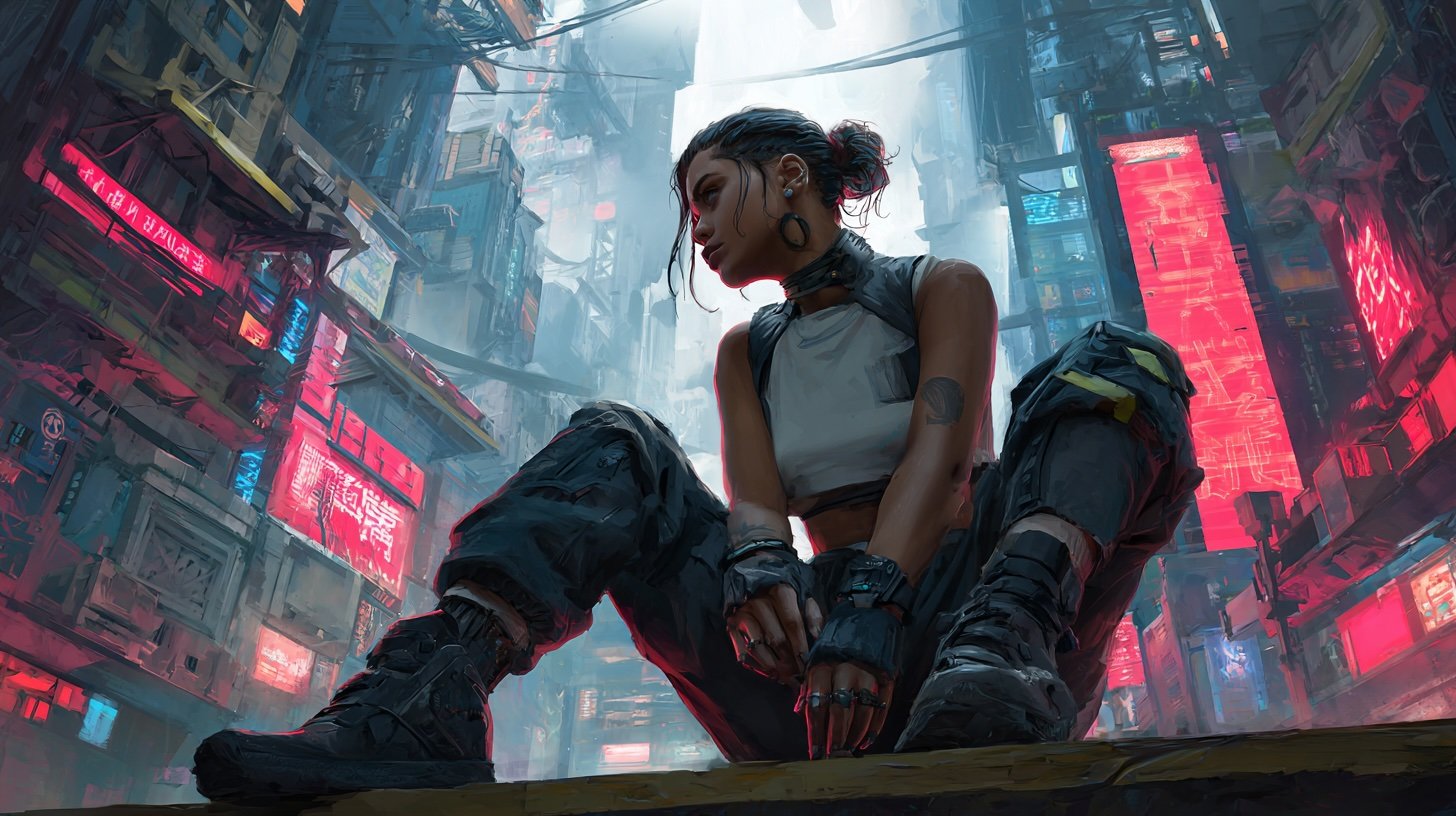
Cyberpunk always felt like the future your parents warned you about, only with better jackets and considerably more neon. Even its birth looked like an accident nobody planned for. A handful of grumpy futurists, a few rogue philosophers, a wave of early hackers and suddenly the world woke up in the eighties and discovered a new flavour of dystopia. Not the stiff, Orwellian type with ration cards and grey coats. No, this one swaggered in with chrome limbs, questionable morals and far too much rain.
It started taking shape long before anyone gave it a name. Writers toyed with uneasy futures where technology gnawed at human identity. Philip K. Dick kept asking whether reality could be trusted. J. G. Ballard treated the modern world as a psychological minefield. Their visions weren’t exactly comforting, but they resonated with anyone who looked at an early computer terminal and thought, well, that’s going to cause trouble. Then a short story called Cyberpunk appeared, the title stuck, and the fuse burned fast.
What followed looked like a creative detonation. William Gibson gave the world a vision of cyberspace that felt disturbingly plausible, even though hardly anyone had touched a computer outside laboratories. Neuromancer wasn’t merely a bestseller. It was a guidebook to a future stitched together from data, corporate ambition and shady dealings carried out in shadowy alleys filled with humming cables. The novel offered new slang, new subcultures, and a new understanding of what a city might look like when corporations owned more billboards than governments owned roads.
Cinema realised immediately that this aesthetic looked sublime on screen. Ridley Scott’s vision of a rain-drenched Los Angeles felt more like a malfunctioning dream than a setting. Blade Runner didn’t behave like a film so much as a feverish warning in neon. The mood spread quickly, infecting comics, games, animation. Akira turned post-apocalyptic Tokyo into a shrine of cybernetic chaos. Ghost in the Shell explored what remained of a soul when most of the body had been replaced by equipment designed by a procurement department.
The appeal lay not in technology for its own sake but in the tug of war between high tech and low life. Cyberpunk showed the shiny inventions that engineers loved, only to place them in the hands of characters who slept in tiny flats next to malfunctioning vending machines. It imagined worlds where brilliant AI could reroute global finance with a shrug, yet the average citizen couldn’t afford decent healthcare. People recognised the pattern. Even in the eighties, company logos loomed larger than politicians. The genre didn’t feel outlandish. It felt predictive.
At the centre stood the cyberpunk outsider. Not the stoic hero saving planets, but the scruffy hacker, the augmented mercenary, the disillusioned detective. They possessed skills that could influence entire networks, yet their lives rarely improved. Corporations remained too large, governments too apathetic, and society too exhausted to do anything but stumble forward. That tension created the pulse of the genre. Power had shifted, and nobody with a conscience seemed to benefit.
Oddly enough, cyberpunk fandom sometimes missed the irony. Many stories aimed to critique corporate domination and unchecked technological growth. Then a certain subsection of fans embraced the exact imagery the authors meant as cautionary. They wanted the neon, the chrome implants, the mega-city nightlife. They decorated their rooms with glowing circuit patterns and dreamed of living inside that dystopia. In a twist worthy of its own novel, cyberpunk slipped from counterculture to aesthetic trend. Corporations promptly monetised it, of course.
The genre’s oddities stretch beyond fashion. Plenty of people assume that cyberpunk accurately predicted the future. In truth, it got the mood right but many of the details hilariously wrong. Flying cars never became normal. Cybernetic limbs exist but they don’t let anyone backflip through a skylight. AI turned out capable of things few authors expected, yet it insists on stumbling over basic social cues. Still, the overarching themes—surveillance, inequality, data as currency—landed uncomfortably close to modern life.
Modern cyberpunk doesn’t stay frozen in its eighties heritage. New interpretations fold in climate change, algorithmic manipulation, digital politics and the strange erosion of identity happening on every social platform. Post-cyberpunk stories add nuance, exploring how people adapt instead of simply suffer. Some even dare to suggest small pockets of hope, though never too much. Too much optimism would break the brand.
Video games injected fresh life into the genre by letting players step inside the grime. Deus Ex encouraged people to question the political cost of human augmentation. Cyberpunk 2077 turned Night City into a sprawling simulation of ambition, corruption and existential crisis wrapped in LED glow. Players didn’t merely watch the dystopia; they navigated it, bargained with it, shot at it and, occasionally, rebuilt themselves inside it.
Despite all the bleakness, cyberpunk endures because it offers a strange sort of honesty. People sense the friction between tech innovation and social decay. They notice how corporations edge into daily life. They recognise the temptation to trade privacy for convenience. Cyberpunk doesn’t lecture. It exaggerates. It takes familiar discomforts and stretches them into full-blown nightmares, then sprinkles neon powder on top to make them strangely appealing.
The genre also benefits from infinite adaptability. Writers can craft grimy detective stories in sprawling megacities. Filmmakers can drown the world in neon and shadow. Musicians can create soundscapes full of distortion and mechanical rhythm. Artists can sketch worlds where wires coil like vines and skyscrapers vanish into polluted clouds. Every medium finds something in cyberpunk worth stealing.
Even when cyberpunk mutates into satire, it retains its sting. Modern creators mock social scoring systems, algorithmic bosses, self-driving advert drones and influencers whose personalities were built in a marketing lab. These stories feel less like fiction and more like cheeky commentary on a world drifting into the absurd. Audiences laugh, then pause a moment, sensing that the joke cuts too close.
Some people insist that cyberpunk has already arrived in reality. Perhaps not in its visual glory, but in its structure. Smart cities record everything. Corporations harvest oceans of data without blinking. Deepfake identities roam the web. Hackers navigate digital shadows while governments try to legislate technology they barely understand. The cities aren’t as dramatic as the films promised, yet the dynamics feel eerily familiar.
Cyberpunk’s core question remains the same: what happens to human identity when technology doesn’t merely support life but entwines with every part of it? The genre keeps poking at the boundary between machine efficiency and human vulnerability. It keeps asking whether progress brings liberation or whether it simply shifts power upwards while everyone else scrambles for scraps.
Oddly, this makes cyberpunk surprisingly introspective. Beneath the flashy aesthetics, many works meditate on loneliness and the erosion of empathy. Characters struggle to connect in worlds where digital filters distort every interaction. People chase dreamlike digital spaces, only to find the same anxieties waiting for them in VR. Technology offers escape, but rarely resolution.
Perhaps the final oddity is this: cyberpunk, once a warning, now inspires technological visionaries, designers and futurists. The cautionary tales have become mood boards for ambitious urban planners and fashion brands. The dystopia turned into a creative template. Even gaming companies borrow the imagery to make their worlds feel rebellious and cool. The genre started as a complaint and grew into a cultural landmark.
Its popularity refuses to fade because the world keeps feeding it material. New technologies arrive faster than societies can absorb them. Economic divides widen. Urban life becomes more fragmented. Every fresh bit of tech news feels like a potential plotline. So long as the future remains complicated, messy and morally ambiguous, cyberpunk will continue to feel relevant.
In the end, the genre works because it nudges people into asking better questions about the worlds they’re building. It mixes neon glamour with existential unease, offers rebellion without resolution and wraps it all in a style so distinctive that even its critics find it hard to resist. Cyberpunk may not have predicted everything, but it captured the atmosphere of a world forever juggling brilliance and chaos—and did so with unforgettable flair.