Monastery Stays: Why Non-Religious People Are Quietly Checking In
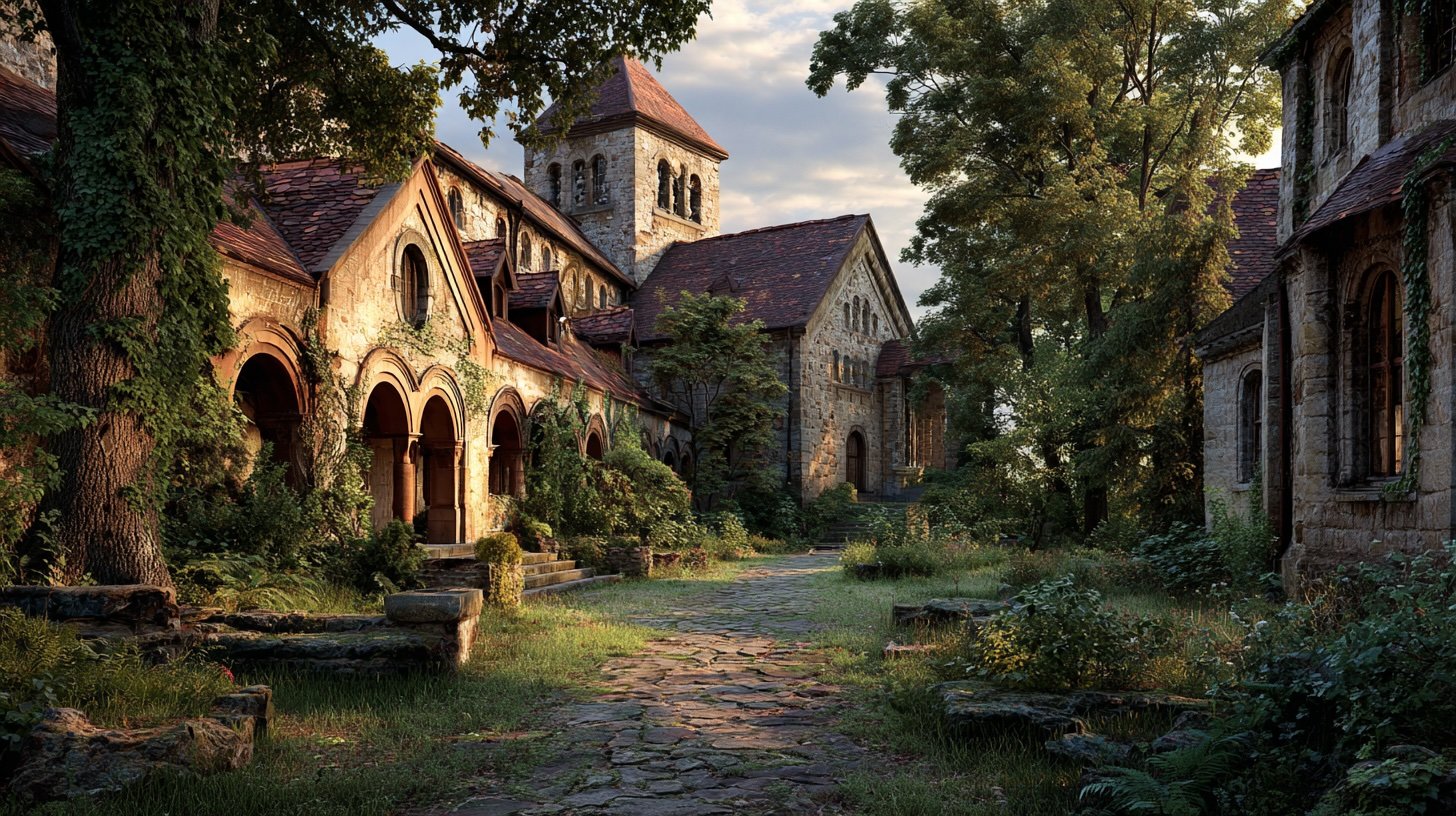
Monastery stays rarely happen by accident anymore. People book them deliberately, often months ahead, and usually with a slightly defensive explanation ready. They are quick to clarify that they are not religious. Instead, they describe themselves as tired, curious, stuck, or burned out in a way ordinary holidays no longer touch.
For centuries, monasteries existed at a safe distance from mainstream life. You visited them as a pilgrim, a believer, or not at all. Today, however, they sit inside a different mental map. Writers arrive with laptops they barely open. Consultants arrive with nervous systems running hot. Designers, founders, academics, journalists, newly retired executives, and overwhelmed parents all turn up carrying the same quiet hope: that something about this place will hold them still long enough to hear themselves think.
Silence is the headline, yet it is not the whole story. What truly draws non-religious guests is a rare combination modern life struggles to offer: enforced quiet without awkwardness, structure without optimisation, and simplicity without branding.
Silence, to begin with, feels different here. This is not aspirational silence, nor the curated quiet of a luxury spa where someone might still ask if you want cucumber water. Monastic silence comes with permission. Nobody expects conversation. Nobody reads quietness as antisocial. And nobody fills the gaps with music to soften the edges. Bells ring. Footsteps echo. Cutlery clinks in refectories. Otherwise, the day remains largely unclaimed.
For people who live inside constant commentary, that absence can feel unsettling at first. Thoughts grow louder before they calm down. Mental to-do lists march in formation. Regrets surface, and half-finished ideas follow closely behind. Many guests report that the first night brings worse sleep rather than better rest. Then, gradually, something shifts. Attention widens. Time stretches. Even boredom starts behaving differently, less like an enemy and more like a threshold.
Structure does most of the heavy lifting. Long before productivity culture discovered morning routines, monasteries organised time through rhythm rather than choice. Bells divide the day. Meals arrive at fixed hours. Prayer continues whether guests attend or not. This matters more than it seems, because everyday life requires constant negotiation. Do I work now or later? Do I answer this message? Or, do I go for a walk or stay in? Monastic time removes those questions. The day arrives already shaped.
Burned-out professionals often describe this as relief rather than restriction. They do not want freedom. Instead, they want fewer decisions. They want a container sturdy enough to hold them while internal noise settles. In a monastery, nobody asks what you do. Nobody optimises your rest. Nobody suggests journalling prompts. You wake, eat, walk, sit, and sleep. At first, the simplicity feels almost suspicious. Soon enough, it starts to feel quietly luxurious.
Writers and creatives have long understood this appeal, even before focus became a fashionable topic. A monastic guest room offers something co-working spaces rarely manage: uninterrupted attention without performance. No one expects output. No one praises productivity. The work happens, or it does not, and both outcomes feel oddly acceptable. Many writers report that they write less than planned yet think far more than expected. Often, that is exactly what was missing.
Simplicity completes the triangle. Rooms are plain. Furniture stays put. Food leans toward the nourishing rather than the exciting. Decoration rarely flatters the ego. As a result, a particular modern exhaustion falls away: the need to curate experience. There is nothing to upgrade. Nothing to compare. Nothing to signal. You are not meant to be impressive here.
That lack of prestige turns out to be a feature, not a flaw. In a world where wellness arrives wrapped in expensive language, monasteries remain stubbornly unimpressed by self-improvement. They offer practices rather than promises. They offer time rather than transformation. Consequently, the effect feels grounding rather than aspirational.
Travellers without religious belief often arrive expecting to feel out of place. Instead, they find hospitality with boundaries. Monastic communities have always received guests, but the terms remain clear. This is not a hotel. The life of the community comes first. Quiet matters. Behaviour matters. Presence matters. For visitors used to spaces built around customer satisfaction, this reversal feels strangely refreshing.
Many monasteries now state openly that guests of all faiths and none are welcome. That sentence carries weight. It signals that belief is not the entry ticket. Behaviour is. Respect is. Curiosity is. Participation remains optional. You can attend services or skip them. Sit in the chapel or walk the grounds. Read or stare out of the window. Meanwhile, the rhythm continues regardless.
The curious traveller often discovers that monasteries deliver something conventional tourism rarely does: a sense of arrival without agenda. There is nothing to see in the usual sense. The buildings stay put. The garden changes slowly. The view does not care whether you photograph it. Without attractions competing for attention, experience deepens rather than expands.
Silence also carries social permission. Outside monastic walls, silence often feels like withdrawal. Inside them, it feels communal. Everyone agrees, implicitly, to lower the volume. Because of that shared agreement, the anxiety of explaining oneself disappears. You are not being difficult. You are participating.
Digital distance reinforces this effect. Many monasteries limit Wi-Fi by design. Some restrict phone use in common areas. Others rely on thick stone walls that quietly defeat signal. Guests often discover, with mild panic, that their devices have lost authority. Notifications wait. News pauses. Algorithms fall silent. Initially, this feels uncomfortable. Then, rather quickly, it feels like relief.
The absence of constant information allows attention to rest. Thoughts unfold more slowly. Ideas connect in unexpected ways. Problems that felt urgent reveal themselves as merely loud. This aligns with research on attention restoration, although guests rarely arrive thinking in those terms. Instead, they simply notice that their minds behave differently when interruptions disappear.
Not everyone comes seeking healing. Some arrive out of curiosity. Others want to understand monastic life from the inside, without converting or pretending. They want to see how a day organised around prayer and work actually feels. Often, they leave with respect rather than belief. The experience answers a practical question rather than a theological one: what happens to a human day when it stops revolving around consumption.
There are tensions in this trend. Monasteries walk a careful line between hospitality and dilution. Too many guests, and the place risks turning into a themed retreat. Too few, and financial survival becomes fragile. Communities therefore set boundaries deliberately. Silence rules exist for a reason. So do limits on numbers, behaviour, and access.
Critics worry about commodification. When silence becomes a product and simplicity a selling point, something essential risks being lost. Others argue that openness has always been part of monastic tradition, and that welcoming outsiders without demanding belief reflects that heritage rather than betraying it. The debate remains unresolved, and perhaps that is appropriate.
What seems clear is that monasteries offer something modern life struggles to replicate elsewhere. Not escape, exactly. Rather, recalibration. They provide a place where time slows without spectacle, where structure supports rather than constrains, and where simplicity does not need defending.
People leave monasteries changed in small ways. Speech slows. Phones get checked less often. There is a renewed awareness of how little is actually needed to fill a day. Some changes fade quickly, while others linger. Often, the memory of a bell marking the hour stays longer than expected.
The appeal is not about religion returning through the side door. Instead, it reflects a rediscovery of forms of living that predate constant stimulation. Monasteries never set out to solve burnout, creativity blocks, or digital overload. They simply kept doing what they had always done. The world changed around them. Now, unexpectedly, their way of organising time feels radical again.
In a culture obsessed with novelty, monasteries offer repetition. Where modern life multiplies choices, they impose limits instead. And in a world trained to perform, they provide anonymity. For people who no longer believe but still want meaning, that combination turns out to be enough.
Here’s a curated list of five monasteries well known for welcoming guests for stays, including non-religious visitors.
Worth Abbey (West Sussex, England)
A Benedictine monastery set in woodland near the South Downs. Worth Abbey runs a dedicated retreat centre with simple rooms, shared meals, and a strong rhythm shaped by the monastic day. Guests are welcome to join services or keep to themselves. It attracts writers, professionals on quiet breaks, and people seeking structure rather than sermons.
Mucknell Abbey (Worcestershire, England)
Known for its emphasis on silence and contemplative rhythm. Mucknell Abbey offers short and longer stays where guests share the daily pattern of the community. The atmosphere feels calm but serious, appealing to people who want fewer distractions rather than a soft wellness experience.
St Augustine’s Abbey (Surrey, England)
Explicitly welcomes guests of all faiths and none. St Augustine’s Abbey offers quiet accommodation in a working monastery just outside Guildford. It suits people who want a monastery stay without travelling far, and who value silence, gardens, and routine over comfort upgrades.
Buckfast Abbey (Devon, England)
One of the most accessible monastery stays in the UK. Buckfast Abbey combines a large working monastery with purpose-built retreat accommodation. Guests often include burned-out professionals and solo travellers looking for calm rather than isolation. Silence is encouraged but not rigid, making it a gentle entry point.
Taizé Community (Burgundy, France)
Not silent in the strict sense, but deeply simple. Taizé attracts thousands of visitors each year, many of them non-religious or unsure what they believe. Life revolves around song, quiet reflection, shared meals, and voluntary participation. It works well for people seeking community without pressure to conform.