Misogi and Freezing Back to Life
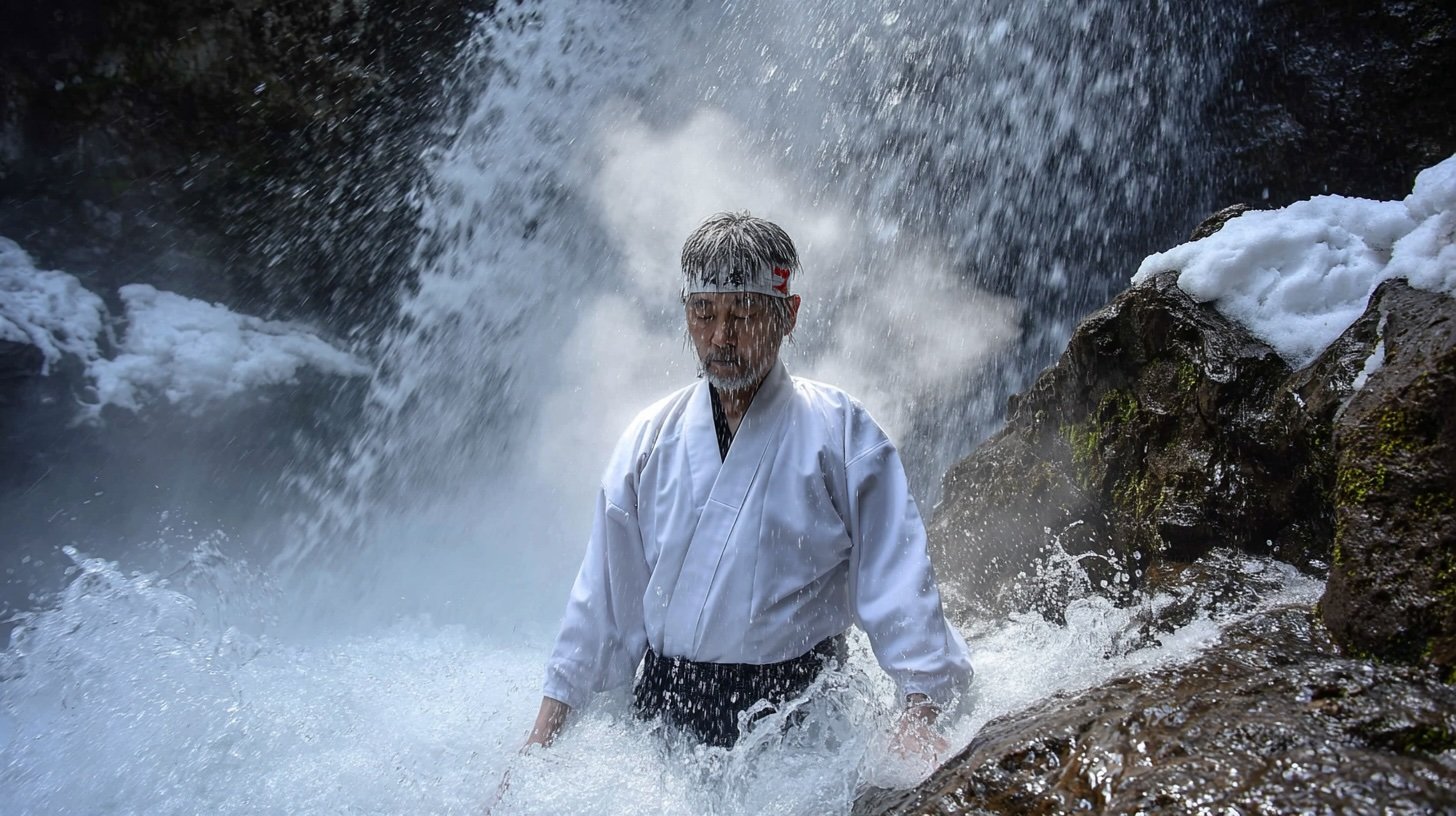
Misogi carries the sort of mystique that makes you wonder why standing under a freezing waterfall became a route to spiritual clarity. Anyone who has ever tried wild swimming in February knows that clarity certainly arrives, though usually in the form of shrieking. Yet long before wellness influencers discovered cold plunges, Japan had already perfected a ritual where water, breath and willpower reshaped a person from the inside out. The practice came from a world where purity wasn’t a lifestyle choice but a cosmic requirement. And despite thousands of years of cultural evolution, Misogi still manages to feel startlingly contemporary.
The story usually begins with a god who returned from a visit to the underworld and realised that death clings stubbornly. Izanagi, as the mythology tells it, washed away the impurity with an urgent bath in flowing water. As the filth fell away, fresh deities sprang to life. Few origin stories combine trauma, hygiene and spontaneous divine reproduction quite so efficiently. That myth serves as the spiritual blueprint: by washing away what weighs on you, you make space for something brighter, cleaner, lighter. Water doesn’t simply remove dirt. It resets the soul.
When you watch a Misogi ritual today, that ancient logic still pulses beneath the surface. Participants gather near a riverbank or waterfall before dawn, wrapped in white cloths that flutter like banners of good intentions. The air feels sharp, and nerves buzz louder than the chanting. They brace themselves, perform breathing exercises that stir the body into a rhythmic readiness, and enter the water with a mixture of dread and determination. Cold water seizes them immediately, but a fascinating thing happens. After the gasp, after the shock, something steadies. That stillness becomes the heart of Misogi: a return to oneself, surrounded by nature’s merciless generosity.
Older shrines once conducted these rituals frequently. Worshippers arrived with worries, stains of misfortune, or the lingering sense that life had drifted off course. Flowing water solved what priests could not. There’s a reason the Japanese character for impurity also carries shades of heaviness and stagnation. Misogi lifts that. It gives people permission to shed the lingering psychic sediment that everyday life so reliably deposits. Walking back up the path, dripping and shivering, people often describe the same thing: a peculiar lightness, as if the ritual rinsed off something they couldn’t name.
Although many still practise Misogi in its traditional form, the meaning has expanded far beyond waterfalls. Japan reinvented itself repeatedly, and Misogi came along for the ride. Modern practitioners mix discipline, spirituality and a dose of self‑imposed hardship. An office worker might join a winter river immersion as a way to reset after a gruelling year. A martial arts group may combine Misogi with breath training and meditation. Social clubs sometimes host seaside immersion events at sunrise, which look suspiciously like wellness retreats until the chanting begins and the temperature plummets. Whatever the specifics, the aim stays broadly the same: challenge the body to liberate the mind.
A curious twist emerged when outsiders discovered the practice. A term once linked to Shinto cosmology now appears in business seminars, creative workshops and lifestyle blogs. Some treat Misogi as a yearly challenge. Pick something difficult, the advice goes, something with a genuine possibility of failure. Hike across a desolate landscape. Swim a ridiculous distance. Attempt a creative project you’ve always avoided. The point isn’t to achieve glory. The point is to disrupt your own narrative so thoroughly that you surprise yourself. In that sense, these modern interpretations echo the spirit of Izanagi’s plunge. Hardship brings renewal; discomfort forces clarity.
A swimming enthusiast in the United States wrote recently about using a marathon‑style swim as their personal Misogi. After months of training, they launched into open water knowing it would push them beyond familiar limits. Somewhere in the middle of it, lungs burning and arms protesting, they found a strange wave of calm. It resembled neither triumph nor surrender. It resembled relief. That moment became the ritual’s treasure: the discovery that discomfort often hides a doorway.
Meanwhile, a trekker in northern Europe framed a brutal 110‑kilometre Arctic walk as their Misogi, planned during a period when they felt stuck. The cold bit hard, the silence deepened, and the isolation forced them to sit with thoughts they had been dodging for years. Though they never described it as a religious moment, the effect sounded uncannily similar to what Shinto priests recognise in traditional participants. The natural world acted as a mirror. Every step stripped away a little more mental clutter.
Then there’s the creative crowd, always eager to repurpose heritage for artistic purposes. One illustrator proposed a Misogi of the imagination: produce something wildly outside your comfort zone every year. A film, a comic, an absurd performance piece. The task feels daunting, but that’s the point. You face the thing that unnerves you and let it shake loose whatever impurities have gathered in your creative practice. Shake out the impostor syndrome, the perfectionism, the cowardly whisper of “not ready yet.” When the work exists, so do you, renewed by the confrontation.
Traditionalists may sigh at these reinterpretations, but they also understand the deeper logic. Misogi isn’t confined to wooden shrines or mossy riverbeds. It travels wherever humans feel the need to shed invisible burdens. The physical ritual simply expresses a truth that people instinctively recognise: water cleanses, effort clarifies, and nature doesn’t lie. Put someone under a waterfall in midwinter and their pretences shatter. In that moment, they meet themselves honestly.
Of course, the authentic version still draws participants to shrines such as Tsubaki, where priests lead them through set sequences of breathing, chanting and immersion. The waterfall crashes around them, icy and indifferent, yet the atmosphere vibrates with reverence. People emerge trembling, but eyes shine with something unmistakable. Renewal doesn’t always arrive gently; sometimes it strikes like cold water.
The ritual has also served as a gateway to environmental awareness. When people immerse themselves in lakes and rivers, they notice the health of these waters. Pollution becomes more than an abstract concern when you stand knee‑deep in murky currents. Local communities occasionally organise Misogi‑inspired clean‑ups, combining symbolic purification with literal restoration. Water protects those who protect it. The relationship feels reciprocal.
Anthropologists like to point out that purification rituals exist everywhere, yet Misogi has a distinctive charm. It binds body and landscape, myth and present, personal struggle and cosmic order. You don’t merely wash; you enact a story. The water becomes a thread connecting you to generations who sought the same clarity. Someone in Heian Japan stepped into a river hoping for renewal. A martial artist in Edo period practised winter Misogi to discipline the mind. A salaryman today might do the same to escape burnout. Beneath the centuries, the impulse hasn’t changed.
Perhaps the most telling aspect of Misogi is its refusal to be domesticated. Even when adapted into motivational programmes or corporate retreats, it still retains an edge. Comfort has no role here. The ritual insists on a confrontation with reality, whether that reality takes the form of freezing water or an overwhelming challenge. And once a person faces that moment, illusion buckles. Something unclutters. Something sharpens. People return to everyday life with a subtle shift that others may or may not notice.
Ask someone why they tried it, and you hear variations of the same explanation. They felt heavy, overwhelmed, stale, directionless. They wanted a reset that didn’t involve apps or scented candles. Misogi offered a structure, a story and an experience powerful enough to cut through the noise. Modern life rarely provides rituals that mark transition or transformation. Misogi fills that gap, whether or not people call it spiritual.
But there’s also humour in it. Watching a group of enthusiastic beginners shriek their way into an icy river brings a sense of camaraderie that transcends solemnity. Fear and laughter occupy the same breath. In that vulnerable moment, participants drop the armour they lug around every day. The shared absurdity generates a warmth the water refuses to provide.
If you stand at the edge of a Misogi event at sunrise, the atmosphere sits somewhere between a festival and a rite of passage. Steam rises from breath. The sky blushes with early light. Someone starts chanting. Someone else hesitates and then steps forward. You can almost see the internal negotiation: Do I actually need to do this? Then the plunge, the gasp, the shudder. And afterwards, an unmistakable looseness in the shoulders.
The lesson, if there is one, doesn’t belong solely to Japan. Misogi embodies a universal craving for cleansing that reshapes the inner world. It reminds people that renewal doesn’t always require grandeur; sometimes it requires willingness to be uncomfortable for a moment. Whether that moment arrives under a Shinto waterfall or at the crest of a remote ridge or in the first terrifying minutes of a creative project, the mechanism stays the same. You enter unsure, endure something fierce, and emerge slightly reconfigured.
In a world overflowing with distractions, Misogi remains disarmingly direct. Step into the water. Face the cold. Feel the mind roar back to life. Step out changed. The simplicity gives it power. The tradition endures because humans recognise themselves in it. Somewhere inside, beneath the schedules and screens, people still long for a clean slate. Misogi offers that slate, washed by ancient stories and the relentless honesty of the natural world.