Meningitis Explained: How Infection Turns the Brain Against Itself
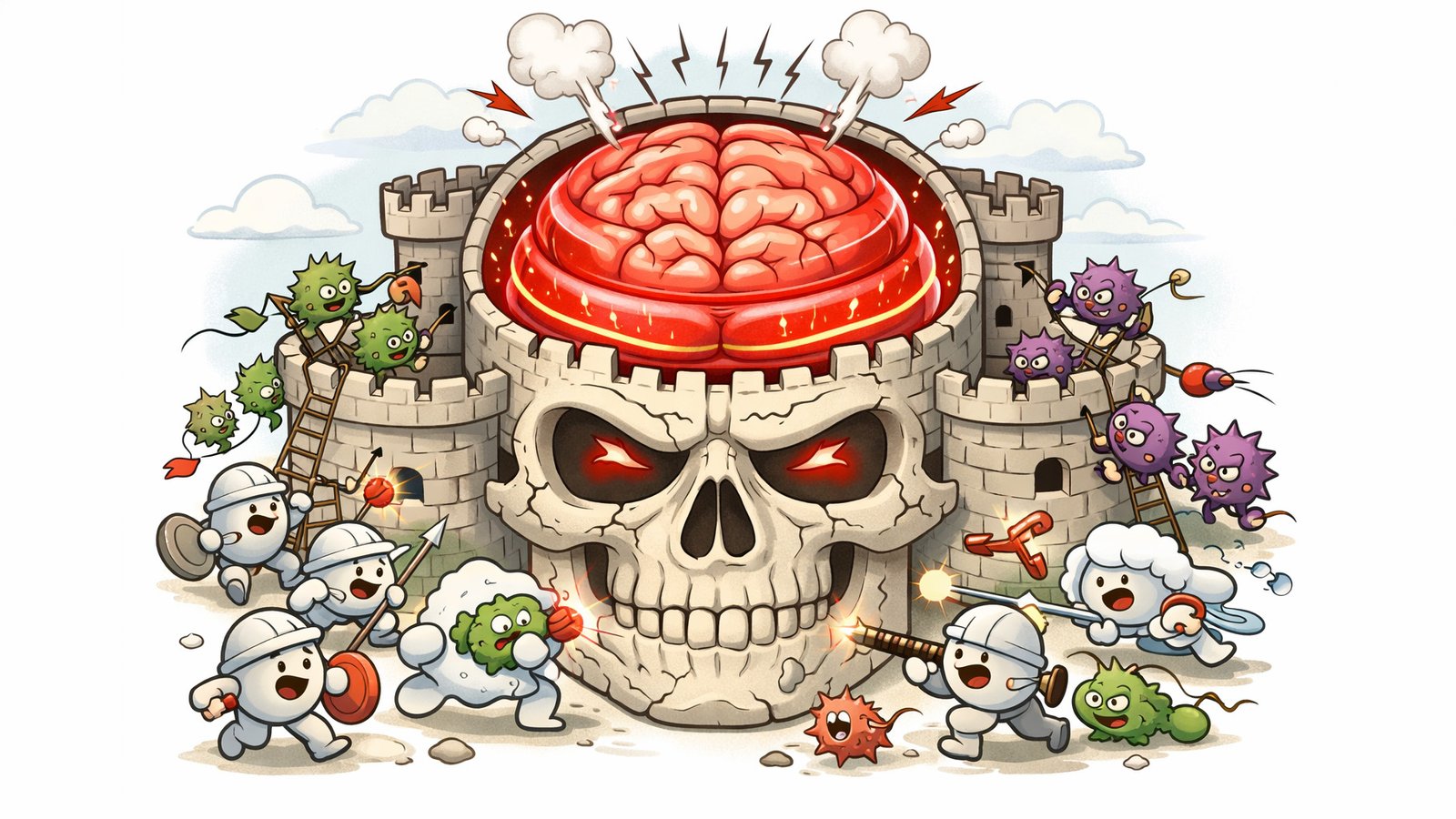
The word meningitis sounds oddly tidy for something so violent. It refers to inflammation of the meninges, the thin protective layers wrapped around the brain and spinal cord. They are supposed to cushion, shield, and quietly mind their own business. During meningitis, that quiet arrangement collapses.
First, something breaches the body’s usual defences. Sometimes it is a virus. Sometimes it is a bacterium. Less often, it is a fungus or another trigger entirely. The cause matters because the biology changes with it. Viral meningitis often stays milder. Bacterial meningitis, by contrast, can turn into a medical emergency with brutal speed.
The trouble usually begins far away from the brain. A pathogen may start in the nose, throat, bloodstream, or another site. Then it reaches the central nervous system. That is the moment the drama shifts location. The brain itself sits inside a heavily guarded environment, protected by barriers that do not welcome casual intruders. Yet some microbes get through anyway.
How do they spread in the first place? In many cases, through ordinary human contact. Respiratory droplets carry bacteria like Neisseria meningitidis or Streptococcus pneumoniae from one person to another, often through coughing, sneezing, or prolonged close contact. Viral meningitis can spread through respiratory secretions or contaminated surfaces, depending on the virus. In other words, nothing exotic is required. Everyday proximity is enough.
Once they reach the meninges or the fluid around the brain and spinal cord, the immune system reacts fast. That sounds helpful, and in one sense it is. However, the brain lives in a cramped, unforgiving space. Inflammation anywhere else can spread outward. Inflammation inside the skull has nowhere polite to go.
So the immune system unleashes chemical signals, including inflammatory cytokines, to recruit more defenders. Blood vessels become leakier. White blood cells flood into the cerebrospinal fluid. Proteins rise. Fluid balance shifts. The tissues around the brain begin to swell. Suddenly the problem is no longer just the microbe. It is the body’s own response, now thundering through a space built for precision, not chaos.
That is why meningitis feels the way it does. Headache arrives because pain-sensitive structures in and around the meninges become irritated and stretched. Fever appears because the immune system has switched the body into full alarm mode. Neck stiffness follows because inflamed meninges do not slide and move comfortably when the neck bends. Light starts to feel offensive. Sound can feel sharper than it should. Thinking may turn muddy.
Meanwhile, pressure inside the skull can start to rise. The brain is soft tissue packed into a rigid box. It cannot simply expand like an ankle after a sprain. As swelling grows, blood flow may suffer. Areas of the brain may receive less oxygen and less glucose at the very moment they need more. Then neurons begin to malfunction.
That is when symptoms can become frighteningly dramatic. Confusion may replace a simple headache. Drowsiness may deepen into reduced consciousness. Seizures can erupt if irritated brain tissue starts firing abnormally. In severe cases, the pressure becomes dangerous enough to threaten brain herniation, a catastrophic shift of brain tissue caused by swelling and high intracranial pressure.
Bacterial meningitis adds another layer of damage. Certain bacteria do not just trigger inflammation. They can also damage blood vessels, disrupt the blood-brain barrier, and intensify clotting or bleeding problems. As a result, some patients develop strokes, areas of tissue injury, or widespread sepsis alongside the meningeal inflammation. It is a horribly efficient way for one infection to start several disasters at once.
The cerebrospinal fluid tells this story in biochemical form. In bacterial meningitis, the fluid often shows high white cell counts, high protein, and low glucose. That low glucose matters because bacteria consume it, and inflamed barriers transport it less effectively. Viral meningitis usually produces a different pattern. The fluid is still inflamed, but the overall picture often looks less destructive.
There are several major types of meningitis, and they behave quite differently. Viral meningitis is the most common and often resolves without severe complications. Bacterial meningitis is less common but far more dangerous. Fungal meningitis tends to affect people with weakened immune systems. There are also rare non-infectious forms caused by medications, cancers, or autoimmune conditions. One name, several biological realities.
The scale of the disease globally adds another layer to the story. Each year, meningitis affects roughly 2.5 million people worldwide. Around 240,000 of those cases are bacterial, the form most likely to kill or leave lasting damage. Even with modern treatment, bacterial meningitis can have a fatality rate of 10–15% in high-income settings. In some lower-resource settings, mortality can rise to 30% or higher. In other words, this is not a rare medical curiosity. It is a persistent global threat.
Children and babies do not always read from the same script. Adults may complain about headache and stiff neck. Infants, however, can become floppy, irritable, difficult to wake, or feed poorly. Sometimes the soft spot on the head bulges. So the classic image of someone clutching their temples in a dark room is only part of the story. The disease can arrive wearing different masks.
People often fixate on the rash, especially in meningococcal disease. Fair enough, because it can be a serious sign. Yet the rash is not guaranteed, and it may appear late. That makes it a dangerous thing to wait for. Meningitis is one of those conditions that punishes optimism.
What about the brain after the acute phase? Unfortunately, surviving the infection is not always the end of the plot. In some people, the inflammatory assault leaves lasting effects. Hearing loss is one of the best-known complications, especially after bacterial meningitis. Up to one in five survivors may experience some form of long-term disability, ranging from hearing impairment to cognitive or neurological deficits. The inner ear sits close to the infected spaces, and inflammation can damage delicate structures there.
This is where meningitis becomes more than a short, sharp illness. It can alter development in children. It can reshape work, school, and relationships in adults. It can leave someone alive yet dealing with a nervous system that no longer behaves quite like the old one. That part rarely fits on a public health poster, but it belongs in the picture.
There is also a common misunderstanding worth retiring. Meningitis is not just “brain flu” with better branding. Flu can make you miserable. Meningitis can destabilise consciousness, circulation, hearing, memory, and motor function in a matter of hours. Equally, not every case is a guaranteed catastrophe. Viral meningitis often resolves without the same level of devastation. The name covers a category, not a single uniform experience.
Another misconception is that meningitis always means the brain itself is infected. Not necessarily. Strictly speaking, meningitis is inflammation of the protective membranes and surrounding fluid. Encephalitis is inflammation of the brain tissue itself. In real life, though, the boundary can blur. Some patients develop meningoencephalitis, where both the coverings and the brain become involved. That is about as welcome as it sounds.
Treatment depends on speed and cause. With suspected bacterial meningitis, doctors do not sit around waiting for the universe to reveal its mysteries. They move quickly with antibiotics and supportive care because delay increases the risk of death and long-term injury. Viral meningitis may need supportive treatment rather than antibiotics, though severe cases can still require hospital care. Either way, timing matters far more than internet bravado.
Prevention, meanwhile, remains one of the least glamorous and most effective parts of the story. Vaccines have dramatically reduced several major bacterial causes, including those linked to Haemophilus influenzae type b (Hib), pneumococcus, and meningococcus. In countries with strong vaccination programmes, incidence has dropped sharply for these strains. Preventive measures also include good hygiene, avoiding close contact with infected individuals, and, in some cases, prophylactic antibiotics for close contacts of meningococcal cases.
Globally, meningitis still remains a major health challenge, especially bacterial meningitis. That matters because the disease is not merely a private medical event. It is also a public health issue shaped by vaccination, rapid diagnosis, access to care, and outbreak control. In other words, what happens inside one inflamed skull often reflects what is happening outside it too.
So what actually happens during meningitis? A microbe or another trigger reaches a set of tissues that protect the central nervous system. The immune system responds with force. Barriers leak. Cells rush in. Fluid chemistry changes. Swelling rises. Pressure builds. Brain function starts to wobble, then sometimes fails in dramatic ways. The tragedy is not just the invader. It is the chaos produced when protection turns into inflammation in the worst possible place.
The meninges were designed to guard the brain, not to become the battleground. Yet during meningitis, that is exactly what they become. And once the fight starts, the brain pays for every inch of it.
Post Comment
You must be logged in to post a comment.