Maria Callas: The Diva Who Sang Like Her Life Was on the Line
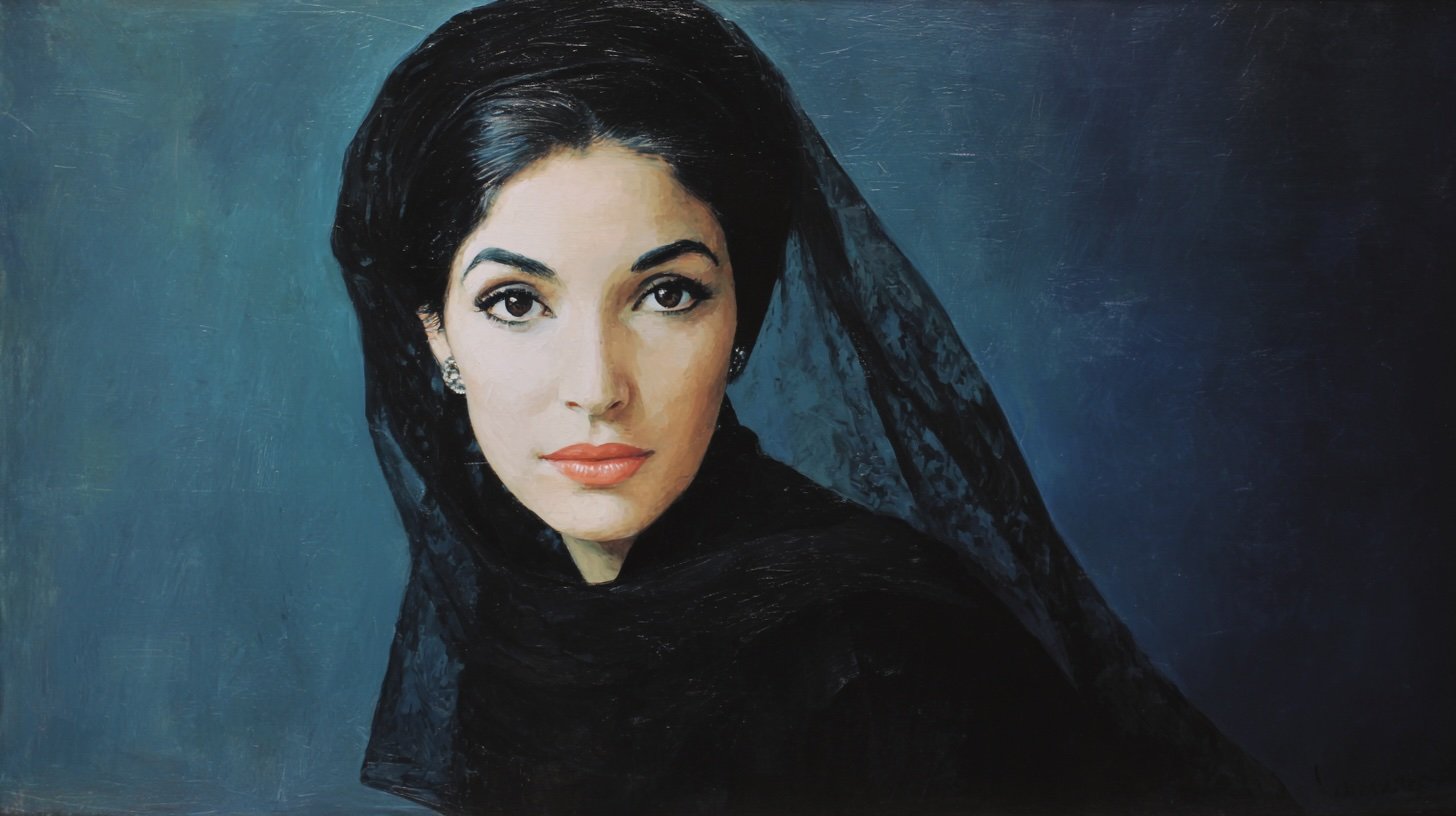
Maria Callas liked to say she had two people inside her: Maria, who wanted love, and Callas, who wanted glory. Hardly surprising that the arrangement didn’t last peacefully. The world rarely accommodates one intense personality, let alone two living in the same soprano. Yet there she was, a girl from a New York pharmacy family who somehow grew into the most formidable force opera had ever seen. People often imagine divas as tempestuous creatures flinging champagne flutes and demanding rooms full of orchids. Callas didn’t need theatrics like that. She simply walked into a rehearsal room and the collective pulse tightened. Other singers called her magnetic. Conductors called her terrifying. Audiences called her divine. The woman herself? She just wanted to be taken seriously.
Her story starts in Manhattan in 1923 with the name Kalogeropoulou, which didn’t exactly roll off the tongue in the American entertainment market. Her father shortened it to Callas. Her mother pushed her into music before she’d fully grasped what childhood was for. While other children climbed trees, she spent her days at a piano or standing in front of mirrors practising posture. She later remembered the whole thing with a sort of bruised clarity, the way adults look back on childhood jobs they never applied for. Singing was both a gift and an obligation, and Greek mothers never confused the two.
When her parents separated, she moved with her mother and sister back to Athens. She arrived overweight, shy, and irritated by a world that expected her to be impressive. Athens during the 1930s wasn’t the most encouraging environment for a teenage girl with a booming mezzo-ish voice and a tendency to argue, but she pushed through. The Athens Conservatoire rejected her for not knowing solfège. The National Conservatoire accepted her and introduced her to the formidable Elvira de Hidalgo, a Spanish coloratura who understood talent when she heard it and discipline when she didn’t. De Hidalgo shaped her the way a sculptor shapes marble, with ruthless affection. Callas later credited her with giving her not just a technique but a spine.
War arrived. Occupation followed. She sang through it all. People often forget that part. While the city endured food shortages and fear, she stood on stages performing whatever the moment demanded. Opera houses weren’t glamorous refuges; they were human ones. Audiences clung to anything that lifted the air above their heads. Callas may have been only in her late teens, but she already had that strange electricity that makes a performer more than a performer. Even when she sang small parts, people noticed.
Her voice in those years was enormous. The kind critics call volcanic because they’ve run out of geological metaphors. She could cut through Wagner before she knew what bel canto refinement was supposed to sound like. Powerful, dramatic, unstoppable—like an early prototype of the artist she’d later become, before polish softened the edges.
When the war ended, she returned briefly to America before heading to Italy, the country that would become her artistic homeland. Italy in the late 1940s was in that brilliant mood where culture becomes a national sport. Anyone with a decent pair of lungs dreamed of La Scala. Callas showed up with not just lungs but a brain tuned to musical architecture. Even before she hit the stage, impresarios sensed she wasn’t simply another soprano trying to pinch a role from established names. She was something rarer: a singer who could act with the voice alone.
Her breakthrough came in Venice, then Verona, then everywhere. By 1951 she made her official debut at La Scala. The Italians, famous for changing loyalties depending on espresso strength and football scores, suddenly became unwavering devotees. She was terrifyingly good. She ripped into Verdi with the confidence of someone who had no idea she might fail. She navigated Bellini’s long, delicate lines with a control that made conductors grip their batons tighter. In Norma she didn’t perform the priestess; she became her. Directors said she sang with her face, her eyes, her shoulders. Even her silences held shape.
Her voice split opinion even among those who adored her. The lower register sounded rich and dark, almost chest-heavy. The middle had that curious reedy quality critics likened to woodwinds. The top? When it worked, it set theatres alight. When it didn’t, it sent them into nervous collapse. But even the flaws became part of the fascination. Perfection is pleasant; danger is unforgettable. Callas always felt like she was singing on the edge of something dramatic, as if emotion and technique were locked in a duel and the outcome changed night to night.
She understood theatre. She knew how to hold an audience with a tiny shift of expression. The way she bent a vowel could suggest heartbreak or cruelty. The way she lifted a hand could turn a character’s entire psychology. Sceptics claimed she manufactured drama. Admirers insisted she excavated it. Either way, she kept opera alive in a century increasingly distracted by film, television, and anything requiring less concentration than a three‑hour tragedy sung in Italian.
Her personal life, of course, fed the legend. Opera fans adore drama both on and off the stage, and Callas obliged unintentionally. There was the marriage to Giovanni Battista Meneghini, who became her manager and champion before fading into the footnotes. There was the myth‑laden affair with Aristotle Onassis, the shipping magnate who collected powerful women the way some people collect antique coins. Stories vary wildly depending on who tells them. Some say she abandoned her career for him. Others say she simply wanted someone to see Maria, not Callas. Whatever the truth, the relationship shaped her public narrative almost as much as her roles did.
People sometimes ask why her voice declined. Experts offer theories. Some blame the weight loss—she shed nearly 40 kilos in the early 1950s, transforming her appearance and possibly her physical support. Others fault the heavy repertoire she tackled too early. Some point to stress, hormones, illness. The truth probably lies in the unromantic combination of all these. Voices age differently, especially voices used like Formula 1 engines. Hers burned brilliantly. It didn’t burn long.
By the early 1960s her performances grew unpredictable. She could still be extraordinary on the right night, but the margin for risk widened. The press sharpened its knives. Opera houses hesitated. She stepped back, returned, stepped back again. Eventually she turned to teaching and the occasional concert tour, though nothing matched the operatic triumphs of her prime.
Yet her influence didn’t dim. Callas shifted how the world understood opera. Before her, audiences admired beautiful singing. After her, they demanded emotional truth. She reintroduced forgotten bel canto works into the mainstream. She showed that acting mattered as much as vocal fireworks. She used technique as a tool for storytelling rather than as a shiny object to display.
Her recordings—both the polished studio versions and the occasionally chaotic live ones—still stir debate. Some people adore the early, massive voice and lament the later years. Others prefer the leaner, sharper interpretations that emerged after her transformation. Almost everyone agrees that no one else has combined intellect, instinct, and electricity with quite the same chemistry.
For all the drama surrounding her, she remained surprisingly reflective. She worried, constantly, about being understood. She feared being judged only as the diva and not as the artist. She had a way of sounding both proud and wounded when she spoke about her career, as if she’d paid a price for greatness she never fully budgeted for.
She died in Paris in 1977, young at 53. The official cause was a heart attack, though rumours swirled as they always do. Her ashes were scattered in the Aegean, returning her to the landscape that shaped her earliest musical instincts.
Her legacy keeps unfolding. Young singers still analyse her phrasing. Directors still study her gestures. Writers still try to decode the mystery of how one woman could be so fierce in art and so fragile in life. Films, exhibitions, and biographies continue to revisit her. Her image—slim, elegant, eyes blazing with concentration—remains one of the most recognisable in classical music.
What makes her irresistible isn’t perfection but contradiction. She was a diva who disliked being difficult. A star who longed for ordinary affection. A musician who seemed to wage war with her own instrument. A legend whose career peak lasted barely a decade, yet still overshadows careers three times as long. Opera houses have produced technically flawless singers before and after her, but few who could make an audience forget they were hearing notes rather than emotions. She could make a simple phrase feel like a confession. She could make tragedy feel personal even in vast theatres.
People often say Callas brought characters to life. In truth, she magnified life inside characters. That’s why she still matters. She showed what happens when someone refuses to separate art from self, even when the cost is high.
So the woman born Maria Kalogeropoulou grew into Maria Callas, then into simply Callas, the single name that still carries an empire of associations: genius, vulnerability, ruthlessness, elegance, discipline, obsession, transformation. And perhaps that is the most fitting tribute. The world remembers her not because she sang beautifully—many have sung beautifully—but because she made beauty feel urgent, dangerous, and human. She sang as if everything depended on it, because for her, it did.