Lindy Hop: The Dance That Outran the Great Depression
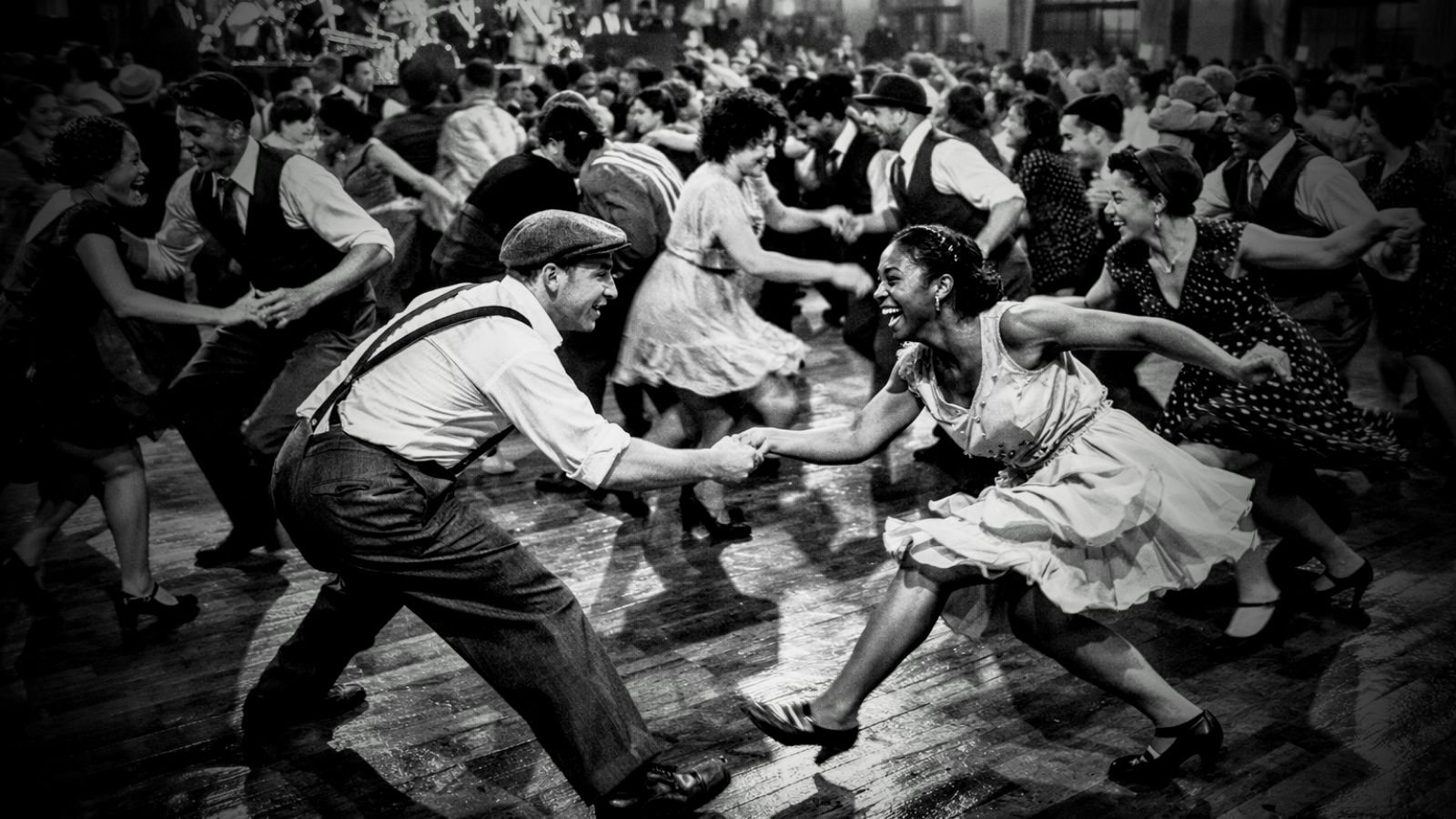
Lindy Hop did not appear politely, and it did not wait for permission. Instead, it burst onto crowded dance floors in Harlem in the late 1920s, fuelled by fast jazz, competitive bodies, and a city already running at an unforgiving pace. People often describe it as a cheerful footnote to a grim decade. However, that framing misses the point. Lindy Hop was not a distraction from collapse. Rather, it was a way of moving through it.
At the time, Harlem felt loud, compressed, and restless. The neighbourhood sat at the centre of Black American cultural life, shaped by migration from the South, overcrowded housing, and an economy that rarely worked in anyone’s favour. Music spilled out of rent parties, bars, and ballrooms. Jazz bands played faster, not because audiences requested it, but because dancers demanded momentum. Slow music felt like standing still, and standing still carried its own risks.
Lindy Hop grew out of earlier dances that already valued improvisation. The Charleston, the breakaway, the Texas Tommy, and tap rhythms all folded into its footwork. Yet Lindy Hop refused to freeze into a formula. Partners separated and reconnected. Steps stretched and snapped back. As a result, the dance assumed uncertainty and treated it as normal. That alone made it well suited to a decade defined by instability.
The name arrived wrapped in legend. One popular story credits a dancer nicknamed Shorty George Snowden with joking about Charles Lindbergh’s transatlantic flight in 1927, announcing that he was doing “the Lindy Hop”. Whether the line landed exactly that way matters less than why it stuck. At the time, the public worshipped speed, machines, and daring bodies. A dance named after flight sounded modern, risky, and defiant. Unsurprisingly, newspapers embraced it, and dancers adopted it without apology.
The Savoy Ballroom gave Lindy Hop room to breathe and compete. It was enormous, integrated, and unforgiving. Dancers did not go there to look neat. Instead, they went to be seen, tested, and occasionally humbled. Multiple bands rotated through the night, pushing tempos higher as crowds thickened. When a step worked, others copied it within hours. When it failed, the floor corrected you immediately.
Competition mattered more than instruction. There were no manuals and few formal teachers. People learned by watching better dancers, stealing ideas, and trying them under pressure. Consequently, Lindy Hop evolved rapidly. Moves that thrilled one week bored the crowd the next. Innovation became social currency, and stamina turned into credibility.
Then the economy collapsed. The stock market crash of 1929 did not invent hardship, but it stripped away any remaining illusions. Jobs vanished. Wages fell. Futures narrowed. Leisure usually retreats in moments like that, becoming quieter, cheaper, and smaller. Lindy Hop reacted in the opposite direction. Tempos accelerated. Floors grew more crowded. The dance became more physical, not less.
This response was not denial. Instead, it acted as a physical answer to powerlessness. Dancing hard proved that the body still obeyed you. Lifting a partner showed that strength had not disappeared with money. Flying briefly through the air offered a momentary rewrite of gravity itself. In this context, joy was not softness. It was exertion.
Aerials emerged from that environment in the early 1930s. Contrary to modern assumptions, they did not define Lindy Hop from the beginning. They developed as competitive punctuation, a way to end a phrase or dominate a contest. Dancers pushed boundaries because the floor rewarded boldness. Only later did safety catch up with experimentation.
Economically, Lindy Hop thrived because it asked for very little. You needed shoes, a partner, and enough spare change to get through the door. For people excluded from stable employment, dancing sometimes turned into paid work. Contest prizes, touring troupes, and later stage and film appearances offered irregular income. Although that income never replaced security, it mattered in a decade when any cash stream felt valuable.
At the same time, Lindy Hop resisted ownership. No single dancer controlled its direction. Styles varied by neighbourhood, by band, and even by night. That flexibility made the dance durable. When one venue closed, another picked up the rhythm. When one generation aged out, younger dancers adapted the steps without asking permission.
Hollywood noticed Lindy Hop precisely because it looked impossible. Film clips from the 1930s show bodies flung through space with apparent ease, smiles fixed in place despite the strain. On screen, Lindy Hop became spectacle rather than social language. Even so, those fragments preserved something essential. Without them, much of the dance’s early vocabulary would have vanished entirely.
The Depression-era mood often gets remembered as uniformly grey. Photographs of breadlines and shuttered shops dominate the archive. Meanwhile, ballrooms tell a parallel story. They were hot, crowded, and noisy. People sweated through shirts and laughed through exhaustion. They danced because tomorrow offered no guarantees, and speed made that uncertainty tolerable.
Lindy Hop also rearranged relationships. The dance relied on conversation rather than dominance. Partners negotiated momentum, weight, and timing in real time. Good dancing required listening, not control. In a society built on rigid hierarchies, that mattered. On the floor, responsiveness carried more value than authority.
The Second World War changed the landscape without erasing the dance. Big bands shrank. Ballrooms closed or shifted purpose. Popular taste moved on. Lindy Hop narrowed rather than disappeared. It survived in local scenes, in teaching lineages, and in muscle memory passed between dancers.
The late twentieth-century revival returned Lindy Hop to visibility rather than reinventing it. Dancers sought out surviving practitioners, studied old film clips, and rebuilt a global social scene. That revival preserved the dance, although it also softened some of its original urgency. Early Lindy Hop was faster, messier, and more competitive than many modern interpretations suggest.
Lindy Hop did not stop there. Instead, it fragmented, slowed down, sped up again, and slipped into new musical eras. Many later partner dances carry its logic even when the name itself fades from view. Jitterbug simplified Lindy Hop for mass audiences. East Coast Swing formalised it for classrooms. West Coast Swing slowed it down and stretched it into a new musical vocabulary. Balboa specialised for crowded floors and fast tempos.
Beyond the United States, Lindy Hop adapted again. European Boogie Woogie styles absorbed its bounce and improvisation. Rock and Roll dancing borrowed its aerials and turned them into spectacle. Jive and Rockabilly continued the process, prioritising recognisable patterns and competitive structure. Each version altered the surface while keeping the underlying mechanics.
Seen this way, Lindy Hop resembles less a historical artefact and more a root system. Its branches stretch into multiple styles, tempos, and cultures. What persists is not a specific step, but a philosophy: listen first, adapt quickly, share momentum, and keep moving when the wider world stalls. While systems froze, bodies kept moving. While futures narrowed, dancers expanded the present until it felt livable.