LEGO Brick Clog and the Art of Turning Absurdity into Desire
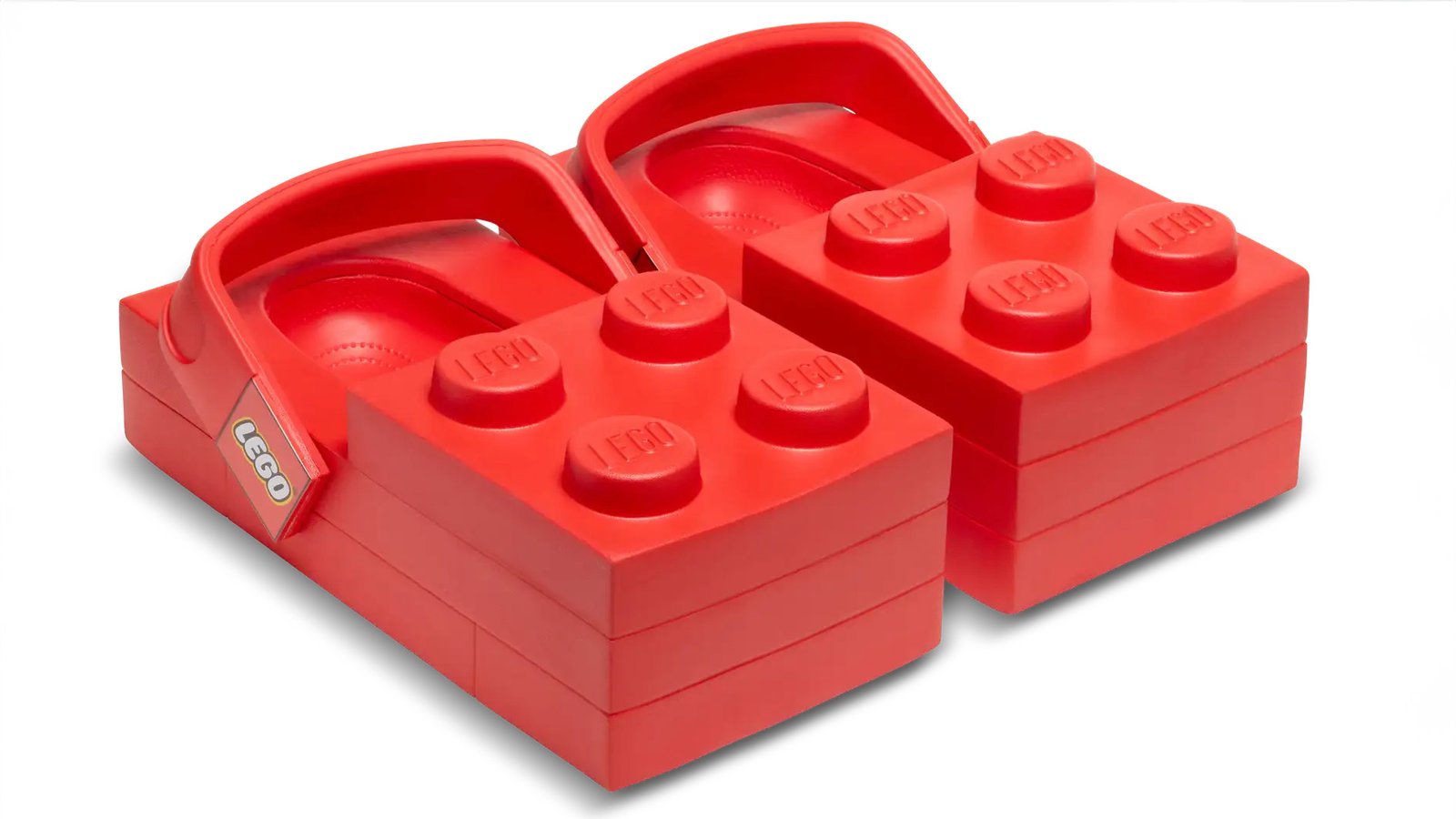
LEGO Brick Clog does not look like a shoe that quietly entered the market. Instead, it looks like something that escaped from a toy box and refused to go back. Bright, blocky, and unapologetically strange, it arrives already half‑meme and half‑marketing experiment.
From the outset, Crocs never intended this to be a normal product. Rather, it was designed to be noticed, discussed, mocked, photographed, and shared. The LEGO Brick Clog marks the opening move in a multi‑year partnership between two brands that understand something important. Adults never really stop playing. They just wait for permission.
The shape makes that message impossible to miss. Instead of smoothing LEGO references into something wearable, Crocs leaned hard into exaggeration. The clog resembles a literal LEGO brick scaled up to human proportions. Oversized studs dominate the upper. The body stays boxy and blunt. Consequently, the proportions feel slightly wrong, which is exactly why they work.
That deliberate awkwardness triggers instant reaction. Some people laugh out loud. Others recoil on sight. Many do both in quick succession. Online commentary swings between disbelief and desire, often within the same sentence. Crucially, indifference never enters the conversation, and Crocs knows that attention is the real currency here.
Pricing reinforces this intention. At around $150, and closer to £200 in parts of Europe, the LEGO Brick Clog sits far above standard Crocs territory. This is not an accidental premium. Instead, the price frames the shoe as a collectible object rather than everyday footwear. You are not buying comfort alone. You are buying participation.
That participation rests on nostalgia, although not the soft, sentimental kind. LEGO has spent years repositioning itself as a lifelong creative system rather than a children’s toy. Adult fans now form a serious global market with money, space, and emotional attachment. Meanwhile, Crocs has turned itself into a platform for self‑expression, helped by charms, collaborations, and a willingness to look ridiculous on purpose.
The LEGO Brick Clog sits precisely where those strategies overlap. It treats the foot as a display surface. It celebrates uselessness as a feature rather than a flaw. In a culture obsessed with optimisation and productivity, that refusal to be efficient feels quietly subversive.
Design details support that reading. The familiar pivoting heel strap remains, offering just enough practicality to make the shoe wearable. Meanwhile, the sole borrows LEGO‑style textures instead of athletic cues. The studs are not abstract shapes or playful hints. They are instantly recognisable LEGO elements, complete with branding, and they make no attempt to blend in.
Inside the box, the joke sharpens further. Each pair includes a LEGO minifigure equipped with four tiny clog‑shaped shoes. This detail serves no practical purpose. However, it transforms the product’s tone. It confirms that the collaboration understands itself and invites the buyer into that shared awareness.
The public debut followed the same logic. The clogs appeared at Paris Fashion Week on a performer known for visual provocation rather than restraint. This was not a bid for elegance. Instead, it functioned as a deliberate interruption of fashion’s self‑seriousness. Predictably, images spread fast, commentary followed, and memes did the rest.
From a business angle, LEGO Brick Clog fits neatly into Crocs’ recent trajectory. After explosive pandemic‑era growth, the brand faced the challenge of staying culturally relevant without exhausting its core models. As a result, collaborations became its primary visibility engine. Some releases aim for wearability. Others exist almost entirely for conversation. This one belongs firmly in the latter category.
LEGO’s motivation mirrors that approach. The brand has long experimented with lifestyle extensions that preserve its core identity. Clothing, homeware, games, and experiences all carry the same creative promise. Footwear represented a logical yet risky step. By partnering closely rather than licensing loosely, LEGO retains narrative control, and the Brick Clog feels intentional rather than diluted.
Criticism arrived quickly and predictably. The shoe is heavy. It looks awkward. It will not replace anyone’s daily trainers. Yet these objections miss the product’s purpose. LEGO Brick Clog is not competing with functional footwear. Instead, it competes with boredom.
That distinction matters more than it seems. Many contemporary fashion successes operate between object and content. They exist physically, yet they circulate digitally. Photos matter as much as comfort. Reaction matters more than reviews. LEGO Brick Clog thrives in this space because it communicates instantly. No explanation required.
At the same time, the shoe reflects a broader cultural shift. Adults increasingly seek permission to engage with play openly. Board games return to living rooms. Colour pushes out beige interiors. Collecting toys stops being ironic. Within that context, the LEGO Brick Clog feels less absurd and more honest.
Notably, the collaboration avoids over‑engineering. There are no smart features. Sustainability messaging stays understated. Performance claims never appear. Instead, recognisability and narrative do the heavy lifting. That restraint keeps the concept from collapsing under its own weight.
Future releases are already hinted at. Smaller accessories, themed charms, and child‑friendly versions are expected. Those will likely translate the idea into more wearable forms. Nevertheless, the Brick Clog will remain the reference point. It sets the tone, making everything else feel restrained by comparison.
Collectors have taken note. Some pairs are already destined for display shelves rather than pavements. This behaviour mirrors LEGO’s own transformation from toy to artefact. Ownership becomes symbolic rather than practical.
From the outside, the collaboration can look indulgent. A shoe shaped like a toy at a premium price challenges conventional logic. Yet collectibility has never obeyed practicality. What matters is whether the object captures imagination. On that front, LEGO Brick Clog succeeds effortlessly.
There is also something refreshing in its lack of compromise. It does not slim the silhouette. It does not flatter the foot. And it does not pretend to be elegant. As a result, it avoids comparison entirely. Critique loses traction when refinement was never promised.
For cultural observers, the real significance lies here. LEGO Brick Clog demonstrates how physical products increasingly operate as media. They anchor conversations, generate images, and circulate ideas about identity, nostalgia, and taste. Function becomes secondary to meaning.
Whether the Brick Clog becomes a resale phenomenon or a short‑lived curiosity matters less than what it represents. It shows how mainstream brands now manufacture moments rather than merely products. It also shows how eagerly audiences respond when invited to stop taking themselves seriously.
Some buyers will wear them proudly. Others will photograph them once and retire them to a shelf. Many will never touch them at all yet still recognise them instantly. That spectrum of engagement is not accidental. It is the strategy.
LEGO Brick Clog will not change how people dress every day. Instead, it quietly changes the rules of justification. It proves that being memorable can matter more than being useful. In a world full of competent, forgettable objects, that may be the boldest move available.
Image: © The LEGO Group