Lamassu: The Ancient Guardians With Five Legs
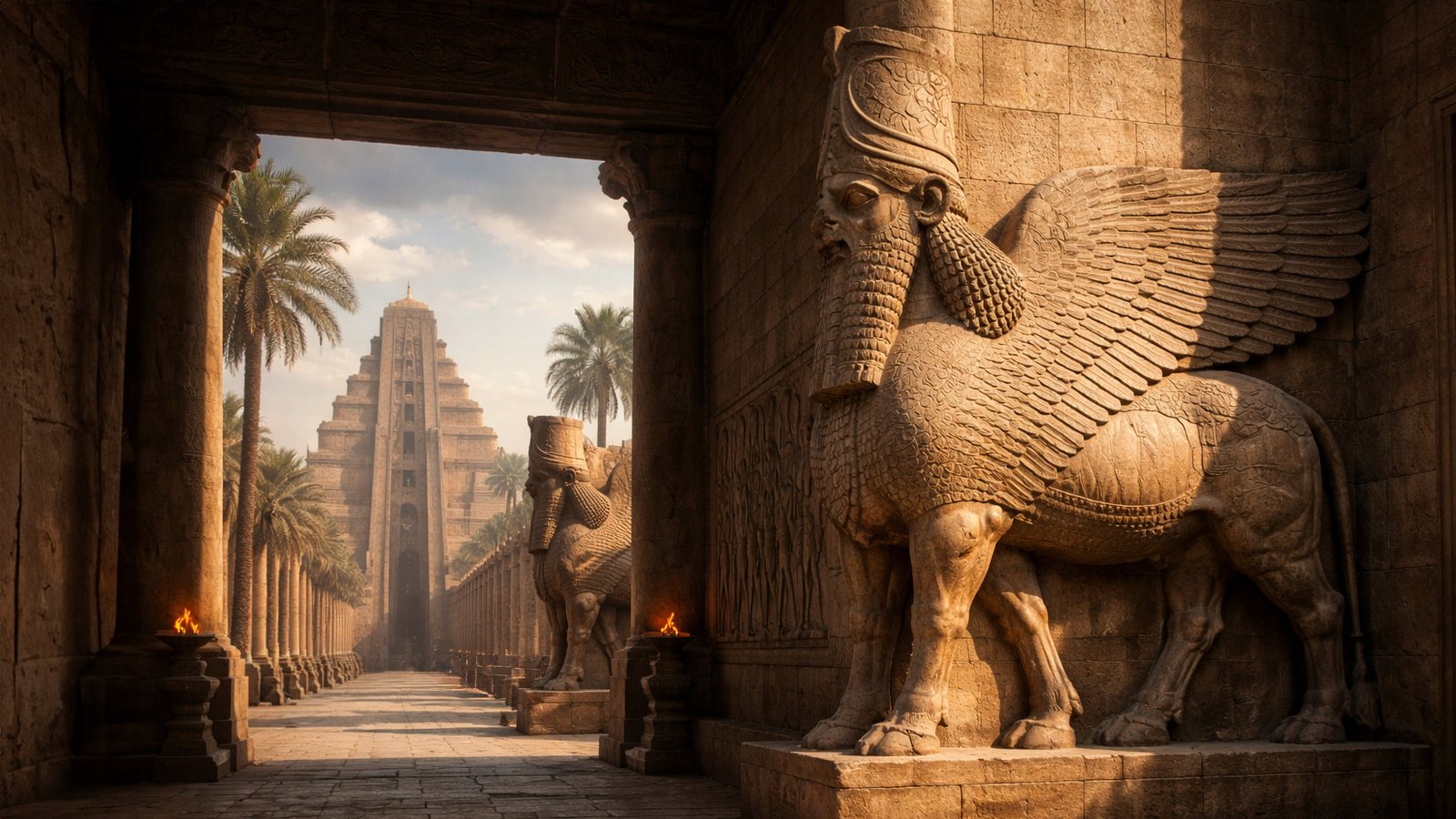
Stand face-to-face with a lamassu, and you’ll understand why ancient Mesopotamians believed these creatures could ward off evil. Towering four metres tall, carved from a single block of alabaster, they combine the body of a bull, wings of an eagle, and the bearded head of a man wearing a horned crown. These hybrid guardians have been watching over palace gates since 3000 BCE. Remarkably, they’re still making headlines today.
In September 2025, archaeologists working in Mosul, Iraq, announced something extraordinary. They’d unearthed the largest lamassu ever found – a colossal six-metre winged bull from King Esarhaddon’s throne room in ancient Nineveh. This discovery dwarfs even the celebrated examples residing in the British Museum and the Louvre, which stand between 3.5 and 4.2 metres tall. Moreover, the team found fifteen additional lamassu statues just weeks later at the same site. After decades of conflict and destruction, these gentle giants are reminding us why they’ve captivated imaginations for nearly three millennia.
The word “lamassu” translates from Akkadian as “protective spirits,” which perfectly captures their purpose. Ancient Assyrians placed them at the entrances to cities, palaces, throne rooms, and temples – anywhere that needed divine protection. They weren’t just decorative; furthermore, these sculptures actually held up the barrel vaults of doorways, serving both architectural and spiritual functions. Imagine approaching the gates of seventh-century Nineveh and seeing pairs of these magnificent beasts flanking every entrance, their eyes gazing past you into realms beyond human understanding.
What makes these sculptures particularly clever is their construction. Many lamassu have five legs, not four. This isn’t a mistake – it’s ancient artistic genius at work. When you approach a lamassu head-on, you see two front legs planted firmly on the ground. Consequently, the creature appears motionless, standing guard with unwavering vigilance. However, walk past it and glance at the profile, and suddenly you see four legs in a striding position. The beast seems to be moving alongside you, keeping pace as you enter the sacred space it protects.
Ancient sculptors created this optical illusion for two practical reasons. First, carving away the stone to show all four legs from the front would weaken the archway the lamassu was supporting. Keeping the extra stone maintained structural integrity. Second, the sculptors wanted the guardians to appear formidable from every angle. Standing still from the front conveyed strength and stability. Meanwhile, walking from the side suggested supernatural power and vigilance. Consequently, visitors experienced both impressions, depending on their perspective.
Each body part contains embedded symbolism that tells a complete story. Bull bodies represent immense physical strength, capable of intimidating evil spirits and protecting the innocent. Eagle wings symbolise swiftness and power. These guardians could theoretically take flight and respond to threats anywhere. Meanwhile, the human head, typically crowned and bearded, signifies wisdom and intelligence. Some lamassu wear elaborate jewellery in their ears, reinforcing their divine status. Together, these elements created the perfect supernatural bodyguard: strong, fast, and wise.
Archaeological evidence shows that lamassu weren’t limited to monumental sculptures. Ordinary Mesopotamian families believed in their protective powers too. People would engrave lamassu images on clay tablets and bury them beneath their doorways, hoping to shield their homes from malevolent forces. In fact, the creatures appeared in household religion from Sumerian times through the Babylonian era.
Fascinatingly, the lamassu’s journey through history reveals remarkable transformations. During the reign of Tiglath-Pileser I around 967 BCE, the first distinct lamassu motif appeared. Early versions featured lion bodies, but King Sargon II later popularised the bull-bodied variety we recognise today. Interestingly, Sargon’s lamassu are smiling – an unusual detail that adds benevolence to their imposing presence. When Sargon founded his capital, Dur Sharrukin, in 713 BCE, he placed protective genies at each of the city’s seven gates.
Ancient texts describe lamassu as representations of the zodiac, parent-stars, and constellations. This connection to celestial bodies adds another layer of meaning. In the Epic of Gilgamesh, they appear as physical deities embodying divine higher principles associated with specific celestial origins. This cosmic dimension elevated them beyond mere gatekeepers to beings that encompassed all life within them.
Sadly, the 21st century brought devastating losses to Iraq’s lamassu heritage. In February 2015, ISIS released a horrifying video showing militants destroying ancient artefacts in the Mosul Museum, including a granite lamassu from the Nergal Gate. They used jackhammers and sledgehammers to deface these irreplaceable sculptures. Additionally, ISIS bulldozed Nimrud in March 2015, demolishing 90% of the excavated zone.
Nevertheless, there’s a silver lining to this tragedy. Many of Iraq’s most valuable pieces had been relocated to Baghdad before ISIS’s occupation. Additionally, the destruction drew global attention to these magnificent guardians. Italy donated a 3D-printed replica of the destroyed “Bull of Nimrud” to Iraq in 2024, placing it at the Basrah Museum. Artist Michael Rakowitz created a lamassu reconstruction from date-syrup cans. It stood in London’s Trafalgar Square from 2018 to 2020, symbolising the resilience of Iraqi culture.
Today, you can encounter surviving lamassu in museums worldwide. Specifically, the British Museum houses six of them. Pairs from Dur-Sharrukin and Nimrud stand guard there. Similarly, the Louvre features magnificent examples from Sargon II’s palace in their own dedicated room. New York’s Metropolitan Museum of Art, Chicago’s Oriental Institute, and Baghdad’s National Museum of Iraq all display these ancient guardians. Seeing them in person is breathtaking. Photographs simply can’t convey their massive scale or the intricate details of their carved feathers, beards, and muscular legs.
The craftsmanship astounds even modern sculptors. Stone curls cascade down the lamassu’s chin in perfectly symmetrical waves, carved hair by hair. Veins, muscles, and bones are visible in their legs. They were hewn from single blocks of stone weighing up to 40 tons. Ancient artisans even created reliefs showing the process of moving these colossal sculptures into position. This monumental undertaking required hundreds of workers and sophisticated engineering.
Between the hind legs of many lamassu, you’ll find cuneiform inscriptions called “standard inscriptions.” These texts list the commissioning king’s victories and virtues. They describe his piety and detail how the gods have favoured him. They also contain curses threatening anyone who would harm the palace. Consequently, these inscriptions transform the sculptures into three-dimensional documents, combining visual and written propaganda to reinforce royal authority.
Recent discoveries in Mosul demonstrate that our understanding of lamassu is still evolving. German archaeologists from Heidelberg University, working alongside Iraq’s State Board of Antiquities and Heritage, have been excavating tunnels that ISIS militants dug beneath Tell Nabi Yunus whilst looting antiquities. Ironically, these destructive tunnels have now provided access to areas previously impossible to excavate. They’ve revealed chambers that hadn’t seen daylight in over 2,600 years.
Esarhaddon’s six-metre lamassu from the throne room challenges previous assumptions about Assyrian monumental art. Was this extraordinary size unique to Esarhaddon, demonstrating his power after conquering Egypt and rebuilding Babylon? Or does it represent a lost tradition of colossal sculpture that we’re only now beginning to uncover? Notably, the fifteen additional lamassu found nearby show diverse construction techniques. Some were carved from single monoliths, others assembled from multiple blocks. This suggests evolving artistic methods.
Modern culture continues to embrace lamassu imagery. They appear in C.S. Lewis’s The Chronicles of Narnia, Disney’s Aladdin, and numerous video games. Indeed, the symbol featured on the insignia of both British and American forces deployed in Iraq. Iraqi banknotes display lamassu motifs. Modern Assyrian people use them to honour their ancient heritage, keeping these protective spirits alive in contemporary contexts.
Standing before a lamassu today connects us directly to people who lived 2,700 years ago. Whether in a museum or at an archaeological site, the experience is profound. These weren’t primitive sculptors working with crude tools. Rather, they were sophisticated artists who understood perspective, symbolism, and the psychological impact of monumental art. They created beings that still command our attention, still inspire awe, and still seem capable of protecting the gates they guard.
Ongoing excavations in Mosul offer hope for the future. Iraqi archaeologists are documenting discoveries. They’re training new generations of heritage professionals. Furthermore, they’re planning to transform the Nabi Yunus site into a museum complex. This would integrate both the Assyrian remains and the Islamic cultural heritage of the Prophet Jonah Mosque. Eventually, it will create a space where multiple layers of history can coexist and be celebrated.
Perhaps most remarkably, the lamassu’s purpose hasn’t changed. Nearly three millennia after their creation, they’re still protecting. However, they now guard cultural memory itself rather than just physical gates. Each discovery reinforces our connection to ancient Mesopotamia, the “cradle of civilisation” where writing, cities, and complex societies first flourished. Every restored fragment, every documented inscription, every photograph shared online helps ensure that these magnificent guardians continue their eternal watch.
The smiling bulls of Sargon, the colossal guardians of Esarhaddon, the winged lions of Ashurnasirpal – they’re all still standing. They’re still protecting, still inspiring wonder. That’s rather extraordinary when you think about it.