Lake Annecy and the Town That Knows How to Slow You Down
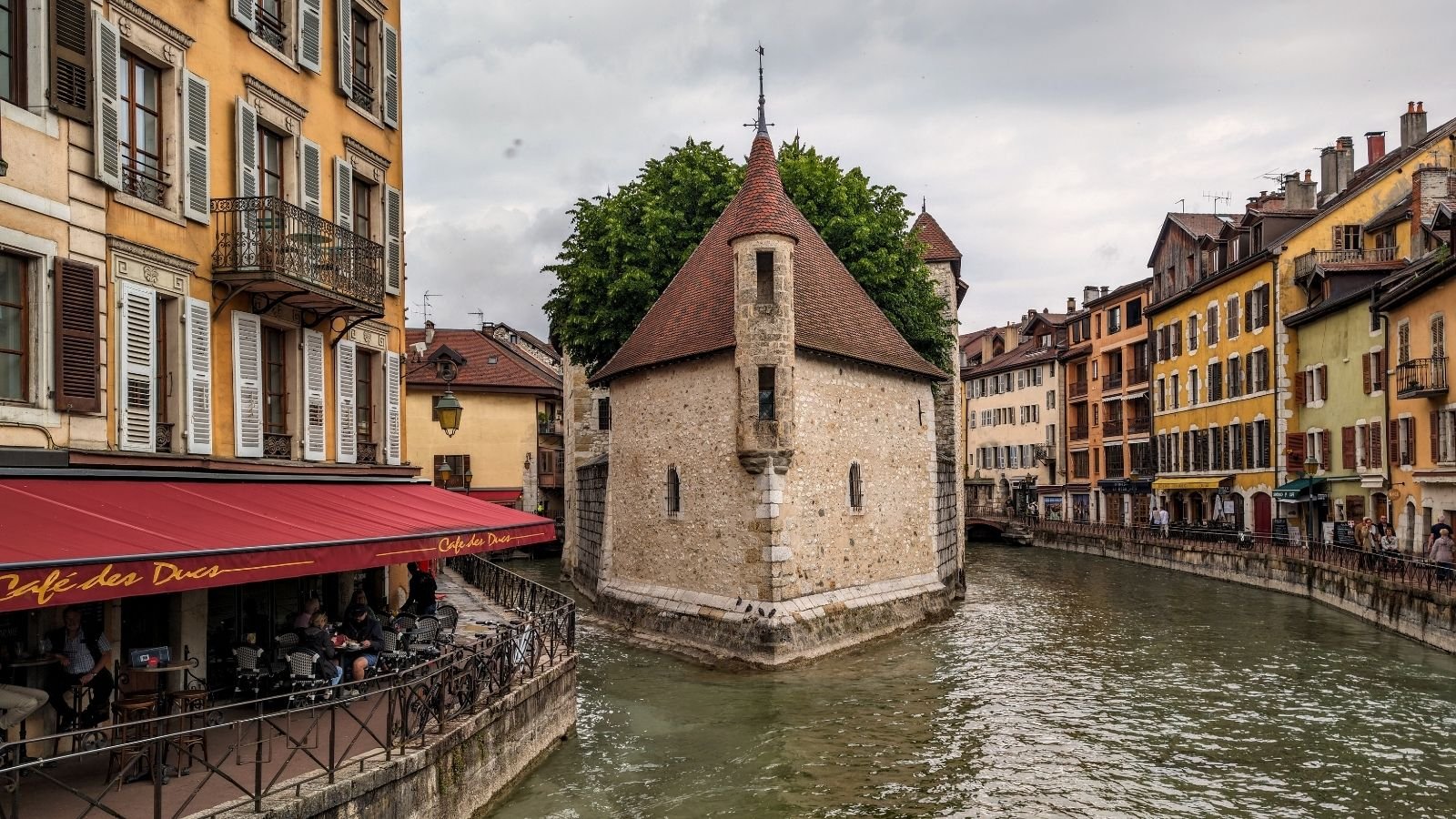
Annecy has a habit of stealing people’s hearts before they even find a place to sit down. The combination of a mountain lake so clear it feels unreal, a medieval old town threaded with canals, and the soft clatter of café cups creates an atmosphere that makes visitors believe they’ve accidentally wandered into a particularly well‑staged film set. The place looks immaculate, almost suspiciously so, yet it never feels artificial. The lake does its part, showing off shades of blue and green that would make the Caribbean nervous, while the Alps casually loom in the background like oversized bodyguards.
The old town, or Vieille Ville, charms with an ease that borders on arrogance. Cobbled lanes curl past pastel houses, bakeries send out whiffs of warm pastry designed to derail any sensible itinerary, and tiny bridges tiptoe over cheerful canals. The most photographed building in town, the Palais de l’Île, sits dramatically in the middle of the water like a small stone ship that forgot to sail away. It has served as a prison, courthouse and administrative building, yet today it’s content to pose for every camera that passes, which is often.
People love calling Annecy the Venice of the Alps, and while the comparison is flattering, it isn’t quite fair. Annecy doesn’t need gondoliers belting out ballads because it has something better: the quiet thrill of watching sunlight bounce off the canal water early in the morning, while shutters creak open and bakers’ vans clatter along narrow streets. The town wakes slowly, which is useful because visitors rarely manage to rush anywhere anyway. They stop constantly to gawk at flowers, water, mountains, pastries or all of the above.
The lake dominates life here, and for good reason. Lake Annecy is celebrated as one of the cleanest lakes in Europe, thanks to strict environmental rules that would make many coastal resorts blush. Locals treat the water with a level of respect usually reserved for royalty. On a warm day, swimmers drift around like lazy waterfowl, paddleboarders trace long slow lines across the surface, and families hire pedal boats shaped like giant swans because practicality is overrated when swan‑powered transport is available.
Walking or cycling around the lake offers a gentle sport in people‑watching. Lycra‑clad cyclists zoom past at speeds suggesting they might actually be training for something, while visitors wobble along rental bikes, stopping every few hundred metres because the view keeps changing and each new angle seems unfairly more beautiful than the last. Lakeside villages such as Veyrier‑du‑Lac and Sévrier tempt people into long lunches, which naturally stretch into lazy afternoons because nothing in Annecy encourages urgency.
Hikers also find their paradise here. Trails wind up to balconied viewpoints where the lake glows under you like a misplaced gemstone. The Roc de Chère nature reserve offers gentle woodland paths and surprising peeks at the water, while the climb to Mont Veyrier rewards the patient with sprawling panoramas of the entire region. Even the timid can relish mountain views thanks to well‑placed benches that seem made for pondering life while pretending to be sporty.
The villages around the lake demand attention. Talloires, with its waterside calm and discreet elegance, feels like an enclave for people who appreciate tranquillity but aren’t above ordering a second dessert. Menthon‑Saint‑Bernard shelters one of the most dramatic castles in the region, a turreted extravaganza perched on a hill and visible from the water. It looks medieval, dangerous and wonderfully theatrical, which explains why so many visitors start daydreaming about becoming minor dukes.
Back in town, the food situation remains a serious affair. Savoyard cuisine is friendly to anyone who believes cheese is a legitimate lifestyle choice. Fondue bubbles merrily in little pots, raclette oozes over potatoes with admirable determination, and tartiflette arrives at the table with the confidence of a dish that knows it will leave you full for about three days. Annecy’s restaurants balance hearty classics with contemporary plates, and cafés along the canals exist primarily to test your ability to resist yet another pastry. Resistance, it must be said, is usually futile.
Yet it’s not just cheese and scenery. Annecy has cultural credibility too. The Château d’Annecy, once a residence of the Counts of Geneva, now hosts exhibitions on regional history and Alpine art. The building’s austere stone walls contrast with the colourful jumble of roofs below, and wandering its courtyards gives a subtle sense of time slowing down. The narrow climb up is part of the experience, as is the smug feeling at the top.
The town also hosts one of the world’s leading animation festivals each June. During that week, Annecy turns into a lively parade of artists, filmmakers, students and industry veterans who spill into bars, talk excitedly about storyboards and queue for screenings. Even those with zero knowledge of animation get swept up in the buzz. It’s impossible not to feel impressed by a town that moves so effortlessly between cheese‑driven comfort and global creative energy.
Accommodation options reflect the region’s dual personality. Lakeside hotels such as the Impérial Palace and Rivage Hôtel & Spa encourage luxuriating in pools, saunas and balconies with water views. In the old town, smaller boutique hotels hide behind colourful façades, offering creaky staircases, modern comfort and front‑row seats to the canal scene. Villages around the lake offer quieter escapes, from elegant manor‑style retreats to family‑run inns where the hosts insist on feeding you far more breakfast than you asked for.
Exploring Annecy becomes a gentle ritual. Mornings begin with coffee and a slow wander through the old town. Afternoons drift toward the lake, where the water convinces even reluctant swimmers to take a dip. Evenings linger over dinner, with glowing mountains framed in restaurant windows. The rhythm isn’t complicated, yet it feels restorative in a way city life often forgets.
Those inclined toward spontaneous adventure can rent a boat and explore the lake’s hidden angles. Small beaches appear unexpectedly, ducks glide by with enviable confidence, and the breeze carries the scent of pines from nearby slopes. The boat rental staff always give instructions with great seriousness, but the moment you push away from the dock, the world softens into an easy, unhurried blue.
Even rainy days have charm. The mountains wrap themselves in clouds, the canals turn glossy and reflective, and cafés fill with people warming their hands around bowls of hot chocolate. The town becomes quieter, but in a way that invites contemplation rather than gloom. Watching raindrops create ripples on the lake becomes an oddly captivating pastime.
Annecy also makes an excellent base for regional exploring. Geneva sits just across the border, reachable in under an hour, offering international flair and museums. Nearby mountain resorts like La Clusaz or Le Grand‑Bornand let visitors dip into Alpine skiing without the full commitment of a week‑long mountain holiday. After a day of snow or city bustle, returning to Annecy feels reassuringly familiar.
The town’s enduring appeal lies in its balance. It offers enough beauty to fill a camera roll, enough history to satisfy curiosity and enough food to derail any diet. It attracts both the adventurous and the lazy, the culture‑seekers and the sunbathers. Everyone finds their pace here. Annecy never pressures its guests to do more than they please.
Travellers often try to summarise the place with neat comparisons, but Annecy quietly refuses to be boxed in. It’s not Venice, nor is it a typical Alpine resort. It’s a lakeside daydream with a practical streak, a place where mountain air sharpens the appetite and canal reflections slow the mind. Visitors leave with the peculiar sensation that life runs a little smoother there, as though the freshwater clarity of the lake seeps into the mood of the town.
Returning home, people inevitably begin plotting when they can come back. Memories of the lake surface at odd moments, like when city traffic tests your patience or the weather forgets how to behave. Annecy lingers, which might be the most persuasive sign of its magic. Once it captures you, you remain slightly enchanted, waiting for the next chance to wander its cobbles, breathe its air and let the mountains and water untangle your thoughts.