Krampusnacht: Horns, Bells and the Dark Side of December
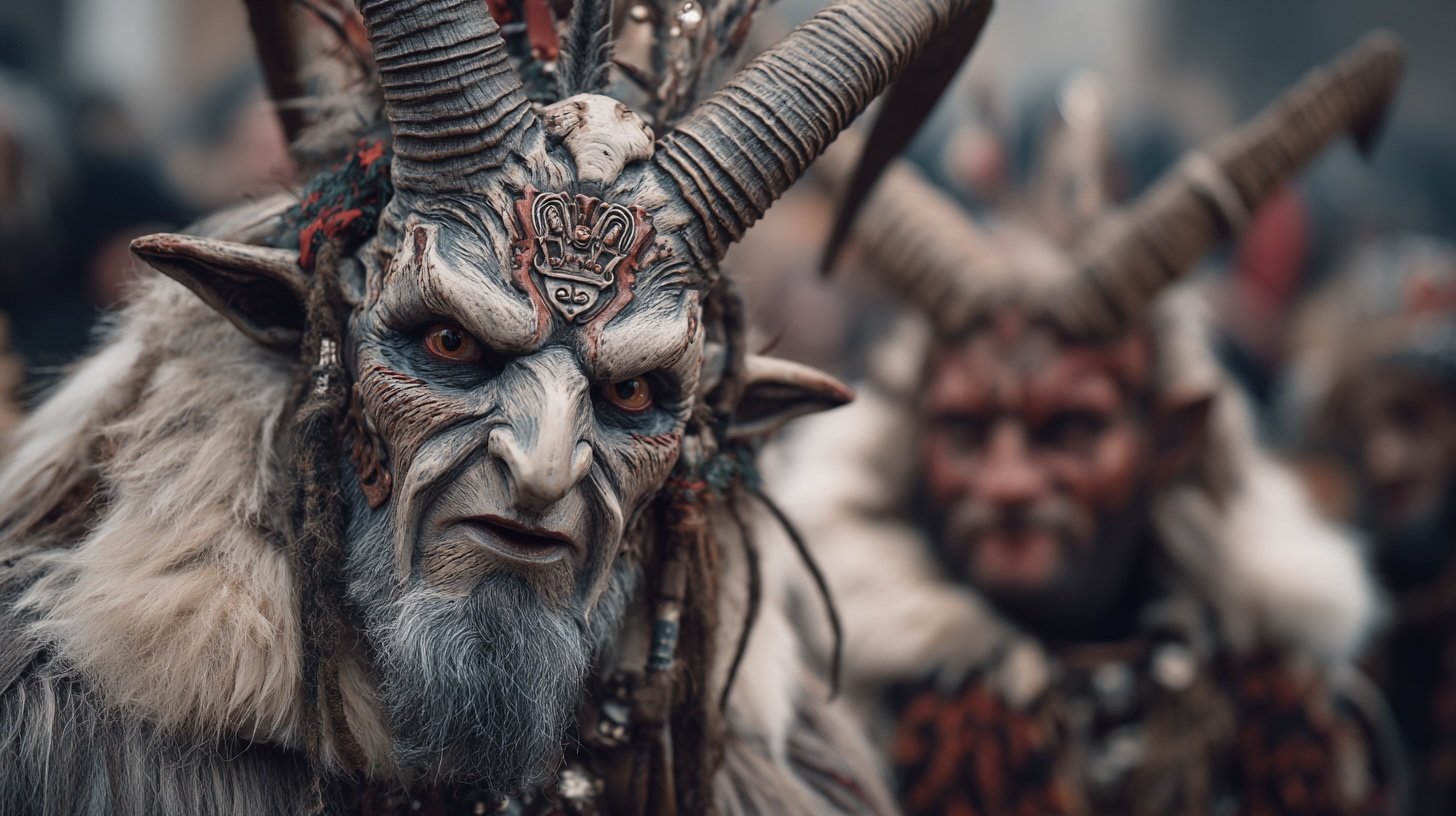
Krampusnacht creeps into the Alpine calendar with the confidence of someone who knows they’re the most dramatic guest at the Christmas party. While Saint Nicholas hands out oranges and moral guidance, Krampus stomps in with horns, hooves, and the unmistakable air of a creature who believes childhood character‑building starts with terror. Modern travellers often stumble across it with the naïve expectation of mulled wine and twinkling lights, only to find furry demons thundering through the streets. The slow blink of a cat feels reassuring after that kind of encounter.
The legend sits in a strange corner of European folklore, stitched together from scattered ideas, local fears, winter rituals and a pinch of theatrical enthusiasm. Some insist he comes from the deep pagan past, a leftover spirit from rituals that tried to bully winter into behaving. Others warn that connecting him to ancient gods requires more imagination than archaeological evidence. Whatever the origin, Krampus strolls through these debates unbothered, his bell‑covered belt swinging with the swagger of someone who has outlived multiple cultural purges.
Alpine communities have always carried a soft spot for the peculiar. Long before Instagram found him irresistible, Krampus already worked the December circuit across Austria, Bavaria, South Tyrol, Slovenia and Croatia. He joined Saint Nicholas as a contrasting double act: one politely rewarding good behaviour, the other promising consequences with birch rods, chains and a basket that hinted at kidnapping. Parents once deployed these stories with the same strategic precision as modern reward charts. The children listened, wide‑eyed, calculating whether Krampus had a flexible approach to moral accounting.
The night itself usually begins innocently. Markets glow with warm stalls, the smell of roasted chestnuts drifts through the air, and cheerful chatter blankets the square. Then the lights dim slightly, bells clatter in the distance, and the crowd instinctively tightens. A low roar echoes behind a row of chalets. Suddenly the procession surges forwards: horned giants with carved wooden masks, heavy furs, rattling chains and eyes glowing with theatrical menace. Visitors freeze. Locals smirk. Children measure the nearest escape route. It’s a spectacle that feels half ritual, half rock concert.
The artistry behind the masks deserves admiration. Craftsmen spend months carving intricate designs from wood, painting them with demonic flourishes and attaching goat horns that look both ancient and oddly elegant. A good mask weighs enough to force its wearer into an intimidating stance. Many of these artisans treat their work as cultural stewardship rather than costume‑making. In their eyes Krampus isn’t merely a seasonal character; he’s a folkloric inheritance, preserved through dedication, sweat, and occasional bruises from enthusiastic crowd interaction.
Krampuslauf, the parade that animates the legend, can vary wildly depending on the village. Some routes follow strict tradition: controlled movement, respectful distance, and a strong emphasis on symbolism. Others resemble unfiltered chaos, full of roaring figures racing through crowds, swinging birch rods and providing what could generously be called an immersive experience. No two runs feel the same, and each one raises the same question in visitors’ minds: is this performance art, catharsis, or community therapy disguised as entertainment?
Not everyone views the night through nostalgic filters. Critics argue that scaring children for sport has lost its charm. Mental health specialists question whether tiny humans need demon‑shaped life lessons in the first place. Some parents insist the experience builds resilience. Others whisper that they still remember their childhood encounters a little too vividly. It’s striking how many adults claim to love the tradition while carefully admitting that their own Krampus experience involved crying behind a market stall.
The safety debate sparks fresh arguments every year. Reports of injuries, brawls or excessive force occasionally make national headlines. When a fully grown adult in heavy furs swings a birch rod through a crowd, physics sometimes wins. Organisers know this and try to impose rules: hits only below the knee, no reckless lunging, no alcohol before donning the horns. Reality, unfortunately, doesn’t always follow the rulebook. When the adrenaline of performance mixes with the enthusiasm of spectators, the line between spirited tradition and regrettable news story gets very thin.
Gender critics raise their own concerns. Krampuslauf often reinforces old-school ideas about masculine bravado, where the biggest, strongest and loudest participants command the spectacle. Some women take part as performers, though not all groups welcome them. Others point out that chaotic crowd interactions sometimes fall more harshly on women and teenage girls, turning the event into something unintended and uncomfortable. The debate continues, often loudly, occasionally with more heat than the mulled wine requires.
Amid all this, younger generations bring mixed reactions. Some adore the theatrical absurdity and treat Krampusnacht as a proudly regional antidote to globalised Christmas sweetness. Others shrug and say it feels outdated. A few see it as an opportunity for elaborate costuming and social media moments. One Austrian student recently described it as “Halloween with cowbells and colder weather.” Another said the modern version feels gentler, noting that children today receive playful scares instead of the full terror their grandparents endured. Whether that is progress or dilution depends on whom you ask.
Communities that truly cherish the tradition have started to adapt it consciously. Established Krampus groups work with schools to explain the folklore in friendly terms. They visit special‑needs centres to demystify the masks and reassure children that the performers are just people in costumes. They collaborate with local authorities to map safe routes, manage crowd density, and rein in overly exuberant participants. These efforts help steer Krampusnacht towards cultural celebration rather than chaotic spectacle.
Tourism adds another complicated layer. Visitors flock to Alpine towns expecting quaint Christmas markets and return home with photos of horned demons lit by torches. The tourist economy appreciates the business, even if locals sometimes roll their eyes at the sudden global fascination. Every December the same jokes appear in travel articles: “Come for the festive cheer, stay for the traumatising goat demon.” The tradition becomes part folklore education, part seasonal brand identity.
Commercialisation has transformed Krampus in unexpected ways. He now adorns mugs, jumpers, postcards and novelty biscuits. Markets sell plush Krampus toys with soft horns, which slightly undermines the threat of eternal punishment. Films and pop culture adaptations reinterpret him with varying degrees of creativity and accuracy. Some locals delight in the attention. Others worry the symbolism gets flattened into generic seasonal horror, stripped of its regional context and meaning. Authenticity is a battle the real Krampus would never bother to fight.
Historical anxieties also surface. During certain political periods, authorities considered the tradition uncivilised or immoral. Attempts to ban it failed repeatedly. Krampus survived not through institutional support but through community stubbornness. The more the authorities disliked him, the more firmly he rooted himself in winter folklore. Now he marches each year with a slightly victorious air, as though reminding everyone that bureaucratic disapproval never stood a chance.
Yet the tradition continues to evolve. Some towns introduce family‑friendly runs during daylight hours. Others produce quieter performances tailored for younger audiences. A few communities host educational exhibitions explaining mask‑carving, the symbolism behind the costume, and the shifting meaning of Krampus through centuries. These contemporary updates soften the rough edges without erasing the folklore. It’s a delicate balancing act between respect for heritage and respect for public well‑being.
There’s something uniquely compelling about watching a Krampuslauf unfold. The freezing Alpine dark becomes alive with fire, bells and silhouettes that look lifted from an old tale whispered by someone with a suspicious fondness for mischief. Crowds flinch, laugh, shout and occasionally flee. Performers relish the moment, moving with surprising grace despite heavy costumes. Even sceptics admit the atmosphere feels electric, a tiny rebellion against the polished, commercialised version of Christmas that dominates elsewhere.
For many locals, Krampusnacht means community. Families gather in the square. Neighbours recognise each other behind masks. Generations share an experience that feels both ancient and carefully recreated. The night carries stories from grandparents, arguments from cultural historians, warnings from psychologists, and pride from the mask carvers who shape each snarling expression. No tradition works this hard to stay relevant unless people care about it deeply.
Does Krampusnacht have a future? Almost certainly. It adapts, reshapes itself, absorbs critique, and still manages to frighten at least one unsuspecting tourist every five minutes. Folklore thrives when communities negotiate its meaning rather than freeze it in time. Krampus seems quite happy being negotiated: feared, loved, questioned, photographed and occasionally misunderstood.
In the end, Krampusnacht remains a winter ritual with personality. It refuses to behave politely. It blends fear, excitement and artistry into a celebration that rattles the nerves and electrifies the season. Children may hide behind scarves. Adults may pretend they’re not startled. Performers roar with gusto. And Saint Nicholas, calm as ever, keeps handing out oranges, pretending his chaotic colleague hasn’t just chased half the town.
It’s that delightful tension — between light and dark, kindness and chaos, safety and spectacle — that keeps Krampusnacht alive. The tradition marches on, bells clanging, hooves stomping, horns gleaming in the winter night. Anyone watching feels drawn into a story older than they can trace, richer than they usually expect, and mischievous enough to make Christmas slightly less predictable.