Jack the Ripper Wasn’t Just a Killer — He Was the First Media Sensation
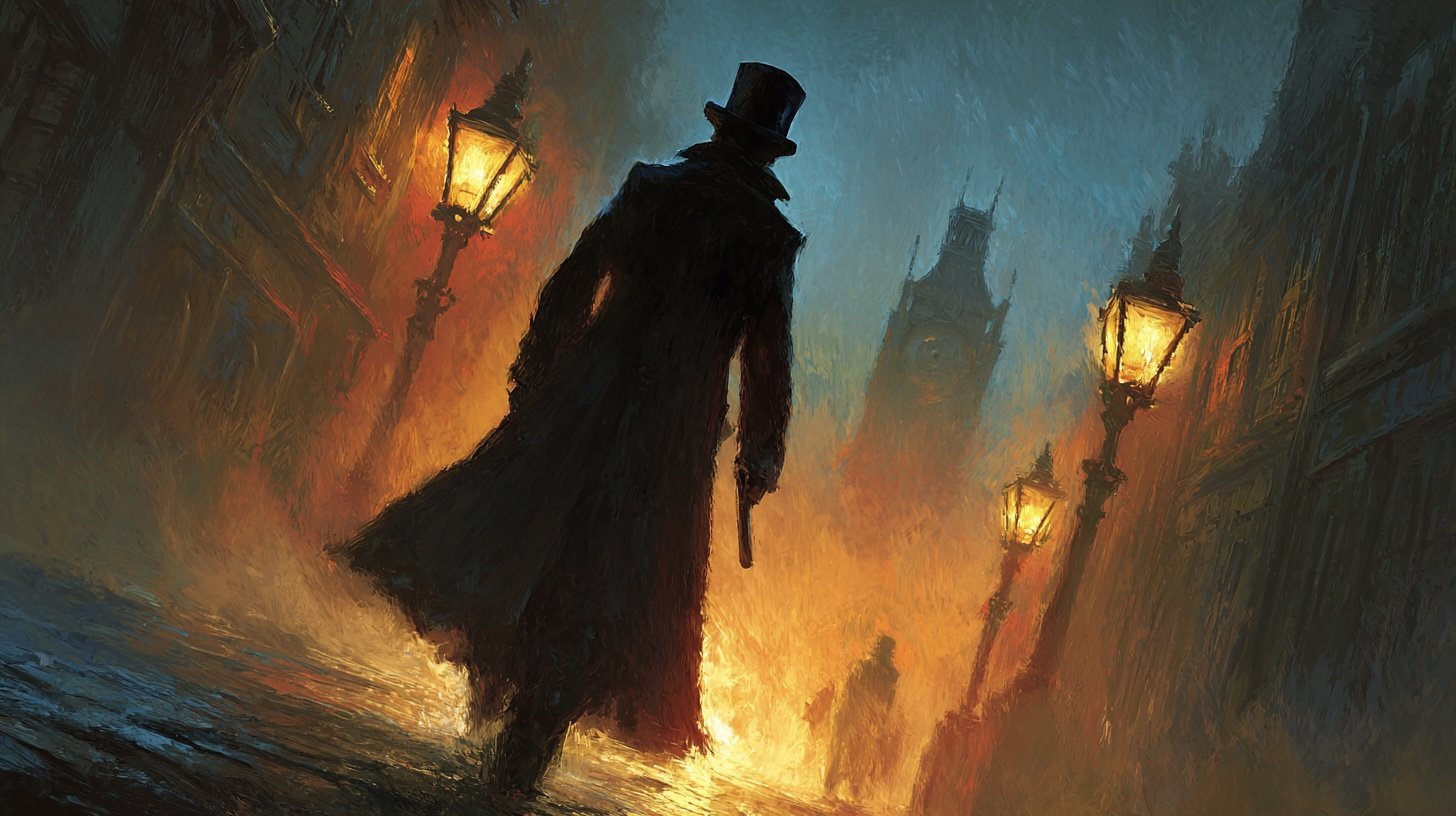
London did not wake up one morning in 1888 expecting to invent a monster. It woke up expecting another day of fog, casual labour, gin, overcrowded rooms, and people vanishing quietly at the edges of society. What it got instead was something new: a killer who arrived already wrapped in headlines.
The murders that later became known as the Whitechapel killings were not the first brutal crimes in the city. They were not even the most violent. London had lived with violence for centuries and had learned, grimly, to absorb it. What changed in 1888 was not the knife, but the megaphone. Jack the Ripper did not simply kill. He performed, and the press turned that performance into a serial narrative.
Before this moment, murder was usually reported as an event. A body was found, facts were listed, moral judgement followed, and the story moved on. In Whitechapel, something different happened. The killings were linked, named, branded, and sustained. Each new death did not replace the previous one. It added a chapter. Readers followed developments as if tracking a story rather than a crime. Suspense entered the newsroom.
The name itself did most of the work. Jack the Ripper sounds inevitable now, but at the time it was an inspired act of copywriting. Short, sharp, vaguely American, half nursery rhyme, half threat. The letters that introduced the name were probably hoaxes, yet that hardly mattered. The press seized them because they solved a problem. Anonymous violence is unsettling. Named violence feels organised. It feels understandable, even when it is not.
Once the name existed, everything else followed. Illustrations appeared showing a cloaked figure stalking gaslit streets. Editorials speculated about education, class, profession, even personality. The killer acquired motives, habits, and a psychological depth that no one could possibly verify. Jack the Ripper became a character, and characters invite loyalty, fear, fascination, and repetition.
Victorian London was perfectly primed for this transformation. Literacy rates had risen sharply. Cheap newspapers competed aggressively for readers. Sensational crime sold well among all classes, not only the poor. At the same time, the city itself had become unreadable. Millions of people moved through its streets anonymously. Traditional social markers no longer worked. Who belonged where had become harder to tell. A hidden killer felt like the ultimate expression of urban anxiety.
Whitechapel added another layer. It was already framed in the public imagination as a place of moral failure, foreignness, and danger. Many readers had never been there, which made it easier to project fears onto it. The murders confirmed what respectable society suspected: something rotten lurked in the East End. The killer became a symbol not only of violence, but of the city’s inability to police its own margins.
The police struggled, but not only because they lacked forensic tools. They also struggled because the story moved faster than the investigation. Every delay looked like incompetence. Every arrest that led nowhere became another twist. The press reported rumours as facts, contradictions as clues, and silence as evidence of conspiracy. The investigation became part of the entertainment.
Crucially, the victims began to disappear from view. They were named, but rarely known. Their lives were flattened into brief descriptions: age, drinking habits, sleeping arrangements. Their deaths mattered because of how they advanced the story, not because of who they were. The killer, meanwhile, grew in presence with each retelling. He gained coherence as the women lost it.
This imbalance marks something genuinely new. Jack the Ripper was not famous because he killed many people. He was famous because his story unfolded in public, in real time, with an audience waiting for updates. Fear became episodic. Readers woke each morning asking not whether violence existed, but whether the Ripper had struck again.
The letters, fake or not, accelerated this process. They blurred the line between reporting and performance. Newspapers debated their authenticity while printing them in full. Even scepticism worked in the killer’s favour. The idea that the murderer might be watching coverage, might be responding, might be playing games with the press, created a feedback loop. The story now involved interaction.
This is why Jack the Ripper feels modern. Not because of the crimes themselves, but because of the ecosystem around them. Media, police, public, and killer became entangled. Attention became a resource. Fear became a commodity. Violence became content.
The murders also coincided with a moment of social self-doubt. Britain ruled an empire yet failed to protect its poorest citizens. Scientific progress sat uneasily alongside slum conditions. The Ripper exposed that contradiction nightly. A single elusive man seemed to humiliate the world’s most powerful city.
When the killings stopped, the silence proved as powerful as the noise. No capture, no confession, no trial. The story simply ended, unresolved. That open ending ensured survival. Readers filled the gap with theories, suspects, and later, entertainment. The lack of closure transformed the Ripper from news item into legend.
Later generations would retrofit psychology onto the case. They would search for pathology, compulsion, signatures. Victorian readers did not need that language. They understood instinctively that something had escaped control. The city had produced a figure it could neither identify nor absorb.
Calling Jack the Ripper the first true media serial killer does not mean he was the first to kill repeatedly. It means he was the first to be consumed this way. His identity was less important than his recognisability. He functioned as a symbol long before he became a subject of study.
The most unsettling possibility is that the killer himself mattered far less than the conditions that allowed the story to thrive. Remove the headlines, the illustrations, the letters, and the narrative momentum, and what remains are terrible but finite crimes. Add the media machine, and the figure becomes endless.
This helps explain why the obsession endures. We are not really searching for a man. We are revisiting the moment when violence learned how to replicate through attention. Jack the Ripper survives because he was never just a person. He was a format.
In that sense, Whitechapel in 1888 looks uncomfortably familiar. A city overwhelmed, institutions exposed, fear packaged for daily consumption, and a nameless individual transformed into a permanent presence through coverage alone. The knife started the story, but the press ensured it never finished.