Is the Great Wall of China Really What You Think It Is?
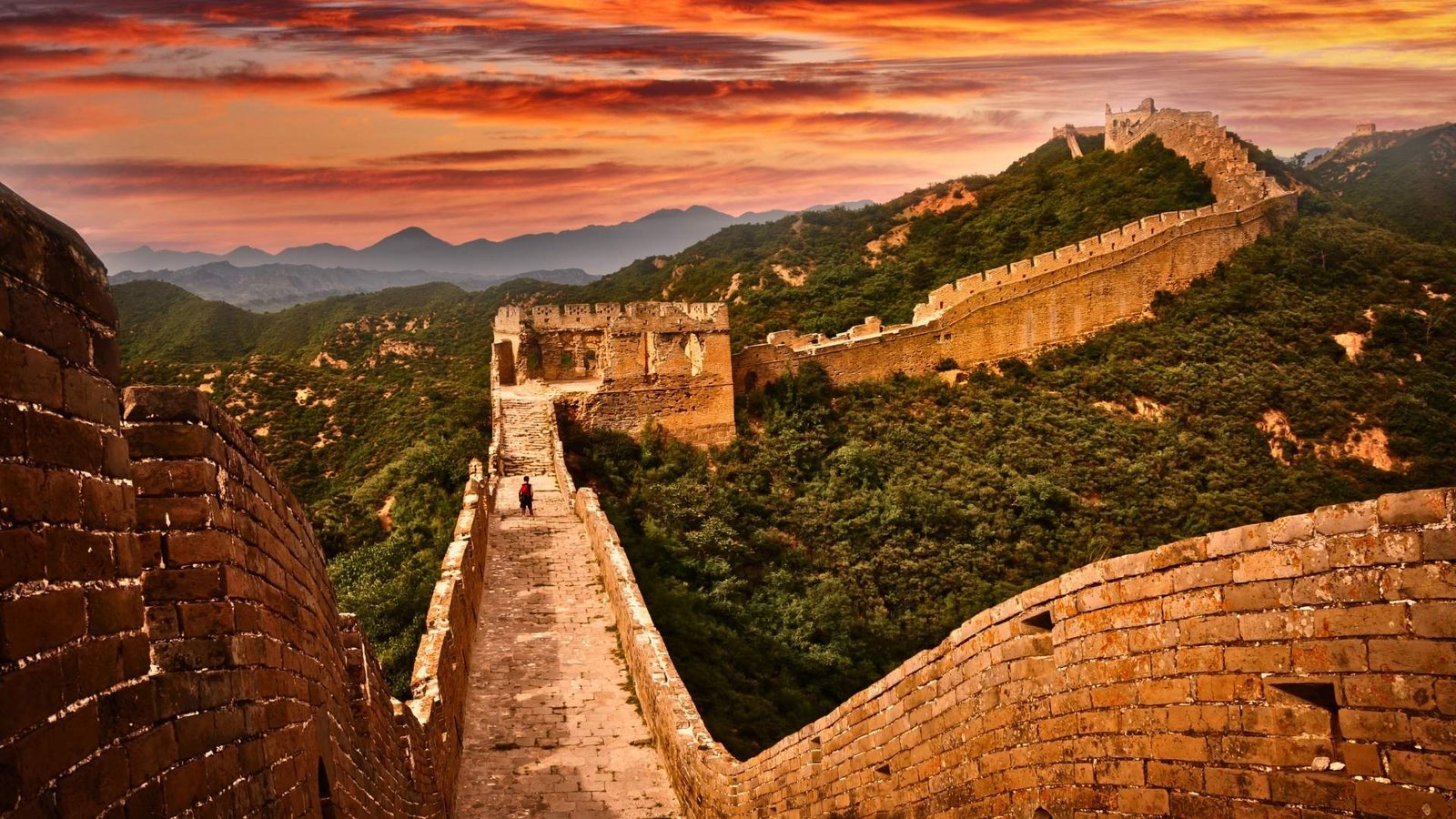
The Great Wall of China usually enters the mind like a cinematic establishing shot. You picture a mighty ribbon of stone unfurling over mountains, a dragon spine basking in the morning mist. Guides will tell you it stretches for thousands of miles in one flawless sweep, built heroically by a single empire with impeccable project‑management skills. You buy the postcard, nod politely, and only later discover that the real story looks nothing like the commemorative fridge magnet.
The Great Wall rarely behaves the way people expect. It changes shape depending on which dynasty you pick, what region you explore, and how honest your tour guide feels on any particular day. It turns out to be less a wall and more a sprawling anthology of human anxieties, bureaucratic stubbornness and wishful thinking stretched across two millennia.
The postcard version starts to wobble as soon as you get closer. The glossy stones of the famous Beijing sections set a high standard, almost too high. They gleam, sweep, and curve as if they graduated from a finishing school. Then you wander off to parts where nature wins every argument. There, the wall dissolves into uneven rubble and earth mounds that barely reveal their past. Sometimes you stand on a lonely ridge and need to squint to convince yourself you’re genuinely looking at the same enterprise. Engineers from the Ming dynasty didn’t always send thank-you notes to their Qin predecessors, and entire regions reinvented the wall’s purpose according to their own obsessions.
The first surprise is that the Great Wall isn’t one thing. It’s many, built by rulers who didn’t always like each other and would have rolled their eyes at the idea of sharing credit. Some sections acted as defensive bulwarks, others as psychological deterrents, and quite a few served the far less glamorous role of tax control — handy when you want to know who owes what as caravans attempt to cross your frontier. The word “frontier” itself feels generous. Some walls kept invaders out; others kept taxpayers exactly where you wanted them.
Tourists often assume the monumental stone structure they see today comes from a single moment of architectural genius. Most of that sleek masonry belongs to the Ming. Their reign involved a fair bit of military panic, especially after some unwelcome northern guests highlighted serious security issues. The Ming responded the way any overworked dynasty might: by pouring manpower into massive stone fortifications. Granite blocks, watchtowers, battlements — the whole reassuring package.
Earlier walls had different personalities. The Qin version — the one often credited as the “original” — resembled an ambitious earthwork. It’s what you build when you’ve unified warring states but haven’t quite formalised your architectural portfolio. Rammed earth proved useful, if less glamorous. Time, rain and a few centuries of neglect turned many Qin sections into shy humps in the landscape. You walk past them and think you’re seeing natural contours until someone points out you’re standing on a former imperial defence project.
Hollywood loves to insist the wall was an impenetrable military marvel. Reality felt less cinematic. Northern nomadic groups regularly crossed it, bribed their way around it, or simply used well-known gaps. In a way, the wall acted as a sort of early-warning system and a border-management tool. It surprised everyone that the structure’s symbolic value outlasted many of its tactical successes. The Ming spent small fortunes repairing breaches, only to discover that a determined opponent always prefers creativity over respect for your masonry.
The idea that the Great Wall marks a neat cultural divide between “China” and “not China” doesn’t hold up either. Frontier life thrived on trade, intermarriage and persuasion. Markets sat near gates. Diplomats trekked back and forth. Entire communities grew up on both sides. The wall indicates a geography of exchange rather than an iron curtain. If you wanted to map the true cultural borderlands, you’d need a mural rather than a single line.
The famous myth about the wall being visible from space survives with admirable stubbornness. Astronauts have patiently explained that you can’t casually spot a long, narrow, earth-coloured line from orbit with the naked eye. It blends too beautifully with the terrain. Roads, airports and agricultural fields stand out much more. The wall’s great achievement lies firmly on the ground, not in the heavens. Somehow the myth still appears in quizzes, proving that the wall’s reputation generates its own weather system.
Many visitors only ever meet the well-behaved portions of the wall. Badaling, Mutianyu, Jiankou and a few others host crowds, vendors and cheerful cable cars whooshing tourists towards the panoramas. These parts are meticulously restored, occasionally over-restored, which makes them stunning yet slightly misleading. The rest of the wall tells entirely different stories. Bricks stolen over centuries to build farmhouses. Watchtowers leaning like indecisive chess pieces. Entire stretches buried in vegetation, fading into hillsides that reclaim everything given enough patience.
There’s even a small irony in the name. China isn’t the only country with a grand fortification. Korea built the Cheolli Jangseong; Vietnam experimented with frontier ramparts. The instinct to build long defensive lines seems to be a human impulse rather than a uniquely Chinese one, though China certainly committed with more enthusiasm and over a longer timeframe.
People often imagine the wall as a patriotic mission executed by a cohesive civilisation, but the notion is fairly recent. For much of history, various kingdoms and dynasties built their own stretches without any desire to harmonise the effort. The modern story of a unified wall fits more comfortably with heritage tourism and national symbolism. Ancient military engineers didn’t receive the memo about future marketing campaigns.
Another overlooked aspect involves the people who built and maintained these fortifications. Labourers, soldiers, farmers conscripted into seasonal projects — the wall kept entire populations busy. Some sections relied on brick kilns churning out materials on site; others drew from quarries miles away. Supply lines spanned deserts and mountains. The logistics alone deserve a place in management textbooks. Instead, most textbooks skip briskly to the romantic parts.
Environmental researchers now monitor the wall with drones and satellite imagery to track erosion, collapse and human activity. They estimate that roughly a third of the Ming structure has disappeared. Sections in Inner Mongolia, Gansu and Ningxia face constant threats from sandstorms or agricultural expansion. Conservation teams attempt to stabilise what they can, but the sheer scale makes it a never-ending job. The wall stretches far beyond the brochure corners.
One of the loveliest contradictions emerges when you consider that the wall’s greatest legacy might not be military at all. It shaped trade routes, guided migration patterns and inspired storytelling for centuries. Artists painted it as a symbol of resilience. Poets used it to lament separation and longing. Modern travellers treat it as a bucket-list moment, even when they know very little about the mud, brick and sweat under their feet.
The Great Wall remains impressive, just not in the tidy way people hope. The truth turns out to be more human, more chaotic and much more interesting. It’s a set of overlapping stories written across time: fear of raids, desire for revenue, ambition of rulers, misfortune of labourers, pride of later generations, and the occasional tourist discovering that the dreamy Instagram curve appears only in certain well-behaved locations.
Perhaps this is the best way to approach it. Treat the wall not as a single monument but as a landscape of decisions. Walk its polished stones and its crumbling earthworks. Admire the watchtowers and imagine the lives of the people who watched from them. Let the contradictions do their work, because the wall generously offers plenty.
And once you’ve taken your photos from the restored ramparts, consider heading off to one of the wilder sections. There, without crowds or cheerful cable cars, the wall behaves more like the ancient creature it is. You hear the wind before anything else. You see the uneven rubble. And you remember that history hides very comfortably in places that don’t ask for attention.
The Great Wall isn’t what you think. It’s messier, older, more fragile and more remarkable. A construction project so huge it collects every human motive imaginable. A myth so enduring it creates its own momentum. A monument that changes depending on where you stand and which dynasty you’re thinking about.
You come away realising that the wall works best not as a single line across a map but as a reminder of how deeply people care about borders, stories and the comfort of solid stone beneath their feet.