Inside Downing Street, Where British Power Learned to Look Ordinary
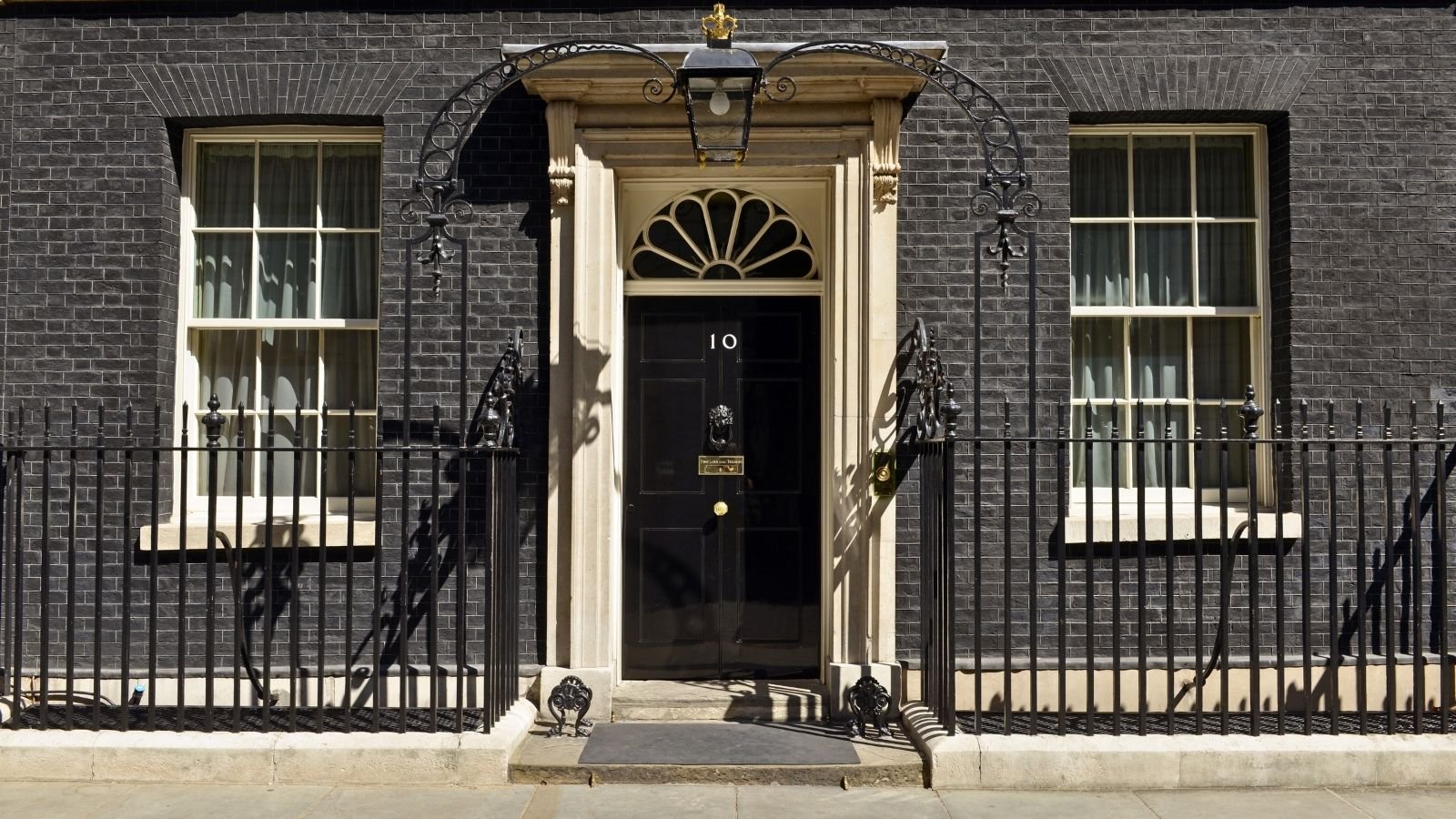
Downing Street looks unimpressive if you meet it cold. It is a short stretch of tarmac, a pair of black iron gates, and a few brick façades that refuse to line up properly. There is no grand square, no triumphal arch, and no hint of theatrical ambition. Yet this modest London street has absorbed more power, pressure, improvisation, panic, and political theatre than almost any address on earth. Over time, it has survived monarchs, empires, wars, scandals, reforms, and reinventions without ever pretending to be beautiful.
Like many British institutions, the street began as a property play. In the late seventeenth century, Sir George Downing noticed an opportunity in a neglected patch of land behind Whitehall. The area had been marshy, half-forgotten, and useful mainly for stables and refuse. Downing, whose loyalty travelled light and whose timing rarely failed, built a row of houses quickly and cheaply. Critics complained even then that the workmanship was poor. Floors dipped, walls absorbed damp, and the houses leaned with quiet determination. Still, none of this mattered, because proximity to power often beats quality.
Downing himself set the tone for what followed. He served Cromwell during the Commonwealth and then reinvented himself smoothly after the Restoration. That instinct for ideological survival echoed through the buildings he left behind. Downing Street never belonged to a single political philosophy. Instead, it learned early how to adjust its language while keeping its address.
The houses were completed in the early 1680s and marketed to people of what advertisements called “good quality”. The phrase did a great deal of work. It meant courtiers, officials, and men with titles or ambitions who needed to be near Whitehall without living inside it. As a result, the street settled into a space between monarchy, administration, and Parliament long before anyone described it as the centre of government.
Number 10 did not begin as the home of a Prime Minister. In fact, the office itself had not fully taken shape. The house was intended for the First Lord of the Treasury, a role that gradually accumulated authority. When Robert Walpole accepted the house in the 1730s, he insisted that it belong to the office rather than to him personally. As a consequence, a private residence quietly became a permanent institutional space. Power moved in slowly, almost by accident.
The building itself resisted grandeur. Number 10 was never a single, clean structure. It stitched together older houses, reused walls, and absorbed staircases that seemed to change their mind halfway up. Over time, it became a physical metaphor for British governance: layered, improvised, and patched rather than planned. Prime Ministers learned to navigate its quirks in much the same way they learned to manage Cabinet politics.
Not every Prime Minister enjoyed living there. Some complained about size, condition, or lack of privacy, while others preferred different arrangements altogether. Nevertheless, the idea that the Prime Minister resides at Number 10 hardened into tradition without ever becoming absolute. The Chancellor’s residence at Number 11 often offered more space, and practical concerns frequently outweighed symbolism. Even so, the public image remained fixed, regardless of what happened behind the door.
That door deserves its reputation. The glossy black entrance, with its slightly eccentric white number, has become one of the most photographed political thresholds in the world. It has no visible keyhole, opens only from the inside, and is repainted far more often than most people realise. The colour sits somewhere between black and deep navy, carefully maintained to project seriousness without ostentation. Inevitably, leaders pass through it knowing cameras are waiting and history is paying attention.
For much of its existence, Downing Street remained open to the public. People walked past the houses, lingered, stared, and occasionally knocked. The idea that the street should be sealed off arrived surprisingly late. Only in the late twentieth century, under the pressure of terrorism and security threats, did permanent gates appear. Their installation in 1989 marked a subtle psychological shift. Power withdrew slightly from view, even as media scrutiny intensified.
Inside, the street connects far more than it reveals. Numbers 10, 11, and 12 bleed into one another through corridors, staircases, and offices. What appears from the outside as a handful of houses functions as a compact administrative machine. Decisions move quickly, sometimes too quickly, through rooms never designed for modern government. The tension between historic architecture and contemporary power never quite disappears.
Downing Street has hosted decisions that reshaped continents. It coordinated war cabinets during global conflicts and oversaw the slow dismantling of empire, sometimes reluctantly and sometimes chaotically. At the same time, it launched economic experiments, social reforms, diplomatic gambits, and political reversals. The street absorbed triumph and humiliation with equal discretion.
The Second World War transformed its role. Winston Churchill used Number 10 not merely as an office but as a symbol of defiance. The building endured nearby bombing, blackout nights, exhaustion, and relentless pressure. After the war, Downing Street emerged with its authority amplified. The modern Prime Ministership solidified there, not through neat constitutional design, but through lived experience.
From that point on, Downing Street became inseparable from global attention. Cold War strategy, nuclear policy, decolonisation, and economic restructuring passed through its rooms. Consequently, Prime Ministers learned that occupying the address meant inheriting its accumulated weight. The walls remembered previous occupants, along with their obsessions and failures.
Over time, the street accumulated myths as well as memories. Stories circulated about ghosts, secret tunnels, and hidden rooms. Staff whispered about footsteps at night or sudden drops in temperature. None of these tales withstand scrutiny, yet they persist because the building feels old in a way that invites imagination. History sits close there, physical rather than abstract.
Animals have always been part of the address as well. The role of Chief Mouser to the Cabinet Office became official in the twentieth century, although cats lived there long before. Some became minor celebrities, complete with press briefings and devoted fans. Their presence introduced an oddly human note into a place defined by authority.
Controversy followed as inevitably as power. The street witnessed scandals that exposed how fragile public trust could be. The Profumo Affair showed how private behaviour might destabilise national security narratives. Later decades brought arguments over intelligence, secrecy, and accountability. Decisions defended behind closed doors did not always age gracefully.
The Iraq War marked a turning point in how Downing Street was perceived. The language crafted inside it, the assurances offered, and the intelligence presented all came under sustained scrutiny. During this period, the idea that Downing Street managed narrative as much as policy hardened, and public scepticism deepened.
Then came the pandemic. Once again, Downing Street issued rules that reshaped everyday life. Lockdowns, restrictions, and emergency powers flowed from the same rooms that had once debated empire and war. When revelations emerged of gatherings held inside those rooms while the public endured isolation, anger cut deep. The scandal later known as Partygate damaged the street’s moral authority in a way speeches and statistics could not repair.
Yet Downing Street did not collapse under that pressure. Institutions rarely do. Instead, it absorbed inquiries, resignations, fines, and reforms, and then carried on, battered but intact. That resilience frustrates critics and reassures traditionalists alike. The street has never promised purity. It offers continuity.
What allows Downing Street to endure is not efficiency or elegance. Rather, it concentrates power in a way that feels both visible and strangely opaque. You know where decisions come from, yet rarely how they fully form. The building’s physical awkwardness mirrors the compromises of governance itself.
Every Prime Minister arrives with plans to reshape how power works there. Few succeed. The street has habits of its own. It rewards those who learn its rhythms and quietly punishes those who mistake the address for a throne. Authority there is borrowed, never owned.
Downing Street remains deliberately unglamorous. That choice forms part of its strength. It refuses to become a palace and resists monumentalisation. Instead, it persists as a working space where history accumulates rather than being curated away.
In a city filled with grand façades and ceremonial avenues, this short, uneven street continues to punch far above its architectural weight. It does not ask to be admired. It expects to be endured. In British political life, that expectation has proved remarkably accurate.