How People Washed Clothes Before Modern Soap
Laundry existed long before anyone knew what soap actually was. Clothes still got clean, or at least clean enough, through habit rather than theory. People washed because they always had, because mothers insisted on it, and because certain combinations of heat, ash, fat, and effort usually worked. Nobody spoke of molecules. Instead, people talked about good water, bad water, stubborn dirt, and the unpredictable temperament of linen.
For most of history, soap arrived not from laboratories but from kitchens and backyards. It began with leftovers. Animal fat scraped from bones. Ash gathered from the hearth. Water added slowly, cautiously, and with the air of a ritual rather than a recipe. When these elements came together in the right mood, something useful happened. Grease loosened. Smells faded. Fabric softened. Why this occurred mattered far less than the fact that it did.
Early soapmakers learned by watching, tasting, touching, and guessing. Lye, the crucial ingredient, came from soaking wood ash in water. Its strength could not be measured, so it had to be tested. Some floated an egg or a potato. Others dipped a finger, winced, and nodded. If it felt sharp enough, it would probably work. If it felt too sharp, clothes might dissolve. In other words, laundry doubled as risk management.
Ancient societies relied on soap-like substances centuries before anyone attempted to explain them. Babylonian tablets from nearly five thousand years ago describe mixtures of fats and ashes used to wash wool. Egyptian records mention alkaline salts combined with oils for cleaning textiles. These instructions appear calm and confident. They do not argue their case. The knowledge simply sits there, unexamined, because it does its job.
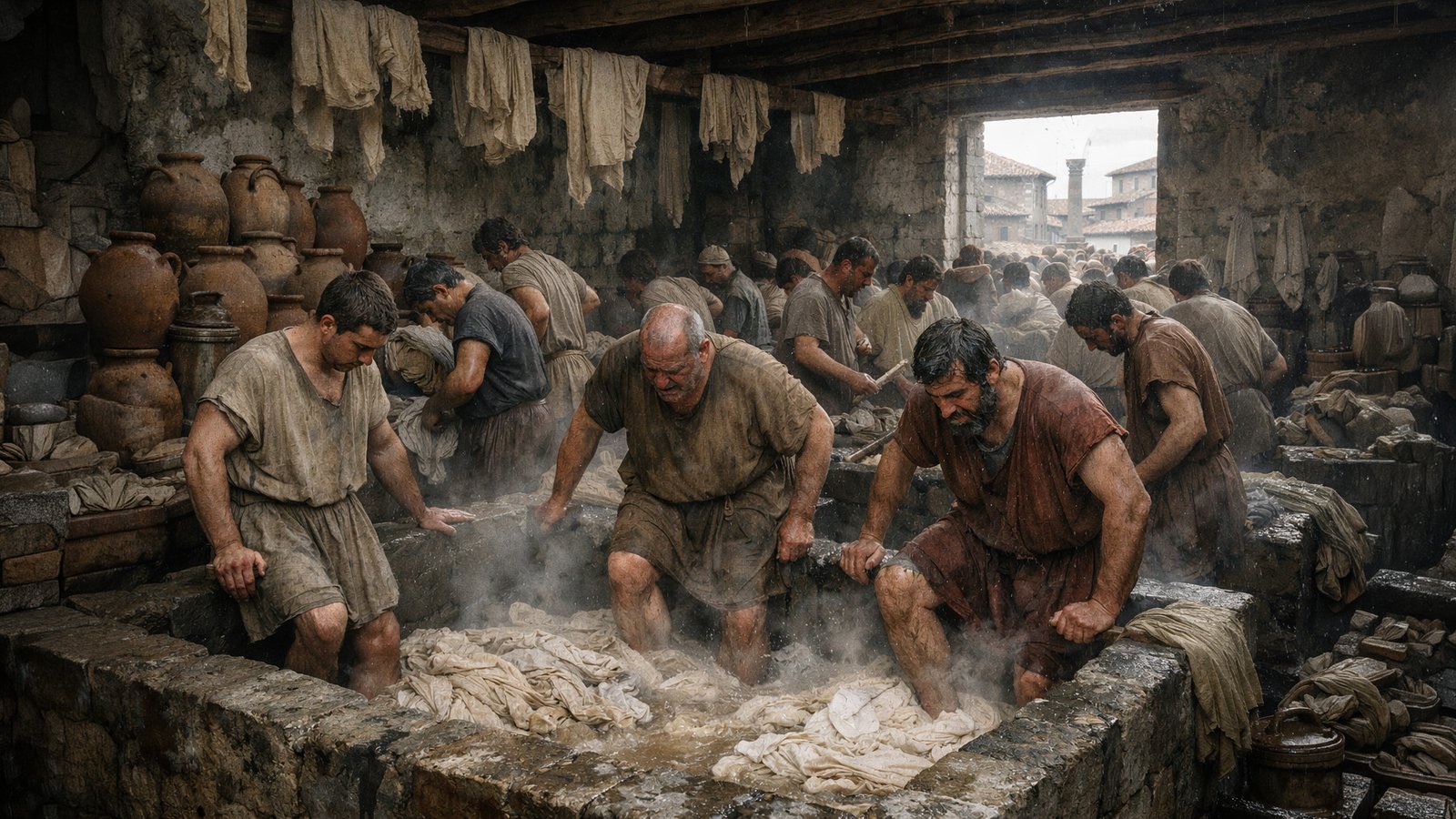
The Romans, famously practical, knew soap but did not entirely trust it. For washing bodies, they preferred oil and scraping. Dirt, in their view, needed loosening rather than dissolving. For laundry, they built an entire industry around trampling cloth in vats filled with water, clay, and aged urine. The smell was unforgettable. The results, however, were effective. Urine produced ammonia. Ammonia cut grease. Nobody framed it that way at the time. It simply worked, which was sufficient.
Laundry remained relentlessly physical. It involved lifting, boiling, pounding, wringing, and hauling. Entire days vanished into the task. Because the effort was so intense, clothes were not washed lightly or often. Wash day became an event rather than a chore. As a result, neighbours noticed. Lines of steaming linen turned streets and riverbanks into temporary exhibitions of domestic life.
Since washing demanded so much labour, it accumulated rules. Some rules made practical sense. Others drifted toward superstition. Many households insisted laundry should never be done on Sundays. Others warned against washing during certain phases of the moon. Rainwater, according to some, made linen brilliantly white. According to others, it weakened fibres and invited mildew. These arguments endured for generations.
Before science, cleanliness meant order rather than sterility. Dirt was visible, tactile, and social. A garment counted as dirty if it smelled, stained, or disrupted appearance. Invisible threats did not feature in daily thinking. Illness came from imbalance, foul air, or divine displeasure. Laundry aimed to restore respectability, not eliminate microscopic enemies.
White linen carried enormous cultural weight. In medieval and early modern Europe, linen undergarments absorbed sweat and body oils. These items were washed frequently, even when outer garments were not. A clean collar suggested discipline. A fresh cuff implied moral self-control. The body itself mattered less than the signal it sent to the outside world.
Soap often smelled strongly of herbs. Lavender, rosemary, sage, and thyme appeared in wash water not because they cleaned better, but because they reassured. Scent equalled purity. Unscented soap felt suspicious. If something claimed to clean without leaving a trace, many doubted it entirely.
Different regions developed fiercely defended traditions. In southern Europe, olive oil soap dominated. It was gentle, pale, and slow to lather. In the north, animal fats and hardwood ash produced darker, harsher bars. Each region considered its soap superior. Foreign soap attracted distrust. Castile soap, made in Spain from olive oil, gained a reputation for refinement and softness. In Protestant countries, it also carried the faint whiff of Catholic excess.
Governments eventually noticed soap’s importance and taxed it. In early modern England, soap duties raised revenue but lowered quality. Soapmakers responded by cutting corners. Chalk, clay, and filler crept into production. Bars grew heavier without becoming better. As a result, many households returned to making their own soap, with uneven results.
Laundry advice circulated widely, yet agreement remained elusive. Manuals contradicted one another cheerfully. One insisted boiling was essential. Another warned boiling destroyed fibres. Sunlight, some claimed, whitened linen naturally. Others insisted it yellowed fabric beyond repair. Even the order of washing inspired debate. Should cloth be soaked first, or soaped dry. Should stains be attacked immediately, or left to mellow.
None of this suggests ignorance. These were observational systems built on experience. People tested methods against reality and modified routines slowly. When something failed, they blamed water hardness, weather, fabric quality, or moral lapse. Rarely did they question the underlying assumptions.
Communal washing spaces amplified opinion. Washhouses, rivers, and public yards became forums for advice and judgement. Praise and criticism travelled quickly. A poorly washed sheet reflected not only technique, but character. Laundry competence defined adulthood, particularly for women.
Clothes themselves shaped washing habits. Wool behaved differently from linen. Silk demanded caution. Cotton arrived later and confused everyone. Some fabrics shrank. Others stretched. Soap that worked beautifully on one garment could destroy another. Without chemical understanding, laundry remained a negotiation between material and method.
Soap also carried symbolic weight. In some cultures, excessive washing suggested vanity. In others, it suggested discipline. Too little washing implied neglect. Too much hinted at obsession. Balance mattered, even if nobody could define it precisely.
When early chemistry emerged in the eighteenth century, daily practice barely shifted at first. Scientists began describing alkalis, acids, and fats in abstract terms. Soap, they explained, allowed water to interact with grease. To most people, these explanations felt distant and unnecessary. After all, soap already worked.
Only with industrialisation did science begin to overtake habit. Factories demanded uniform results. Armies required standardised clothing care. Expanding cities needed faster, cheaper cleaning. Gradually, chemistry moved from explanation to authority.
Even so, resistance lingered. Grandmothers trusted their hands more than pamphlets. Folk wisdom survived because it was embedded in routine. Laundry had always functioned through repetition rather than understanding.
Soap before science was not primitive. Instead, it was pragmatic. It relied on inherited confidence, trial and error, and strong opinions. Clothes came clean not because people understood why, but because they refused to stop experimenting.
By the time chemistry caught up, laundry had already solved most of its practical problems. Science explained the process. Tradition had perfected it long before.