How Invention of Mechanical Clock Turned Hours into Power
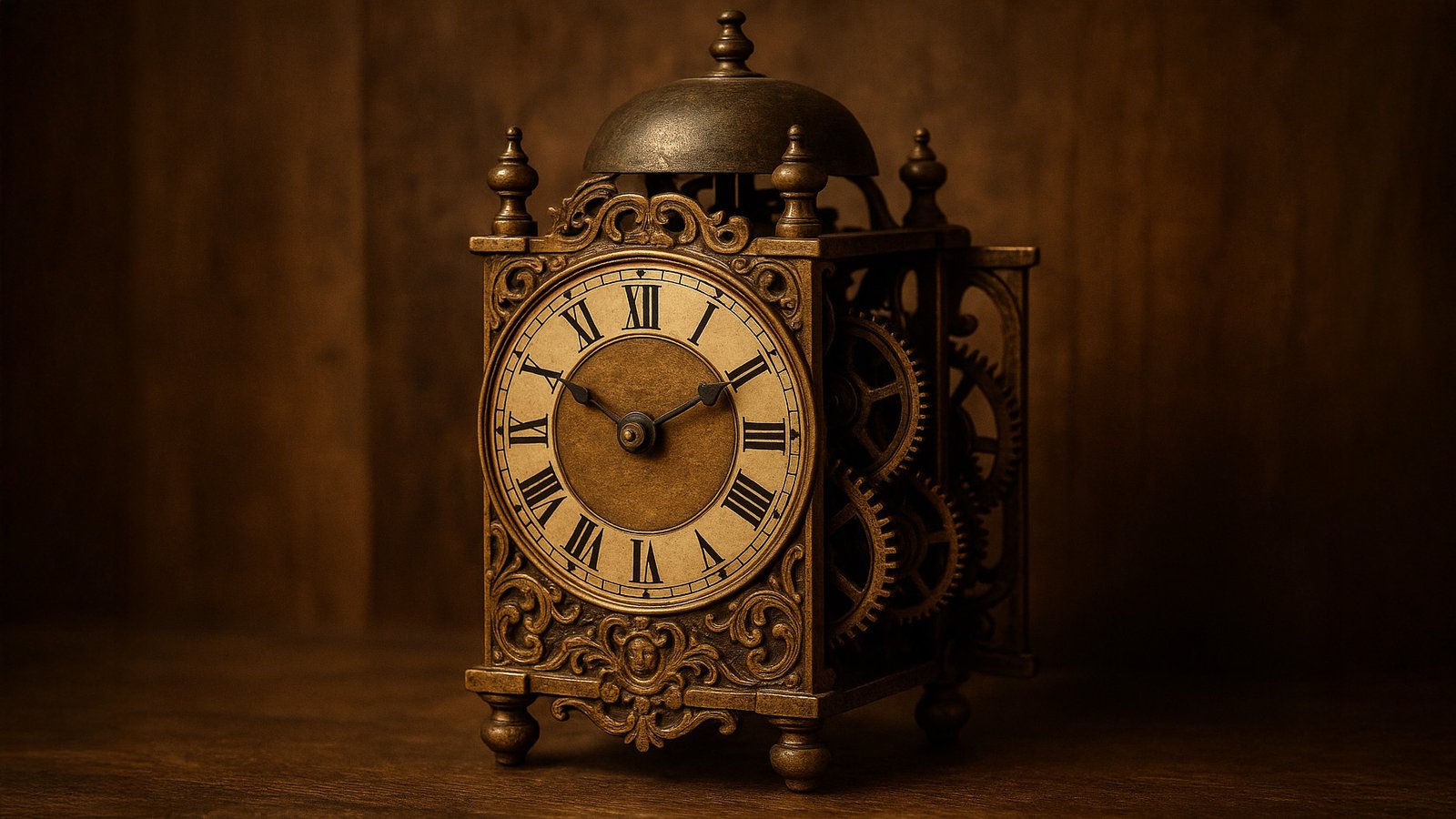
Time used to stroll gently through human life. People rose with the light, prayed when shadows stretched, worked until darkness coaxed them home. Then a strange iron contraption in a bell tower decided enough was enough. From that moment on, hours snapped into tidy slices, and the world began marching to the rhythm of gears rather than birdsong. The mechanical clock didn’t arrive with a polite knock. It clanked, groaned and announced itself by throwing bells into the night so monks knew when to shuffle half-asleep toward Vespers. That first purpose still feels rather heroic: save exhausted monks from guessing the sky’s mood and provide at least one reliable companion in the cold hours. No one could predict that this invention would eventually bully entire economies into timetables and turn the world into one big synchronised performance.
Those early versions looked more like medieval torture instruments than elegant timekeepers. Imagine an iron frame the size of a small cow, a crown wheel trying its best not to wobble, and a foliot bar swinging like a drunken metronome. Yet that crude arrangement of weights and gears marked a turning point far greater than its appearance suggested. For the first time, humans had a machine that didn’t rely on water freezing in winter or the sun hiding behind clouds. It ticked on, indifferent to weather, mood or cosmic sarcasm.
Before these contraptions arrived, Europe had water clocks and candle clocks. Things dripped or burned at roughly predictable rates, which was just good enough until monks realised that missing prayer time wasn’t great for one’s spiritual CV. So, in towns like Milan, Padua and Nuremberg somewhere around the late thirteenth century, artisans began building something new: a fully mechanical, weight-driven mechanism with gears turning under controlled force. Accuracy was more of a rumour than a feature, but it was consistent, and consistency is the seed of revolution.
For the first century or so, nobody bothered with dials. People didn’t stare at clocks; they listened. Bells were the interface, and towers were the speakers. Every strike carried authority. One could almost hear a whole town groaning awake at the hourly clang. These sounds stitched communities together, telling bakers when to open their ovens, merchants when to weigh their goods and city officials when to drag themselves to meetings. The clock turned time into a public experience rather than a private guess.
As cities grew, the machine gained prestige. Towers competed for bragging rights, each one boasting a clock more elaborate than its neighbour. Gear trains became municipal mascots, proudly displayed in cathedrals and town halls. The Salisbury Cathedral clock still stands today, beating away like a stubborn old heart since the fourteenth century. It remains a monument to the era when timekeeping wasn’t hidden inside pockets but displayed like a civic crown.
Across Europe, the spread of mechanical clocks mirrored the rise of urban life. Markets expanded, trade intensified, and craftsmen coordinated shifts with increasing precision. Work patterns began shifting from the flexible ebb and flow of natural light to the firmer beat of segmented hours. People started arriving on time because the town’s clock told them to, not because the sun politely encouraged participation. Time became measurable, regimented and, eventually, monetised.
This shift reached monasteries first. Their schedules already revolved around strict prayer cycles, and the clock simply amplified this rigidity. The hourly bells kept everyone aligned, whether they wanted to be or not. Over time, the same discipline seeped into cities. Curfews, market openings, guard duty, taxation windows, council assemblies: everything benefited from synchronisation. Bureaucracy found a new ally.
Naturally, myths blossomed around the origins of these machines. One popular claim insists they came from China or the Islamic world. Both regions excelled in ingenious hydraulic timekeepers and astronomical devices, yet the fully mechanical escapement-driven clock seems to have sprouted mostly in European soil. This doesn’t diminish the brilliance of earlier cultures; it simply highlights different engineering traditions. Another myth suggests early clocks were accurate marvels. In truth, many lost thirty minutes a day. Imagine blaming that kind of error on your smartwatch today.
Accuracy improved dramatically in the seventeenth century with the arrival of the pendulum. A clever Dutch physicist decided that a swinging weight could steady the chaos of the old verge-and-foliot mechanism. Suddenly clocks behaved less like excitable horses and more like dependable companions. Minutes became trustworthy, and eventually seconds earned their spot on the dial.
Once precision entered the stage, society tightened around it. Factories later ran on it. Railways relied on it. States organised complex administrations through predictable hours. The mechanical clock didn’t just measure time; it reshaped power. When a government controls the hours, it controls the rhythms of life. The bell tower served as an early loudspeaker for authority.
There’s a reason modern critics talk about the tyranny of the clock. The very invention that monks welcomed for convenience also taught generations to rush, to schedule every moment and to feel guilty when resting outside predefined slots. It turned leisurely mornings into timed performances. It carved children’s school days into blocks and adults’ working lives into shifts. One could say the mechanical clock invented the idea of being late.
Even trade changed character. With time sliced neatly, merchants could coordinate shipments, arrange meetings and promise delivery windows. Markets ran smoother, and commerce became more predictable. This new regularity encouraged longer-distance dealings. When everyone agreed on what an hour meant, trust travelled farther.
Administration adopted the clock with equal enthusiasm. Court sessions occurred at specific hours, tax offices opened on time, and city guards switched duties with mechanical precision. The machine became a pillar of civic organisation, quietly pulling society into a more structured world. That structure sometimes chafed, but it also stabilised communities.
Not all stories surrounding mechanical clocks belong to triumph. Some verge on the absurd. There were machines so temperamental they required daily coaxing, and others that chimed so loudly residents petitioned for mercy. Some cities nearly bankrupted themselves building ornate tower clocks because prestige mattered more than financial sanity. And there were theological debates about whether human-made devices should dictate sacred hours instead of celestial signs.
Yet the fascination persisted. Medieval people treated clocks with a mix of awe and suspicion. These mechanisms felt alive, almost magical. They ticked, breathed and commanded obedience. Visitors often climbed towers just to marvel at the gears in motion, mesmerised by metal that seemed to have its own heartbeat. Today, we stuff the same concept into tiny chips and forget how radical it once was.
By the early modern period, personal clocks and watches spread through Europe. Wealthy citizens wore them as symbols of sophistication. The pocket watch became an accessory announcing not only fashion but punctuality. The mechanical clock escaped its tower, moved into homes, then pockets, then wrists and finally into the digital ether. Its essence remained: structure time, command attention, organise life.
Its legacy still shapes how people move through the world. Meetings start at precise hours, trains promise punctual departures and workplaces march to carefully measured schedules. The mechanical clock gave humanity consistency, coordination and a framework for modern complexity. It also stole some spontaneity, replacing intuitive rhythms with mechanical insistence.
Despite that, it remains one of the most influential inventions ever made. It bridged the gap between natural cycles and human ambition. It let societies function at a scale previously impossible. Cities grew more efficient, trade blossomed, bureaucracies expanded with surprising enthusiasm and religion adapted to mechanical discipline.
The mechanical clock stands as a reminder that technology doesn’t just solve problems; it also creates new ones and reshapes how we exist. This humble yet stubborn machine nudged civilisation toward precision, order and maybe a little bit of stress. Yet it also made collaboration possible across distances and seasons. Without it, global trade, scientific observation and even your evening train home would wobble chaotically.
We still live by its tempo. Our days feel wrong when clocks stop. Smartphones echo its logic. Schedules whisper its authority. And every time a bell rings across an old European square, one can hear the echo of that medieval revolution: metal claiming dominion over minutes, and humanity organising itself accordingly.
So the next time you glance at a clock on a station wall or in your living room, spare a thought for those early monks jolted awake by the first iron beast. Their sleep deprivation gifted us the world of punctuality, coordination and, occasionally, frantic rushing. A strange bargain, yet one that turned societies into finely tuned machines almost as intricate as the clocks that shaped them.