How Henry VII Invented the Tudor Brand
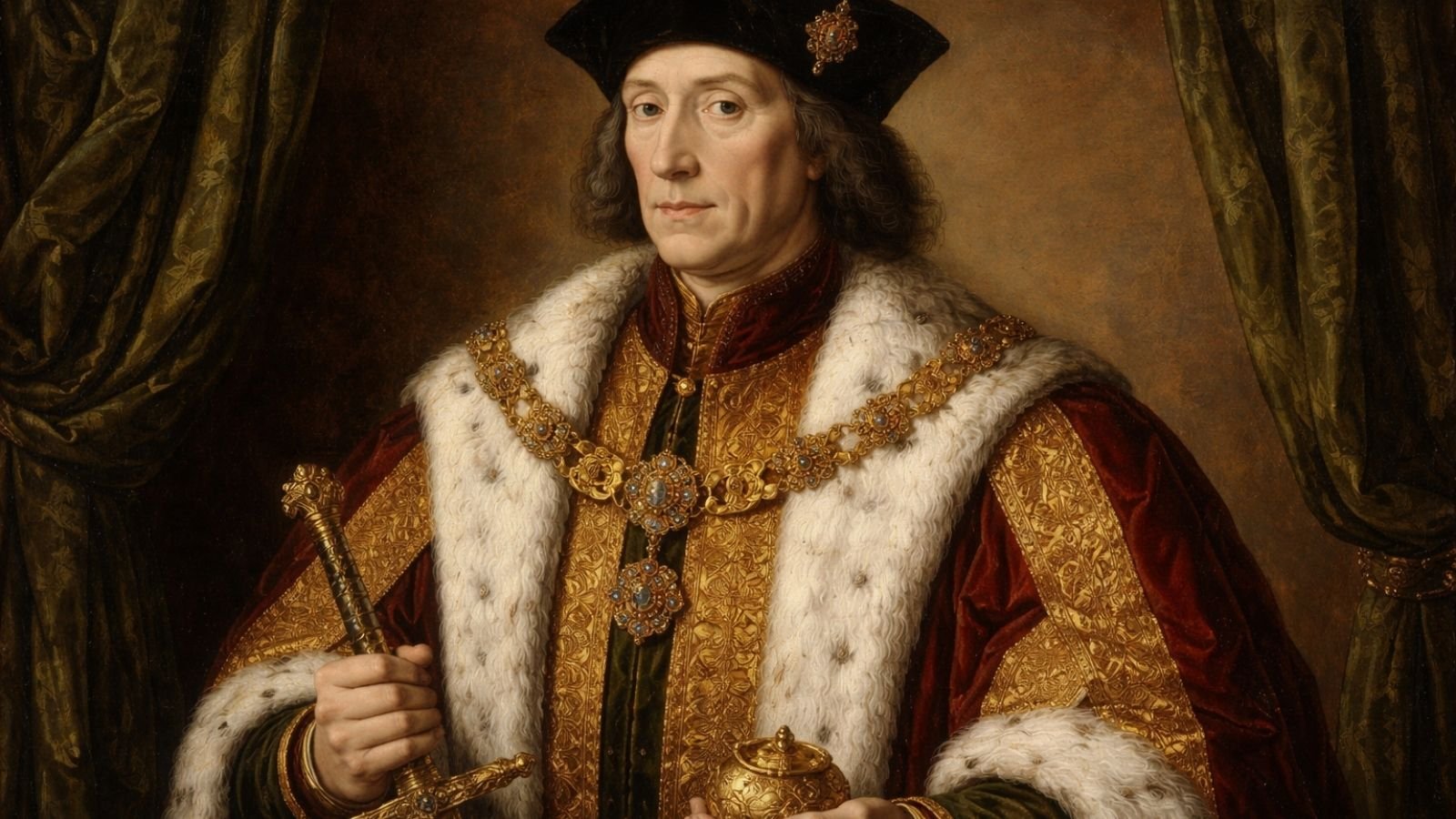
Henry Tudor did not arrive in England looking inevitable. Instead, he appeared cautious, slightly foreign, and inconveniently dependent on a single battle going his way. In 1485, when he defeated Richard III at Bosworth, he did not inherit a crown that felt stable or ancient. Rather, he acquired a throne that still smelt of civil war, contested loyalties, and unfinished arguments. What followed, therefore, was not just a reign, but a carefully assembled idea. Over time, that idea hardened into what we now call the Tudor dynasty.
The problem Henry faced was easy to describe yet difficult to fix. His blood claim was thin. His support base was narrow. Meanwhile, the country he ruled had spent decades watching cousins kill cousins under banners that changed colour with alarming speed. Because of this, ruling was not enough. He needed to look like he had always been meant to rule.
This is where the Tudor brand quietly took shape. Not through arrogance or flamboyance, but through patience. Henry understood that authority settles slowly, especially after chaos. Consequently, instead of announcing a dramatic new order, he wrapped himself in continuity. He presented his victory not as a break, but as a correction. England, according to the new story, had wandered off course. Henry simply brought it back.
The most visible element of this story was the rose. The red rose of Lancaster and the white rose of York merged into a single symbol that promised unity without demanding explanation. It suggested healing while avoiding detail. More importantly, it allowed people to stop choosing sides. Once the wars had a neat ending, remembering them became optional. The rose appeared everywhere, and repetition did the work.
Marriage strengthened the message further. Henry’s union with Elizabeth of York converted a military victory into a domestic settlement. Through her, the rival bloodline folded neatly into his own. As a result, his children could be presented as the natural heirs of both sides, rather than the uneasy compromise they actually were. This did not erase resentment. However, it softened it. Politics often improves when framed as family.
Genealogy then filled in the gaps. Henry’s court invested serious effort in tracing his ancestry back through Welsh princes and into mythic antiquity. These stories did not circulate quietly. Instead, they appeared in manuscripts, sermons, pageants, and court art. Accuracy mattered less than momentum. Once a lineage feels old enough, people stop asking where it began.
Welsh connections proved especially useful at this stage. They allowed Henry to borrow legitimacy from prophecy, legend, and regional loyalty. The past became a toolkit rather than a record. Ancient names resurfaced. Old stories found new endings. Gradually, Henry looked less like a newcomer and more like a return.
Public ceremony reinforced the effect. Coronations, royal progresses, and carefully staged appearances made the monarchy visible again, but on new terms. The king travelled, yet remained distant. He showed himself, yet revealed little. Authority grew not from intimacy, but from ritual. Each appearance confirmed that order had resumed.
Equally important was what disappeared from view. Richard III did not remain a complex figure with supporters, policies, and context. Instead, he became the villain of a simplified narrative. His defeat justified everything that followed. In this version of history, Henry did not seize power. He rescued it. Simplification, in this context, was not laziness. It was strategy.
Henry’s restraint deserves attention. Unlike his son, he did not dominate the stage with personality. Instead, he let structures do the talking. Councils, courts, and finances mattered more than spectacle. Because of this, the brand felt institutional rather than theatrical. Stability replaced excitement, which was precisely the point.
Money played its role as well. Henry’s reputation for caution, even miserliness, fed the story of repair. A careful king looked responsible after years of extravagance and loss. Fiscal discipline became moral virtue. Saving money suggested seriousness, and seriousness suggested permanence.
Over time, repetition achieved what force could not. The Tudor story became familiar. Familiarity bred acceptance. Acceptance, in turn, hardened into expectation. By the end of Henry’s reign, the idea of a Tudor England no longer felt new. It felt normal.
This normality was the real achievement. Henry did not need to convince everyone. He needed to convince enough people, often enough, for doubt to become tiring. Once questioning the story required effort, most people stopped.
The success of the Tudor brand lay in its flexibility. It could absorb contradictions. It could tolerate rebellion without collapsing. And it allowed later rulers to behave very differently while still benefiting from the same foundation. Henry VIII could perform excess because Henry VII had installed stability.
In the end, Henry’s most lasting victory was not Bosworth. It was narrative control. He demonstrated that legitimacy is not discovered. Instead, it is assembled, polished, and maintained. Once that work is done well, it disappears into the background, where it feels like history rather than persuasion.
That is how a fragile claim became a dynasty. Not through destiny, but through design.