House Edge Exposed: The Maths, the Myths and the Charm of Beating the Odds
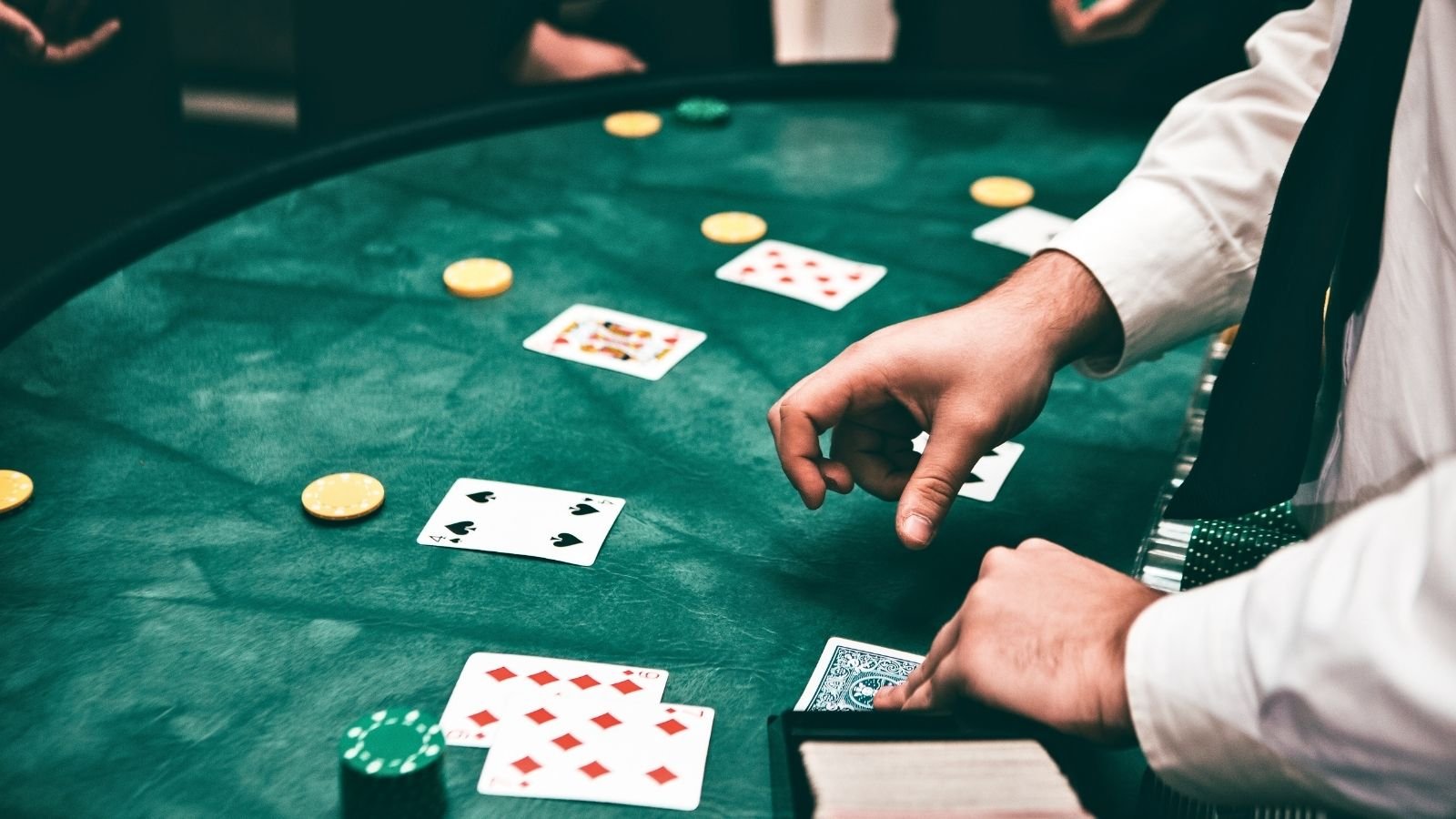
House edge sounds like something a dodgy architect might whisper about over a pint, but in the world of casinos it’s simply the quiet little engine that keeps the lights on, the carpets patterned, and the free drinks flowing. People stroll into casinos believing they’re in a fair duel with fate. They sit at a Blackjack table imagining a moment of pure meritocracy. They spin a roulette wheel as though the universe is listening. Meanwhile, the house edge lounges in the corner like a smug cat, certain it will get its supper eventually.
The idea isn’t sinister. It’s essentially the price of admission to a world where you’re allowed to hurl chips across green felt, chase improbable dreams, and pretend you’re temporarily in Ocean’s Eleven. The house edge keeps casinos solvent, ensures jackpots don’t break the bank, and promises that year after year the casino ends up just slightly ahead. Not ludicrously ahead. Just enough. A little skim here, a gentle prompt there, and the balance tilts in favour of the people who bought the chandeliers.
To understand how it works, picture a roulette wheel. Thirty-seven numbers in European roulette, which sounds reassuringly symmetrical. You bet on red or black thinking you’ve got a simple coin toss. Then you meet the green zero, the wheel’s quiet saboteur. It doesn’t turn up often, but when it does it reminds you that this game is not a coin toss. That tiny slice of green is the house edge. The casino loves that slice. It treats it like insurance. Not glamorous, not thrilling, but reliably profitable.
This mathematical quirk appears in every casino game. In slots it hides inside the payout tables. In Blackjack it crouches behind the rules that nudge the dealer into better long‑term positions. In craps it strolls around like a mischievous ghost altering probabilities by fractions. These slight bends in odds create a subtle but constant drift of money towards the house. Not enough to scare players away, but enough to make accountants smile.
People sometimes imagine the house edge as a kind of secret tax. It isn’t. It’s boldly displayed in the rules of the game, the expected returns, the published percentages required by regulators. The cleverness lies not in concealment but in human psychology. Most people don’t play a game thousands of times to reach the mathematical average. They play for short bursts, enjoy streaks, believe they’ve spotted a pattern, get triumphantly overconfident, then mildly confused when the chips evaporate. Short‑term chaos disguises long‑term certainty.
The history of this edge‑tilting principle stretches back centuries. Gambling survived every era of legislation, moral panic, and suspicious glances from priests because people adore the noise and thrill of uncertain outcomes. But early gambling houses quickly realised that leaving things entirely to chance was a disastrous business model. They needed a margin. So they added rules, shaped probabilities, created banker’s games where the establishment acts as the counterparty. The earliest casinos in Venice already understood the concept. They didn’t call it house edge, but they knew how to bake advantage into the system as naturally as they baked almonds into a biscotti.
Fast forward to 19th‑century Britain, when lawmakers began sniffing around gambling halls trying to suppress the chaos. Wagers became legally unenforceable. Public betting was frowned upon. Yet even then, the people running games found ways to keep a percentage. When the Betting and Gaming Act 1960 rolled in like a stern aunt tidying a messy teenager’s room, casinos could finally operate openly. They multiplied at breathtaking speed across the UK, helped along by the promise of stable earnings supported by that quiet mathematical margin.
By the time the Gambling Act 2005 arrived, regulation had evolved into a modernised armour that protects players as much as operators. The UK Gambling Commission insisted on clear disclosure of rules, fairness audits, and transparency. Nothing could be hidden. Casinos must publish expected returns, state the house edge, and provide guides to help players understand the odds. So the house edge is not just legal; it’s mandated by the very structure of how games are allowed to run.
The best part is that not all house edges are created equal. A Roulette table will take a couple of percent on average. Blackjack, played with a decent strategy and a pinch of discipline, can trim the edge down to almost nothing. Some slot machines offer surprisingly generous returns when they’re feeling festive. Others behave like vacuum cleaners on steroids. The joy, from a player’s perspective, is in discovering which games offer the gentlest mathematical slap.
The house edge becomes fascinating once you realise how disciplined it is. It doesn’t rely on trickery, aggressive fine print, or dramatic wins for the casino. It simply leans. Slightly, consistently, eternally. Like a parent nudging a toddler in the right direction. It’s a patient advantage, the kind that doesn’t mind waiting all night. A player can have a glorious run and strut away convinced they’ve conquered probability. Someone else has a night so unlucky it becomes dinner‑party material for years. Yet over months, over years, over millions of spins and shuffles, the edge gathers what it needs.
Casino operators treat house edge like oxygen. They adjust it, tune it, measure it obsessively. If the edge is too sharp players vanish. Too soft and the casino trembles under its own overheads. Walking that line requires a mixture of maths, psychology, design, and a faint whisper of theatrical flair. People need to enjoy the fantasy. They need to feel that anything could happen, even if the maths already knows the ending.
There’s also a cultural angle. When the idea of house edge migrated from smoky casinos to bright digital platforms, players became more informed. Online casinos list return‑to‑player percentages right next to the games like nutrition labels. It’s gambling but with calorie counts. This transparency didn’t kill the magic. It made the playing field clearer. And players kept coming, delighted by choice, dazzled by flashing graphics, still convinced they can outsmart a system that doesn’t rely on being outsmarted.
Critics occasionally point to the house edge as evidence that gambling is rigged. But rigged games remove uncertainty. House‑edge games thrive on uncertainty. Without unpredictability there would be no excitement, no tension, no reason to place a bet. Casinos want people to win. They need winners. Winners inspire others. Winners believe the universe likes them. Winners come back. The house edge doesn’t crush hope; it moderates it.
The legal framework reinforces this balance. Regulators test random number generators, inspect physical equipment, and require that casinos verify every rule is applied consistently. On top of that, operators must clearly show how each game functions. Players can ask about the edge, scrutinise payout tables, and compare expected returns. If a wheel is crooked or a machine is rigged, regulators step in with the enthusiasm of a teacher catching someone whispering during exams.
One of the more entertaining aspects of the house edge is its ability to turn tiny statistical quirks into massive annual revenues. A roulette wheel might tilt the odds by less than three percent, but multiply that across a year of spins and the amounts become breathtaking. Slot machines, with their small but persistent margins, can fund entire wings of dazzling resorts. The scale is astonishing because humans love giving probability a chance to ruin or redeem their evening.
Some players try to fight the house edge with systems. The infamously optimistic Martingale system urges players to double their bets after every loss. This might work for a short while, but eventually a terrible streak arrives, limits are reached, wallets quiver, and the system folds like a cheap camping chair. Others try pattern recognition, pretending randomness reveals secrets if you squint hard enough. Probability has no patience for these illusions.
Despite all this, casinos remain places of extraordinary atmosphere, partly because people willingly accept the house edge as part of the ritual. It’s similar to paying a theatre ticket. You’re not buying the show’s outcome. You’re buying immersion. The house edge is simply the cost of participating in a game where the climax remains uncertain.
There’s also a psychological charm to the idea that one might beat the edge. The stories of people who turned tiny bets into life‑changing sums are more powerful than any statistical model. Casinos rely on those stories. They’re embroidered into the fabric of the experience. They are the glitter that keeps the floors buzzing.
In a way, the house edge is the most honest thing in the entire environment. It states upfront that the casino will probably win over time. It doesn’t pretend. It doesn’t lie. It doesn’t hide behind superstition. It stands proudly in the rule book as a reminder: enjoy the ride, savour the gamble, celebrate the wins, laugh off the losses, but remember that the game has a long memory.
Whether you’re fascinated by probability, designing a piece of content about the world of casinos, or simply curious about what keeps a gaming empire stable, the house edge offers a glimpse into the blend of maths and storytelling that defines gambling. It’s a little bit science, a little bit theatre, a touch of history and a whole lot of human hopefulness.
Next time you place a bet, have a quiet moment of appreciation for the house edge. It’s the invisible croupier keeping the show running. And you might still walk away with a grin and heavier pockets. Just remember, the advantage waits patiently. It always shows up in the end.