Hobbyhorsing: How a Toy on a Stick Became Most Joyfully Absurd Fitness Craze
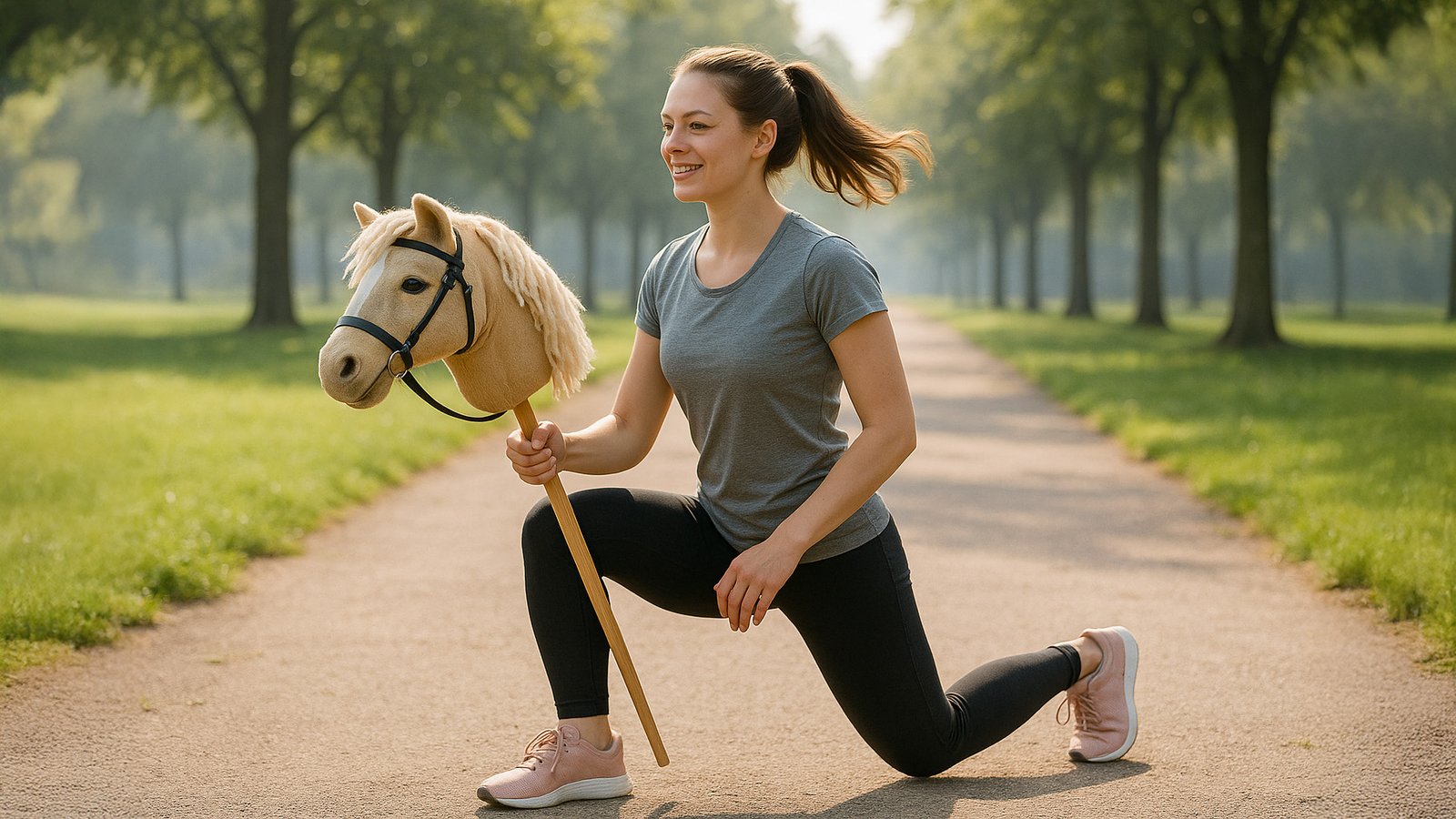
Hobbyhorsing looks innocent enough until you try to describe it to someone who hasn’t witnessed the spectacle. You tell them it involves teenagers galloping around an arena with a plush horse head on a stick, performing dressage moves with absolute concentration. They laugh. Then you show them a video of a Finnish championship, where competitors clear metre‑high jumps with the intensity of Olympic hopefuls, and the laughter melts into a faint sense of bewilderment. Somewhere between childhood nostalgia and full‑blown sport sits this curious global fascination, and no one seems entirely sure how a toy once relegated to dusty playrooms staged such a victorious comeback.
The whole thing began gaining traction in Finland around the early 2000s, where young riders without access to real stables started crafting their own equestrian dreams using fabric, thread and unapologetic imagination. The hobby spilled from back gardens into sports halls, then into organised meets, then into a national phenomenon with championships, referees and rules robust enough to soothe the spirit of any bureaucrat. A couple of decades later, we have an activity that fits into the rare category of things that sound completely absurd until you actually watch them.
For many participants the primary appeal lies in the fact it’s cheap, gloriously simple and available to anyone with a patch of grass or an empty car park. A real horse requires stables, lessons, transport, vet bills and a budget measurable in four figures before you’ve even ridden a hundred metres. A hobby horse requires a stick, a fabric head and the willingness to look a little eccentric while trotting past the neighbour’s window. That affordability factor has fuelled a wave of teenage equestrian dreams that didn’t come with parents willing to sell a kidney.
Despite its playful appearance, hobbyhorsing demands surprising levels of athleticism. Ask anyone to leap over waist‑high jumps repeatedly with a piece of wood wedged between their legs and they’ll discover muscles that have lain dormant since primary school sports day. Competitors choreograph routines that mix gymnastics, sprinting, balance and a touch of theatrical flair. The result is a strange hybrid of sport and play that keeps participants fit without the dull predictability of a treadmill.
Then comes the creative angle, which might be the real reason the whole movement spread with such ferocity. Each hobby horse is a handmade character. Participants stitch realistic eyes, braid yarn manes, sew padded muzzles, and occasionally give their mounts backstories more detailed than actual racehorses enjoy. The craftsmanship puts some fashion schools to shame. Online shops now sell premium models for sums that would make your childhood self faint. The do‑it‑yourself culture also gives the sport a rebellious edge; there’s something refreshing about teenagers building things rather than tapping screens in a trance.
Social media acted as the accelerant. Hobbyhorsing videos hit the sweet spot of shareability: visually odd enough to prompt a second glance, yet impressive enough to earn respect. The combination works like catnip for algorithms. Clips of girls cantering around in Finnish sports halls spread across borders faster than anyone expected. Soon German teens were recreating the moves, then British teens, then thousands of others around Europe and North America who discovered the inexplicable joy of prancing with a stick.
Many adults failed to resist the temptation to snigger, which only made the movement grow stronger. Nothing unites a teenage subculture like the collective determination to prove grown‑ups wrong. What started as a playful imitation of equestrian sport evolved into a slice of youth identity: a place where athleticism meets imagination, and where no one apologises for enjoying something a bit ridiculous. In a world where teens often feel judged, hobbyhorsing offers a community that thrives on unfiltered enthusiasm.
There’s also a post‑pandemic angle. Spending years locked indoors created a hunger for outdoor, physical, low‑cost activities that didn’t require teams of people or expensive equipment. Hobbyhorsing fits into that gap with suspicious perfection. It’s active without being overly competitive. It’s social but still allows for comfortable individuality. And, it’s structured enough to feel like a sport, yet silly enough to feel like freedom.
The community aspect is surprisingly powerful. Local clubs sprout in parks, sports centres and schoolyards. Participants teach one another how to jump, how to choreograph dressage steps, how to craft the perfect horse head with fabric that won’t fray after a day of energetic prancing. Competitions now take place not just in Finland but across Europe, with categories judged on style, technique and performance. Friendships form quickly when everyone shares the same unashamed love for prancing around with plush horses.
What unsettles traditional equestrians isn’t the activity itself but the challenge it poses to the seriousness of horse culture. Many lifelong riders spent years saving for lessons, studying technique, struggling with real horses that don’t always feel enthusiastic about the concept of obedience. Then a teenager with a stick clears a jump, strikes a perfect dressage stance, and becomes a viral star without ever mucking out a stable. It feels slightly unfair, but also slightly brilliant.
Culturally, hobbyhorsing fits into a wider shift towards playful adulthood and a rejection of needless seriousness. People seem tired of hobbies that require rigid rules, expensive kit and a grim determination to achieve excellence. The appeal of something delightfully odd, accessible and expressive feels like a collective palate cleanser. No one expects hobbyhorsing to become an Olympic discipline. It doesn’t need to. Its charm lies in its unapologetic absurdity.
There’s a deeper layer though. Hobbyhorsing gives young people ownership over a dream historically locked behind privilege. Equestrian sport has always carried an aura of exclusivity. Even the vocabulary hints at aristocratic origins. With hobbyhorsing, those barriers evaporate. Anyone can craft a horse, anyone can gallop, anyone can compete. The fact that the horse doesn’t eat, fall ill or develop a sudden desire to sprint sideways is merely a bonus.
Manufacturers have, unsurprisingly, spotted the opportunity. What began as home‑sewn heads on broom handles is now a market full of handcrafted designer models. Premium hobby horses can cost more than a budget bicycle. Artisans create limited‑edition breeds with embroidered nostrils and hand‑painted eyes. An entire accessory market has emerged too, featuring miniature saddles, halters and showjumping sets. Events charge entry fees, spectators buy tickets, and photographers now make a small living capturing the dramatic mid‑air moments of competitors at the peak of their prancing glory.
The phenomenon also raises an intriguing question about the nature of sport. Some people argue that hobbyhorsing qualifies because it requires athletic skill, rules, judging criteria and competitive spirit. Others claim it’s a performance art hiding behind a saddle‑shaped veil. The line between the two becomes increasingly blurry as competitors train several times a week, practice specific moves, join clubs and treat their craft with real discipline. Perhaps the question misses the point. Something can be both sport and performance without needing to pick a side.
Parents, initially sceptical, have warmed to the trend. Compared to sports involving balls, sticks or heavy equipment, hobbyhorsing carries minimal injury risk. The worst that usually happens is a grazed knee or a bruised ego after a poorly timed leap. It’s also refreshingly inclusive. You don’t need to be tall, fast or particularly coordinated to take part. Enthusiasm often trumps skill, and most participants celebrate one another’s progress rather than competing with cut‑throat ferocity.
The psychological benefits shouldn’t be underestimated. Hobbyhorsing gives young people a way to express themselves, to create characters and routines, to channel energy into something active and joyful. It encourages confidence, especially in teens who struggle with traditional team sports. It also provides a rare pocket of escapism from academic pressure and the daily onslaught of digital noise. Galloping around with a felt horse head might seem silly, but silly things can be surprisingly therapeutic.
As fashion cycles go, the rise of hobbyhorsing almost feels inevitable. The moment society became comfortable with adults colouring intricate mandala books and doing goat yoga, the door was wide open for something even more whimsical. With every new wave of youth culture, there’s a need for a pastime that confuses adults just enough to make it appealing. Hobbyhorsing ticks that box with gusto.
Some critics suspect the trend will fade once the novelty wears off. Trends come and go, after all. Yet hobbyhorsing has built something sturdier than a passing fad. It has clubs, competitions, internationally recognised judges, merchandise, choreography tutorials, and a culture all its own. It offers a sense of belonging wrapped in a cloud of irreverence. That’s a difficult combination to kill.
Whether the future brings even larger competitions, cross‑border championships or reality shows dedicated to hobby horse choreography remains to be seen. What’s clear is that people are enjoying a sport that doesn’t take itself too seriously while still leaving room for dedication and flair. For many, it’s the perfect antidote to a world that often demands relentless performance.
Seeing hobbyhorsing through an adult lens can be amusing, but watching it through the eyes of participants reveals something earnest and wonderful. There’s joy in the leaps, pride in the handmade horses, excitement in the competitions and a collective understanding that sometimes the best hobbies are the ones that make absolutely no sense to anyone else.
In the end hobbyhorsing has become fashionable because it captures the spirit of this generation: creative, physical, inclusive and unbothered by the need to appear serious. It asks only that you gallop, leap and enjoy yourself, preferably while holding a horse that can’t run away. That’s not a bad way to turn a childhood toy into a phenomenon.