Hippocrates And the Gods of Disease
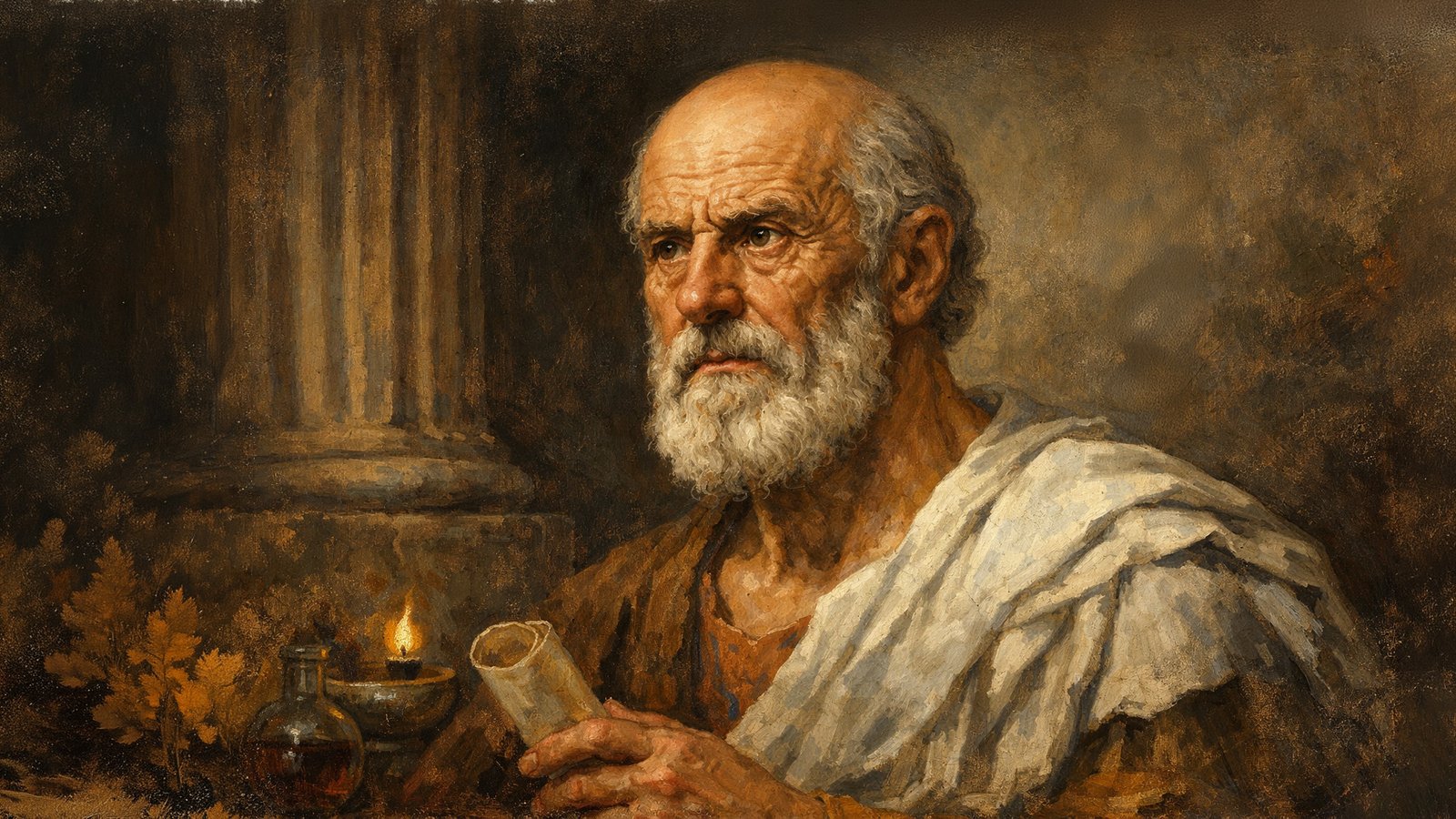
A man collapses in a dusty Greek courtyard. His body jerks violently, teeth clench, and foam gathers at the lips. Immediately the household erupts in panic. Someone shouts that a god has struck him. Meanwhile a neighbour whispers that a curse must be involved. Within moments another voice suggests rushing to the temple. For centuries across the ancient Mediterranean this scene carried a familiar explanation. When illness appeared suddenly and dramatically, the gods were usually the prime suspects.
In the ancient Greek world, disease lived comfortably inside religion. A fever might signal divine anger. Madness could mean possession. Unusual symptoms often hinted at punishment from Apollo or Artemis. Above all, convulsions terrified observers. When a person lost control of their body, many believed a supernatural force had entered it. Therefore the illness we now call epilepsy carried a chilling title: the sacred disease. The label itself reveals the logic. If something looked mysterious enough, it must belong to the divine realm.
However, during the fifth century BCE a small group of physicians began questioning that assumption. Their ideas later became associated with Hippocrates, a doctor from the island of Kos who eventually gained the grand title Father of Medicine. Historians still debate how much Hippocrates himself actually wrote. The surviving collection of medical texts, known as the Hippocratic Corpus, probably came from several authors working in related traditions. Nevertheless the writings share a striking attitude that felt almost rebellious for the time.
Disease, they argued, did not come from offended gods. Instead illness emerged from nature.
At first glance the idea sounds simple. Yet that shift quietly changed the logic of medicine. Hippocratic physicians did not reject religion entirely. Greek society remained deeply religious, and doctors themselves honoured divine powers. Instead they challenged a specific habit of explanation. If a patient developed seizures, the physician should not search Olympus for the answer. Rather, the physician should examine the body.
One treatise illustrates this challenge particularly well. In a text called On the Sacred Disease the author attacks the belief that epilepsy is divine. According to him, the disease is no more sacred than any other illness. People call it sacred, he explains, only because they fail to understand it. Ignorance dresses itself in holiness. Consequently the argument strips away the comforting mystery surrounding one of the most frightening conditions in Greek life.
The author also criticises rival healers who relied on rituals and incantations. Many practitioners claimed special access to divine cures. However the Hippocratic writer openly mocks such figures. They hide behind religion, he argues, because it protects them from scrutiny. If the gods cause disease, then no one can test the healer’s claim. Natural explanations, by contrast, demand evidence.
Once illness belongs to nature, the entire medical approach changes. Physicians must observe carefully. They must compare cases and track patterns. They must record how diseases begin, develop, and end. Gradually Hippocratic doctors developed a culture of close observation that feels surprisingly modern.
Physicians watched their patients with remarkable patience. They studied the colour of skin and eyes. They noted breathing, appetite, sleep, sweating, and bodily fluids. Furthermore they tracked the rhythm of fevers that rose and fell in cycles. They also recorded the days when illness suddenly changed direction. These turning points were called crises. Each observation slowly replaced supernatural speculation with physical description.
Admittedly their theories were not always correct. Hippocratic medicine relied heavily on the idea of bodily humours: blood, phlegm, yellow bile, and black bile. According to the theory, health depended on balance among these fluids. Disease appeared when the balance collapsed. Modern medicine eventually rejected the humoural model. Even so, the deeper transformation lay elsewhere. Hippocratic physicians insisted that illness had causes within the body and the environment.
Consequently environment became central to diagnosis. Hippocratic writers analysed climate, water quality, winds, seasons, and diet. Different landscapes, they believed, produced different patterns of disease. Marshy land might generate fevers, whereas windy regions might produce breathing problems. Therefore the physician needed to study geography alongside anatomy.
Lifestyle also entered the medical conversation. Instead of prescribing purification rituals, physicians frequently recommended practical regimens. Patients received advice about exercise, rest, bathing, and food. Sometimes these recommendations sound surprisingly modern. At other times they seem strange today. Nevertheless the principle remained consistent. The body responded to natural conditions, and careful adjustment could restore balance.
Even so, sacred healing did not vanish from Greek life. Temples dedicated to Asclepius remained busy centres of therapy. Pilgrims travelled long distances seeking cures. Many patients slept inside temple sanctuaries hoping the god would appear in dreams and prescribe treatment. Offerings, prayers, and ritual purification therefore continued to shape everyday healthcare.
Interestingly most Greeks probably saw no contradiction in using both systems. A patient might consult a physician in the morning and pray at a sanctuary in the evening. Greek culture rarely demanded rigid boundaries between religion and practical knowledge. Hippocratic medicine therefore expanded within a world that still believed deeply in divine influence.
Ironically Hippocrates himself later acquired a legendary aura that resembled the sacred traditions he helped challenge. Writers in later centuries described him as a heroic travelling doctor who cured plagues and humbled rival healers. Stories portrayed him as the embodiment of perfect medical wisdom. Gradually the physician who resisted mystical explanations became surrounded by myths of his own.
Nevertheless the intellectual shift proved lasting. Hippocratic medicine altered the way people discussed illness. Instead of asking which god caused a disease, physicians increasingly asked how the body functioned and what natural forces shaped it. As a result the focus moved from divine punishment to physical processes.
Admittedly the transformation was gradual. Early physicians still worked with limited knowledge and imperfect theories. Yet they introduced a crucial habit of thinking. Disease could be studied, debated, and described rather than feared as a supernatural mystery.
Ultimately the most radical change involved explanation itself. Hippocratic writers insisted that the body followed its own rules. Those rules might be hidden at first. However careful observers could uncover them through patience, curiosity, and experience.
The gods did not disappear from Greek life. Yet in the consulting room, little by little, the body began to speak for itself.
Post Comment
You must be logged in to post a comment.