Guinness 60/40 Debate Sweeps Through Pubs This Winter
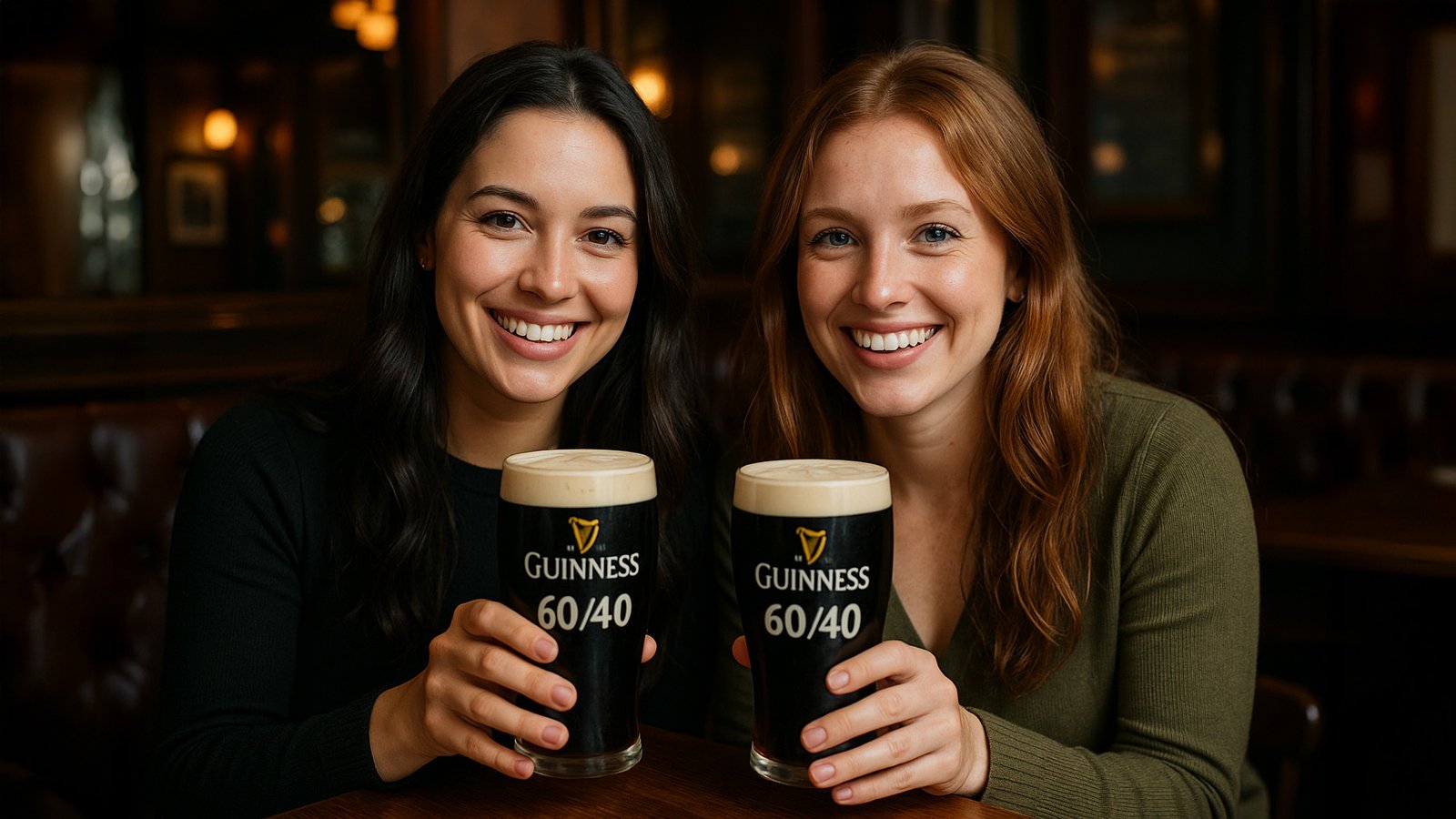
The pint sat there looking perfectly innocent, which already made people suspicious. A Guinness that behaved itself? That alone felt like a warning sign. Regulars stared as though the glass might suddenly confess to a crime. Christmas hadn’t even arrived yet and pubs were already bracing for a seasonal controversy: a 60/40 Guinness hybrid that promised to let you join the fun without waking up the next morning feeling like an abandoned chimney sweep. The scandal brewed faster than the stout.
Word slipped out of a Dublin pub like a mischievous rumour. Someone had combined Guinness 0.0 with the classic stout. Not half and half. That would be too neat. No, this was 60 per cent of the teetotal version with 40 per cent of the real thing, an alchemical ratio that produced a pint with an ABV of around 1.7 per cent. Strong enough for flavour, weak enough to keep you from accidentally debating philosophy with a traffic cone at three in the morning.
People reacted as though someone had discovered a new star. Or committed treason. Opinions split dramatically. One corner declared it nonsense. Another called it genius. Someone online referred to it as “ridiculous”, complete with the kind of punctuation that suggests deep emotional distress. Others shrugged and called it perfect for the festive period. The best bit was how ordinary it looked. The hybrid resembled a classic pint so convincingly that even the most devoted stout guardian might fail to notice. That, naturally, made them even more anxious.
The ritual survived untouched. Guinness fans breathed a cautious sigh of relief. First came the pour of Guinness 0.0. Then the settling stage. Then the slow, confident addition of the proper stout on top. The cascade performed its usual theatre. People watched it in the way they watch a lava lamp after two drinks. The creamy head formed exactly as tradition demanded. A stranger passing the table wouldn’t detect anything unusual unless they had a sixth sense for ABV.
Younger drinkers embraced the concept with the enthusiasm usually reserved for a new flavour of crisps. Their evenings no longer needed to end early because of early alarms, driving home or simply having too many plans packed into one holiday week. A pint that stayed loyal to the taste of Guinness while behaving like a responsible adult sounded almost wholesome. They pictured themselves sipping slowly while older relatives insisted they never needed such inventions back in their day.
The interesting part was the strategy behind it. Guinness didn’t release a big official product. No grand campaign. No billboards featuring moody silhouettes holding a hybrid pint against a windswept Irish coastline. Instead, pubs experimented quietly. Two existing drinks combined into something new. No new machinery. No new staff training. Just a friendly reminder that sometimes innovation hides in the cupboard waiting for someone to mix two bottles together.
Taste dictated survival. Guinness 0.0 already had a reputation for mirroring the original flavour surprisingly well. This gave the hybrid a fighting chance. Some drinkers described it as smooth and familiar. Others said it tasted like Guinness on holiday. A few refused to admit they liked it because they felt loyalty to the stronger stuff. They ordered a regular pint afterwards, just to maintain their reputation. The hybrid didn’t judge them.
Critics spoke about the drink as if it symbolised the downfall of civilisation. They insisted that Guinness represented heritage, identity and purity. Mixing it with anything else felt like scribbling on an old manuscript. These declarations didn’t stop pubs adapting, because pubs had always adapted. Tax changes, shifting tastes, health trends, the great craft-beer wave, the rise of the espresso martini. Hybrid Guinness fit neatly among centuries of pub evolution.
Pricing bamboozled some landlords. Should it cost the same as a regular pint? More? Less? Someone joked that they needed a mathematician behind the bar. Others said that this drink felt less like a budget option and more like a lifestyle choice. A mindful pint for people who want to stay mostly sensible but still catch the mood.
Light alcohol drinks continued their steep rise long before this trend arrived. Festive seasons enhanced that demand. Office parties one night, family gatherings the next, a dinner the day after. People wanted to join in without completely obliterating the week. The 60/40 pint slid seamlessly into this new rhythm of British and Irish pub life, where moderation no longer meant hiding in the corner with sparkling water.
Social media did what it always does: it turned the story into a circus. Memes spread faster than the actual drink. Someone predicted a future of custom decimals. One wag announced they’d order a 63/37 just to disrupt the system. Another predicted a 20/80 version for those trying to behave but not too much. Bar staff watched the commentary with stoic calm. They’d handled far worse requests.
Press coverage made the hybrid look like the star of a festive soap opera. Every article spoke about reactions as though the pint had caused an international incident. Photos of perfectly poured hybrids circulated as evidence. Comments declared loyalty, outrage, amusement. The pubs involved probably enjoyed the unexpected publicity boost.
Then came the speculation. Beer analysts wondered whether other brands would jump on the idea. A world of controlled blends beckoned. Bars could potentially offer a full spectrum from high ABV to chilled-out low. For Guinness, the hybrid allowed them to stay aligned with younger drinkers without tampering with the existing crown jewel.
Brand strategists admired the low-risk sophistication of the move. No overhaul. No complicated R&D. No dramatic tagline about reinventing tradition. Just a neat little pivot. A tweak to proportion rather than product. A middle ground between innovation and nostalgia. Somewhere between the comfort of the familiar and the thrill of trying something slightly mischievous.
December served as the perfect launchpad. People grew more adventurous in winter. They tried novelty lattes, questionable mince-pie-inspired snacks and festive jumpers that should have been illegal. A hybrid pint looked almost dignified in comparison. Pub culture thrived on new talking points. A drink that created debates while preserving the beloved cascade was guaranteed to travel far.
Some Christmas tables witnessed heated discussions about the hybrid. One friend defended it with passion. Another mocked the idea while sipping it anyway. A third found it amusing that people could argue so dramatically about a pint designed to be mild. The hybrid provided entertainment before anyone even tasted it.
Behind the scenes, pub owners monitored sales nervously and excitedly. Early adopters returned for a second pint. Curious sceptics arrived armed with criticism and left quietly impressed. The drink didn’t ignite a revolution, but it sparked a sense of possibility. Pub culture evolved not through grand gestures but through small nudges like this.
The hybrid told a bigger story. Drinking culture changed. The bravado of past decades faded in favour of balance. Nights out mattered, but so did early meetings, school runs and not waking up feeling like a fossil. People wanted to join the pub atmosphere without sacrificing their sanity. The hybrid Guinness said, rather politely, that both were possible.
Its appeal lay in the accommodation it offered. Someone who normally avoided Guinness because it felt too heavy finally had a gentle entry point. Someone cautious about alcohol intake could join the round without raising eyebrows. Someone who loved the traditional pint but needed a softer landing found an elegant compromise.
Whether it becomes an annual ritual or a fleeting seasonal quirk remains to be seen. Trends wander in and out of fashion like unpredictable relatives. But the 60/40 had something working in its favour: it wasn’t trying to replace anything. It simply added one more option to the long list of pub possibilities.
As the Christmas season approached, drinkers kept ordering it for the same reason crowds gather to watch a magician. They wanted to understand how it worked. Some swore it would become their regular pint. Others pretended they only ordered it for research. A few insisted the hybrid tasted better than expected and then whispered it as though confessing a sin.
The 60/40 Guinness captured the mood of the season: festive, curious, a little chaotic and pleasantly surprising. It sparked debates, pulled in new crowds and reminded people that traditions survive because they adapt. And while some purists continued to grumble into their full-strength pints, plenty of drinkers embraced the hybrid with admirable enthusiasm.
As December loomed, the hybrid had earned its place as the year’s most unexpectedly divisive star. Not bad for a pint that only wanted to mind its own business and give people a gentler Christmas. Cheers to that.