From Lava to Luxury: The Invention of Glass
The invention of glass feels like the sort of tale that should begin with a lightning bolt striking a beach, sand melting into a perfect shimmering sheet, and ancient people nodding wisely as if the plan had always been obvious. Instead, the real story meanders through millennia of accidents, half-understood chemistry, stubborn trial and error, and craftsmen who kept going simply because something curious happened in the furnace.
Long before anyone tried to make glass on purpose, people relied on the natural version. Obsidian, born of volcanoes, appeared like nature’s own cutlery drawer. Sharp, glossy, and dramatically dark, it became blades, arrowheads, and jewellery. For thousands of years, that was plenty. After all, when a mountain occasionally explodes and hands you a ready-made toolkit, innovation can afford to be patient.
Eventually, curiosity interfered. The first man-made glass almost certainly arrived uninvited. Somewhere in the ancient Near East, someone heated sand, ash, and mineral scraps in a kiln meant for something else. At the bottom, a sticky, colourful residue appeared. Once cooled, it turned into small beads. They were cloudy and uneven, yet they were new, and novelty has always travelled well.
We are talking roughly five thousand years ago, which is impressive when you consider how long it can still take to master a modern oven timer. Those early beads quickly caught on. Their bright colours and unfamiliar shine made them perfect for trade. Consequently, merchants carried them from settlement to settlement, each stop adding a little more mystique and a little more profit.
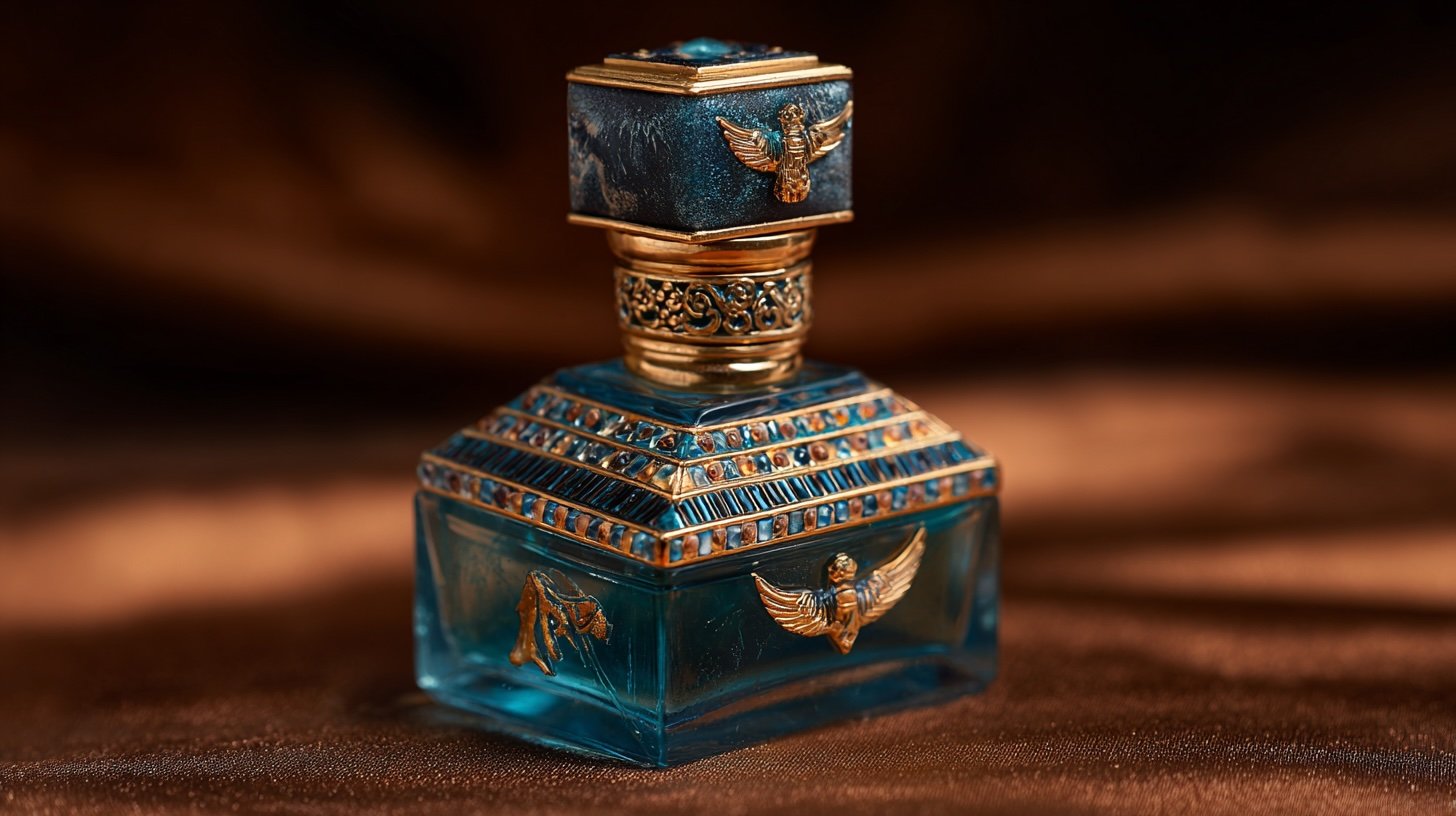
Egypt, predictably, did not stop at beads. Egyptian artisans treated materials as invitations rather than limits. They developed a method known as core-forming, which sounds technical but was mostly clever improvisation. Molten glass was wrapped around a core of sand and clay, shaped while hot, and then scraped out once cool. The results were small bottles and vessels, luxurious enough to impress elites and ritualistic enough to feel important.
As a result, glass settled into an awkward middle ground. It was not essential for daily survival, yet it carried enormous symbolic value. Possessing glass meant access to skill, heat, and time. In other words, it meant power, or at least proximity to it.
For centuries, glass remained slow, precious, and limited. Then a simple act of curiosity shifted everything. Somewhere in the eastern Mediterranean, a craftsman introduced a metal tube to molten glass and blew into it. That single gesture created glassblowing, and the craft moved from painstaking patience to rapid possibility.
With glassblowing, vessels that once took days could be formed in minutes. Bottles, bowls, and cups became practical rather than indulgent. As techniques spread, glass slipped into ordinary life. Roman households drank from it, stored perfumes in it, and admired its ability to mimic gemstones.
Naturally, the Roman appetite for refinement pushed the material further. Experiments followed with colour, thickness, and clarity. Over time, knowledge travelled with merchants and soldiers alike. Gradually, glass stopped being a novelty and started behaving like infrastructure.
However, knowledge is fragile. When the Roman world fractured, much of that expertise fractured too. Glassmaking did not disappear, but progress slowed noticeably. Workshops kept furnaces burning, yet innovation wandered elsewhere.
In medieval Venice, glass found a new centre of gravity. Production moved to Murano, partly to reduce fire risk and partly to control secrets. Venetian authorities guarded glassmaking knowledge with unusual intensity. Artisans enjoyed prestige, although travel was strongly discouraged. Still, the results justified the obsession.
Murano glassmakers refined recipes and techniques until they produced cristallo, a remarkably clear glass after centuries of cloudiness. It looked purer, lighter, and almost unreal. Consequently, Venetian glass became a symbol of European sophistication.
Elsewhere, experimentation continued quietly. In England, glassmakers discovered that ash derived from burned seaweed produced stronger, clearer glass. The method looked improvised, and in many ways it was. Nevertheless, it worked, proving once again that progress often arrives disguised as desperation.
The final leap arrived in the twentieth century. Someone realised that molten glass, when floated on molten metal, spreads into a perfectly flat sheet. This was not flashy, yet it was transformative. Suddenly, glass could be produced at scale with reliable consistency.
As a result, the modern built environment took shape. Skyscrapers gained transparent skins. Cars received windscreens. Shopfronts multiplied. Screens became possible, then unavoidable.
There is something quietly poetic about the arc. Glass begins with volcanic rock and ends with glowing rectangles that dominate daily attention. Along the way, it shifts from obsidian blades to luxury beads, from pharaonic perfume bottles to Roman tableware, from guarded furnaces to global industry.
Today, glass is so embedded in everyday life that it often goes unnoticed. It holds drinks, frames views, keeps out weather, magnifies stars, corrects eyesight, and delivers endless distractions. Yet its story remains profoundly human.
Ultimately, the invention of glass was never a single moment. Instead, it unfolded as a long, collaborative experiment across cultures and centuries. Like many enduring ideas, it began with someone poking something hot, noticing the result, and wondering what else it might do.