From Hunting Fields to Westminster Corridors: The Odd Life of Parliamentary Whips
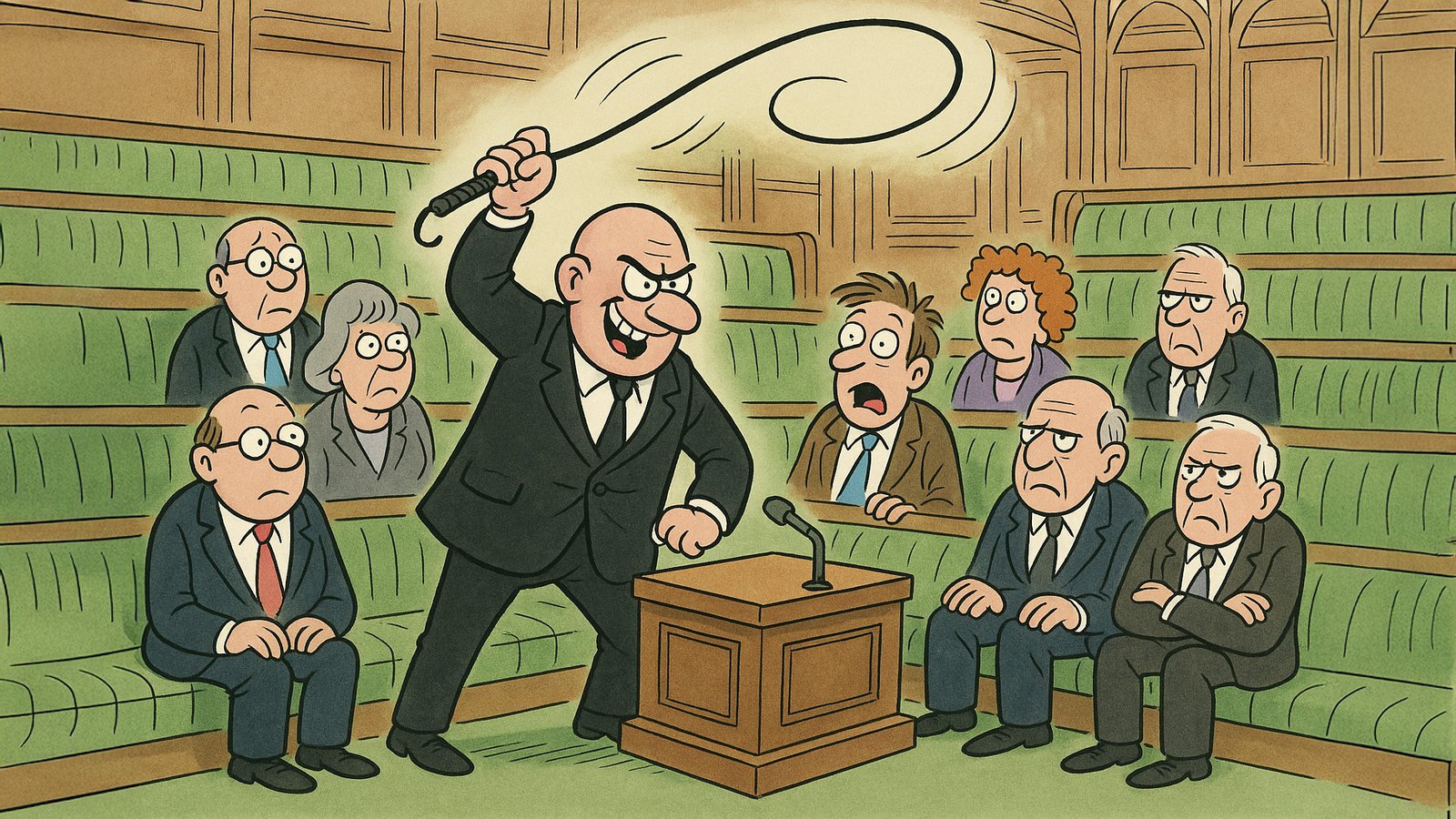
Parliamentary whips sound like something you’d find in a dusty corner of a museum gift shop or tucked away in a Victorian melodrama, but the whole thing started with dogs. Not metaphorical ones either. Actual foxhounds. You picture the scene: gentlemen thundering across the English countryside on horseback, the sort of people who thought nothing of wearing six layers of wool and calling it sport. In this world, the whipper‑in held the pack together. Keeping wayward hounds from sprinting off in the wrong direction wasn’t glamorous, but it mattered. Politics adored a metaphor, so naturally it borrowed one. MPs wandering off to dine, gossip or fall asleep in a leather armchair looked suspiciously like distracted dogs. Someone needed to keep them focused. The name stuck.
Party discipline didn’t come ready-made. In the earliest days of Parliament, MPs behaved like independent spirits who owed loyalty mainly to their constituencies or, more accurately, to whoever paid their bills. The idea of a coherent political party was still simmering. Seventeenth-century politics looked like a revolving door of temporary alliances, backroom agreements and the occasional swordfight just offstage. As tensions rose and voting blocs solidified, news travelled faster and ambitions grew bolder. It became clear you couldn’t simply hope your allies would show up when it mattered. People needed reminders, nudges and sometimes a shove.
By the early eighteenth century, unofficial organisers emerged, lurking in corridors with lists of who planned to vote which way. They counted heads, made promises and whispered the occasional threat, though threats sounded more polite then. These proto-whips tried to keep their side of the chamber from embarrassing themselves by missing key votes. Picture a man in a wig sprinting down Westminster’s draughty halls, parchment in hand, trying to wrangle MPs who had developed sudden commitments to the tavern across the street. Over time, this chaotic shepherding turned into something resembling a system.
Victorian politics adored order. This era polished the whip role into a profession. Parties grew larger, demands grew heavier and backbenchers required constant attention. The weekly written list of instructions, underlined once, twice or three times, became standard practice. The famous three-line whip, the parliamentary equivalent of an alarm bell, showed up in this period. Leaders used it sparingly, but when they did, everyone knew to stop pretending they were too busy sharpening pencils to attend the vote. Skipping a three-line whip had consequences that varied from a stern conversation to political exile.
The whip’s office evolved into a political command centre with the ambience of a gentlemen’s club crossed with a tactical bunker. Whips became experts in soft power. They listened, coaxed and occasionally applied pressure with a smile. People whispered outrageous stories about them knowing everyone’s secrets, most of which were probably nonsense, though it suited the mystique. What mattered was their ability to predict trouble before it arrived and neutralise it before the newspapers caught wind.
The twentieth century strengthened this machinery. After the Second World War, parliamentary parties solidified. Governments clung to fragile majorities, and one rebellious MP could turn a confident victory into a humiliating defeat. Whips acted like political meteorologists. They sensed storms in the backbenches and tried to prevent them turning into hurricanes. Some members found the whole thing heavy-handed; others appreciated the gentle arm around the shoulder reminding them that unity helped everyone keep their jobs.
Meanwhile, in the House of Lords, the role adapted differently. Peers didn’t fear losing their seats because they weren’t elected. Lords whips focused instead on managing debates and shepherding legislation through a chamber where people had stronger opinions about tradition than about party loyalty. Discipline there resembled choreography more than control. They coordinated speakers, smoothed scheduling clashes and maintained decorum in the world’s most elegantly stubborn legislative body.
Modern politics looks different on the surface, but the whip tradition remains stubbornly alive. Emails replaced parchment, smartphones replaced frantic sprints through the lobby, but the essentials didn’t change. Whips still interpret the political mood, soothe anxieties, schedule debates and count every potential rebellion like a family accountant at Christmas. They mediate between leaders and restless backbenchers, offering reassurance or warning depending on the day’s crisis.
The strangest part is how resilient the system proved. Despite louder media, faster scandals and MPs who can broadcast their grievances to millions with one post, the whipping structure continues to hold party politics together. Without it, Parliament would resemble a noisy market where every stallholder shouts louder than the next, and nothing ever gets voted on. Whips prevent chaos by treating politics like a mixture of psychology, theatre and logistics. They keep the show moving even when the cast forgets their lines.
People occasionally suggest Parliament abandon the whip system, imagining a world where MPs vote freely on every issue. It sounds noble. It also sounds like a recipe for legislative deadlock so severe the building might need a permanent “temporarily closed” sign. Parliamentary democracy, for all its eccentricities, depends on predictable numbers. The whips provide that. They aren’t glamorous, they rarely speak in debates and they’re never the stars of the show, but without them the production would fall apart in the first act.
You don’t notice whips unless something goes wrong. A rebellion erupts, a government loses a vote it expected to win or rumours swirl about late-night negotiations in dimly lit corridors. Their work remains mostly invisible, woven into the daily rhythm of Westminster life. The tradition survives because it works. It began with hounds on a field and ended with MPs in a chamber who occasionally need reminding which way to walk when the division bell rings. In politics, as in hunting, someone always needs to keep the pack together.