Fire rainbows: The Beauty of Ice Crystals in the Sky
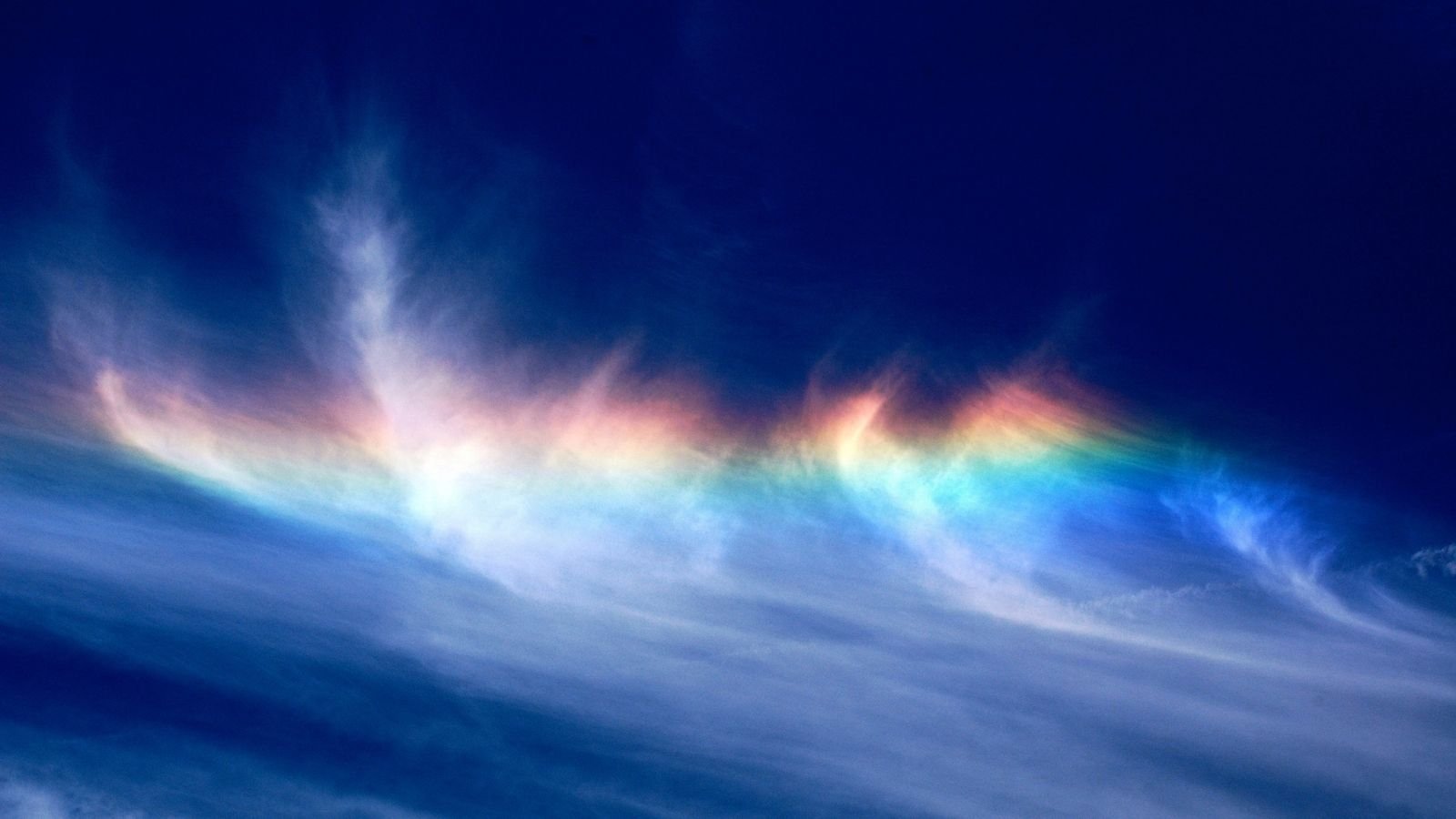
Fire rainbows sound like something a fantasy novelist invented after a long night, but the sky sometimes goes rogue and paints a horizontal streak of colour bright enough to make you question whether you walked into an AI-generated landscape. The name misleads everyone, of course. No fire anywhere, no rain in sight. Just ice crystals and sunlight performing a well‑timed duet. Nature loves a good marketing trick.
You look up and see a band of colours stretched across a patch of wispy cirrus. The thing hangs there like a cosmic highlighter someone dragged across the sky. People mutter about Photoshop. Dogs stare at their owners because humans started behaving strangely again. Someone inevitably whispers that it must mean something mystical. It doesn’t. But it certainly feels like it should.
The whole show begins with the kind of clouds that look more like hair than anything solid. Cirrus clouds float high above the messier weather, chilled to the point where water turns into tiny hexagonal plates. Those crystals drift around with all the enthusiasm of commuters on a Monday morning, yet they manage to act like a massive prism. Sunlight slips into one face of a crystal and exits through another, bending just enough to release a neatly arranged strip of colours. When thousands of these tiny plates sit at the same angle, the whole spectacle emerges like a quiet rebellion against beige skies.
The Sun plays its own part, and it demands a ridiculous angle. It needs to climb above roughly 58 degrees, which immediately rules out most of northern Europe. People north of Manchester love atmospheric phenomena, but the Sun rarely cooperates. It refuses to climb high enough, a bit like a cat who knows exactly what you want but sees no reason to comply. Further south, the odds improve. Southern England whispers a polite “perhaps”, while Greece and southern Italy shrug as if to say “we see them before breakfast”.
Fire rainbows only appear when the geometry lines up perfectly, which explains their reputation for rarity. Nothing about them stays simple. The ice crystals must lie flat. The Sun must shine from the right height. The clouds must pass through just the right patch of sky. You need timing worthy of a stage manager who refuses anything less than precision. Miss your moment and the whole illusion fades before you manage to pull your phone out of your pocket.
People often confuse fire rainbows with sundogs, halos, and various other sparkly phenomena the sky enjoys throwing at us. A sundog pops up when the Sun sits low and the world grows cold enough to float crystals in the air. Fire rainbows only show up when the summer Sun stands high and bright. They carry a very different personality. Halos loop around the Sun. Sundogs sparkle to its left and right. Fire rainbows glide across a horizontal line, looking like someone tried to underline the sky with a neon marker.
The first time you spot one, it almost feels staged. You might walk out of a shop carrying a sandwich and find the sky making a spectacle above your head. People stop mid‑stride. Someone takes a photo that looks disappointingly grey compared to what their eyes see. Cameras never do justice to colours that dramatic. The real thing glows fiercely, almost too bright for comfort, as if nature discovered saturation controls and immediately pushed them too far.
The name “fire rainbow” sticks because it sounds dramatic. The proper term, circumhorizontal arc, feels like something a lecturer would recite while hiding their resentment for poetic language. Most people choose drama. You can’t blame them. If you spot something that looks like a sideways rainbow lit from within, you’ll probably choose the name with the flair. The scientific label reads like a warning on packaging.
People turn into amateur meteorologists within moments. They begin explaining angles and crystals to anyone who stands still long enough. Someone points toward the Sun and shouts “it has to be really high today”, which convinces absolutely no one but adds to the enthusiasm. Fire rainbows breed sudden confidence. They also breed conspiracy theories. A few onlookers start wondering whether the government, aliens, or both somehow arranged this. Most shrug and enjoy the show.
The colours appear reversed compared to what you see in a normal rainbow. Red stays on top, violet on the bottom. The band lies parallel to the horizon rather than curving across the sky. The whole formation looks like a rebellious cousin of the classic rainbow, the one who refused to follow the family tradition and instead pursued conceptual art. It rarely lasts long. Clouds drift. Angles shift. The sky returns to its usual greys and whites. People keep staring at the crumbs of colour left behind, slightly dazed.
If you travel often, you might notice that some regions treat fire rainbows like a casual summer perk. California sees them. Florida sees them. Much of the American South doesn’t act surprised anymore. They simply look up, nod, and get on with their day. In Britain, the opposite happens. A single arc triggers enough excitement to dominate group chats for a week. Weather enthusiasts publish triumphant posts. News outlets scramble to explain that no, the apocalypse hasn’t arrived.
The funniest part involves the photographers. They sprint towards the nearest open space, convinced they will capture the perfect shot. Then they learn the same lesson everyone learns: cameras hate fire rainbows. The sky ends up pale, the colours bland, and the result looks like a smudge of hope rather than a glorious eruption of hues. A few succeed, often by accident, and earn endless social media admiration from people who struggle to understand how the colours appeared so dramatic.
Fire rainbows feel fragile. Not emotionally fragile, just easily disrupted. A shift in the Sun’s angle turns them off like a switch. A small roll of cloud breaks the alignment and eats half the spectrum. The phenomenon never tries to linger. It performs and vanishes, like a pop‑up shop selling nothing you need but everything that catches your eye. You wait for it to return, knowing full well that the sky makes no promises.
Their brief appearance creates a tiny window of collective wonder. People suddenly act nicer. No one pretends indifference. Even the most cynical characters pause long enough to appreciate the moment. Fire rainbows expose the inner child everyone keeps tucked away behind emails and schedules. For a few minutes the world looks playful. Everyone notices the same thing. Strangers point upwards and share a rare sense of unity, powered by nothing more than refracted light.
Some even attempt to tie meaning to the moment. They speak about good omens or messages from above, even though nature cares very little about human interpretation. Light bends; colours appear. That’s all. Yet the emotional impact makes the event feel more significant than the physics behind it. You might catch yourself smiling for no sensible reason. You might keep glancing at the sky long after the colours fade.
The physics remains simple, though elegant. Light enters the side of an ice crystal at one angle and leaves through the bottom face at another. Each wavelength bends slightly differently, which spreads the familiar spectrum into a flat ribbon. Only plate‑shaped crystals create the effect. Only the correct orientation allows it to become visible. Only the right altitude ensures the crystals stay cold enough to exist. Everything depends on an absurd sequence of coincidences, which makes each sighting feel like a tiny cosmic joke.
People often ask whether climate change might make fire rainbows more common. Hard to say. Warmer air holds more moisture, so more cirrus clouds could form, but the Sun’s angle stays the same. Geography remains stubborn. Northern Scotland won’t suddenly develop Miami’s solar elevation. You still need summer skies and high Sun. Weather patterns shift, but the physics won’t compromise.
Stories circulate from hikers, sailors, pilots and early‑morning joggers who stumble into a fire rainbow before the rest of the world wakes up. Pilots in particular love them. They spend their lives above the weather, gliding near cirrus layers that generate these spectacles more often than the ground allows. Ask one about the first time they flew past a circumhorizontal arc and you’ll likely receive the kind of grin usually reserved for childhood memories.
The phenomenon rarely appears near sunrise or sunset. People love golden hours, but the Sun remains too low to meet the requirements. You need midday strength, the sort that makes everyone scramble for shade. The moment the Sun dips below the threshold, the colours vanish. Some observers refuse to leave their spot until the last trace disappears, convinced it might flare up again as the clouds shift. The sky remains indifferent to negotiation.
Anyone who likes chasing rare atmospheric effects eventually creates their own checklist. Fire rainbows sit near the top for many because they combine rarity, drama and unpredictability. You can’t plan them like eclipses. No one issues alerts. Most sightings happen because someone glanced up at exactly the right moment. You get the impression the sky enjoys keeping humans humble.
The more you learn about fire rainbows, the more ridiculous the whole recipe sounds. Cold ice crystals suspended miles above ground, all aligning like tiny soldiers. A Sun high enough to glare with tropical confidence. A passing cirrus layer that floats into position and behaves just long enough to create an extravagant smear of colour. Then the entire formation collapses as casually as it formed.
The charm comes from how unnecessary the whole thing feels. Nature didn’t need to invent this spectacle. Rainbows already exist. Halos already exist. Clouds already know how to behave predictably. Yet sometimes the atmosphere decides it wants to show off, and humans receive a few minutes of impractical, dazzling colour.
If you ever encounter a fire rainbow, don’t waste the moment fiddling with camera settings. Look first. Enjoy the absurdity of a world where ice crystals ten kilometres above your head create luminous streaks that appear and vanish without care for your schedule. Nothing in that moment asks you to interpret it. Nothing demands meaning. The sky simply performs.
People remember their first fire rainbow for years. They forget the weather from that morning but never the sensation of stopping in the middle of a street because the sky looked like it borrowed a palette from a surrealist painter. The memory sticks because it feels rare and undeserved, the sort of moment that turns an ordinary afternoon into a small piece of personal mythology.
Fire rainbows don’t ask for devotion, but they reward curiosity. They encourage you to look up more often, even when the sky seems dull. One day it might throw a streak of impossible colour your way. Not because you earned it, just because the angles finally behaved.
So keep an eye on the sky when summer arrives and the Sun climbs higher than usual. Cirrus clouds drift lightly. Ice crystals align for reasons known only to them. Light bends. For a few brief minutes the sky might decide to underline itself in rainbow colours just to remind you that it can.
Photo: Jeff Kubina via Wikimedia Commons
