Fermented Glory: Why Sauerkraut is a Hero of Your Digestive System
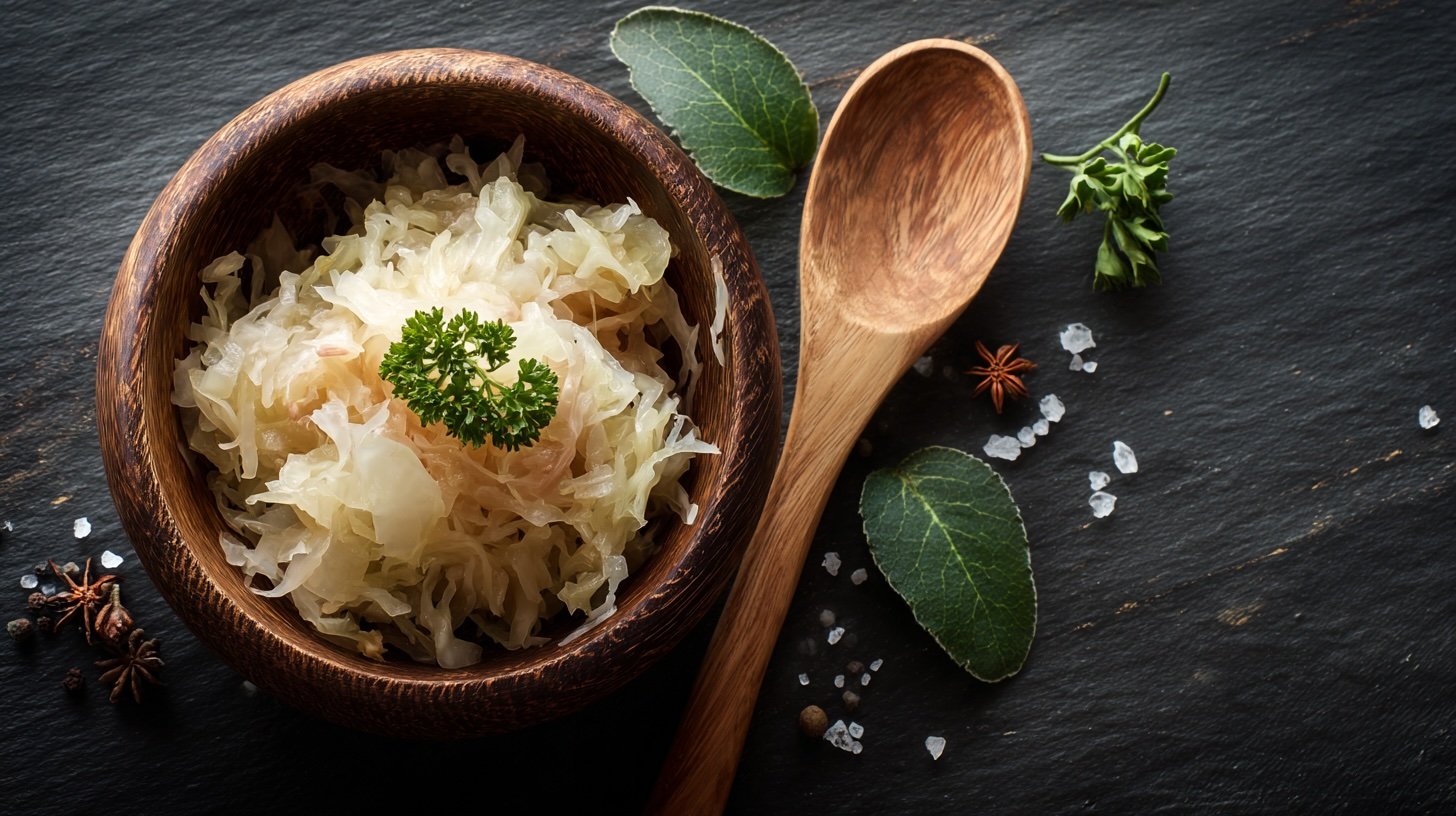
Sauerkraut tends to appear in life the way eccentric relatives do at family gatherings: unmistakable, slightly loud, and deeply proud of its heritage, even though no one can quite agree on what that heritage actually is. People insist it’s German, but fermented cabbage quietly rolled across continents long before Germany discovered it could liven up a plate of sausages. Fermentation has rather nomadic origins, and sauerkraut carries those stamps like a well-travelled passport.
The earliest pickled cabbages came from ancient China more than two millennia ago, where labourers working on the Great Wall preserved shredded cabbage in rice wine. Their goal wasn’t culinary glory; they simply needed something nourishing that wouldn’t spoil in the cold. It worked brilliantly, and the idea wandered westward with the persistence of a rumour. Eventually, the method landed in Europe, where cooks looked at rice wine, shrugged, and swapped it for salt. This tiny adjustment ushered in lacto-fermentation, a process so elegant that cabbage quietly transforms into something sharp, tangy and downright addictive.
European cooks embraced the technique with the enthusiasm of people who had just discovered a way to keep vegetables alive through winter. Germans made it famous, but Poles, Alsatians, Russians, Latvians, and several other nations instantly laid claim to it. Everyone added their own flourish. Some mixed in carrots, others cranberries, apples, caraway seeds or juniper berries. Each variation insisted it was the superior one, though cabbage, being a sensible vegetable, didn’t take sides.
History occasionally gives food a starring moment, and sauerkraut’s big break came courtesy of long ocean voyages. Scurvy haunted sailors, and ships smelled vaguely of despair until James Cook turned up with barrels of sauerkraut. He had noticed that its vitamin C content survived months at sea. Sailors weren’t thrilled at first, though survival tends to improve the flavour of most things. Soon enough, sauerkraut became indispensable, proving that fermentation could outsmart a disease that had tormented explorers for centuries.
Somewhere along the way, sauerkraut also became a quiet diplomat. It crossed borders without causing arguments and slipped into cuisines with barely a fuss. In Alsace, it partnered with sausages and pork in stately choucroute garnie. In Poland, it simmered with mushrooms until the whole kitchen smelled like Christmas. In Russia, it showed up with onions and sunflower oil and occasionally with tart green apples. This unassuming pile of fermented cabbage carried childhood memories, winter traditions and the sort of comfort that travels surprisingly well.
Part of sauerkraut’s appeal stems from its personality during fermentation. Anyone who has made it at home will confirm that it behaves like a small, slightly mischievous science experiment. It fizzes. It bubbles. It sometimes makes tiny popping noises that leave you wondering if the cabbage is trying to communicate. That’s lactobacillus bacteria hard at work, turning sugars into lactic acid and creating an environment hostile to dangerous microbes but perfectly pleasant for fermentation enthusiasts.
The alchemy is beautifully simple. You slice cabbage, mix it with salt, squeeze until it gives up its juices, pack it tightly into a jar, and wait. Over the following days and weeks, chemistry unfolds with serene confidence. The brine grows cloudy, the flavour deepens, and suddenly you’re left with something that tastes far more complex than the humble vegetable you started with. It’s a reminder that transformation in nature often looks like magic disguised as biology.
Sauerkraut’s health credentials would make a nutritionist smile. Fermentation fills it with probiotics that support gut health and digestion. The lactic acid acts as a friendly bouncer at the door of your microbiome, encouraging good bacteria and discouraging troublemakers. Vitamin C remains plentiful, which helped sailors survive the open seas and now quietly supports immune systems everywhere. Vitamin K2 contributes to bone health, while B vitamins show up to join the party courtesy of bacterial activity.
Despite its long list of virtues, sauerkraut does come with one caveat: salt. A generous pinch is essential for fermentation, but it means moderation suits anyone keeping an eye on sodium intake. Unpasteurised sauerkraut retains the living cultures people rave about. Pasteurised versions behave politely on supermarket shelves but leave most of the probiotic benefits behind due to heat treatment. It’s not a scandal, just a lesson in reading labels.
Cabbage, when left to its own devices with a handful of salt, manages feats that would impress a laboratory. Fermentation not only preserves nutrients; it increases the bioavailability of some, especially vitamin C. It’s an old trick that feels strangely futuristic, as if our ancestors accidentally pioneered the original wellness trend without knowing they were supposed to brand it.
Fun facts about sauerkraut pop up in the oddest places. During the First World War, the United States briefly tried to rename it “liberty cabbage” to avoid any association with Germany. The new name did not survive the armistice or common sense. In Eastern Europe, sauerkraut brine often serves as a hangover remedy, which sounds extreme until you remember that most hangover cures are really just negotiations between pride and suffering.
Records involving sauerkraut tend to be gloriously excessive. The largest serving on record topped a metric tonne, an event that must have required an equally heroic number of sausages. Collectors seek out antique German fermentation crocks, complete with hand-painted motifs, because apparently even cabbage needs a touch of elegance. Researchers working on long-term space missions have studied fermented foods for their microbiome stability, meaning sauerkraut may one day hitch a ride into the cosmos.
Its global story continues with surprising twists. In Korea, a different but philosophically related fermentation process produced kimchi, which regularly challenges sauerkraut for the title of Most Beloved Fermented Cabbage. Kimchi brings spice, swagger and an entirely separate cultural lineage. Sauerkraut seems unbothered by the rivalry. It understands that there’s room in the world for more than one cabbage-based celebrity.
Some people treat sauerkraut as a winter essential; others eat it year-round with the calm certainty that it makes everything better. A spoonful brightens stews, cuts through fatty meats, refreshes salads and whispers faintly of ancient markets where fermented foods ruled the shelves. It’s a humble dish that has outlived empires, crossed continents, rescued sailors, and survived rebranding attempts by nervous governments.
There’s a moment when you open a jar of sauerkraut and the aroma leaps out with a confidence usually found in extroverted cats. It’s tangy, unapologetic and delightfully alive. The first bite delivers crunch, acidity, and an odd sense that nature has engineered something rather clever. Fermentation isn’t glamorous, but it yields creations that feel both comforting and mischievous.
Sauerkraut’s endurance isn’t accidental. It sits at the crossroads of flavour, science and culture. It proves that simple ingredients, given time and the right conditions, can become unexpectedly profound. Cabbage never asked to be iconic, but humanity gave it a push, a sprinkle of salt, and a tight jar. It rewarded us with a food that nourishes, travels well and tells a story older than most nations.
Perhaps that’s the real charm of sauerkraut. It doesn’t pretend to be sophisticated. It doesn’t need truffles or foams or elaborate presentations. It just exists, quietly fermenting away, confident in its own peculiar greatness. And somehow, that confidence tastes rather good.