El Salvador Crypto Gamble: High Hopes, Low Returns
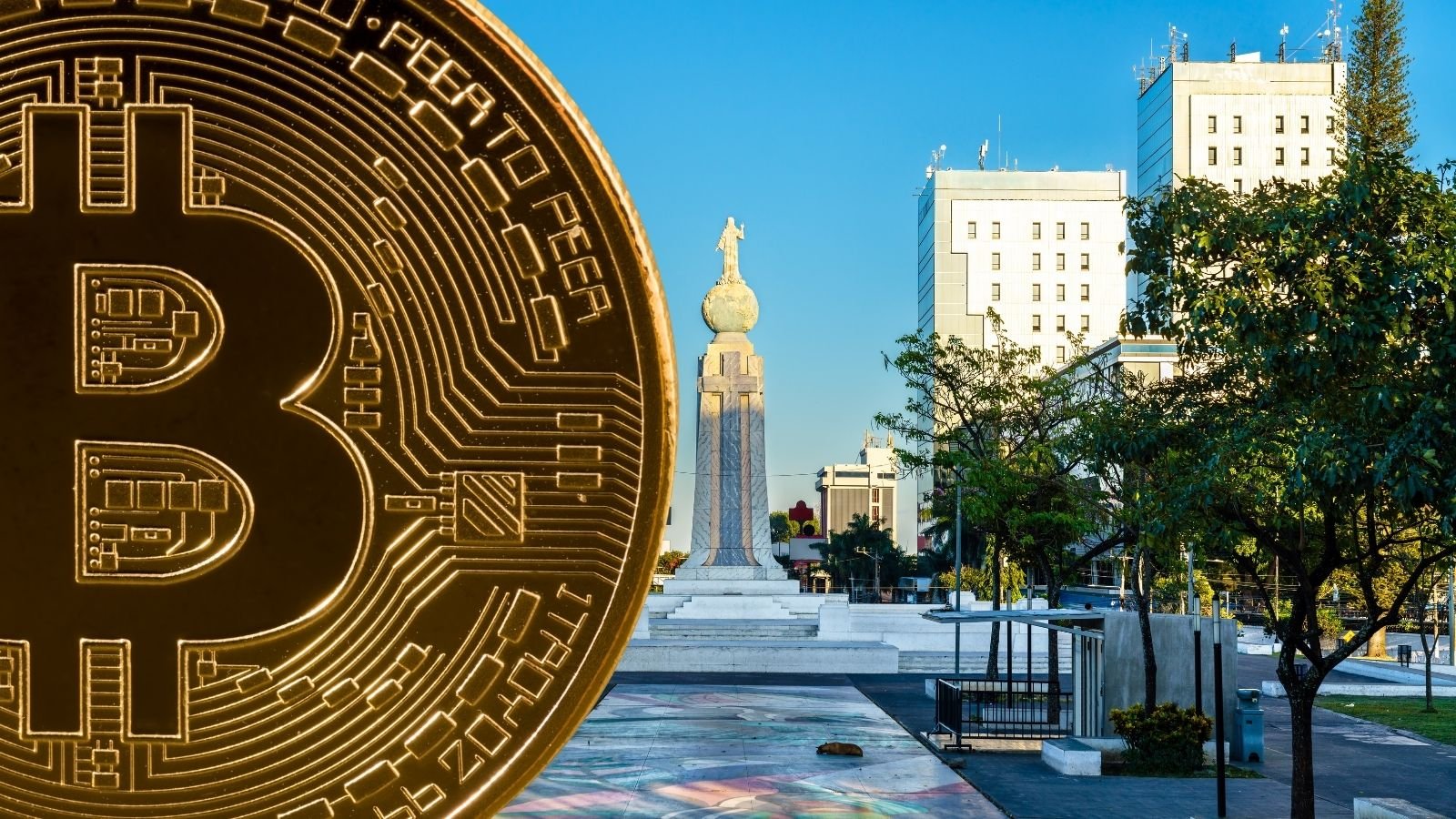
El Salvador once tried to rebrand itself as the world’s first Crypto nation, a small Central American country with big volcanic dreams and the sort of tech swagger usually reserved for Silicon Valley bros with venture capital to burn. The promise sounded impressive. Digital wallets for everyone. Lower fees for the millions sending money home. A chance to leapfrog traditional banking systems. A country that might ride the rocket of a digital currency straight into the economic stratosphere. The pitch landed with the finesse of a magician pulling a rabbit out of a hat. The rabbit, of course, immediately bolted into the jungle.
Before the story slowed down, more than 2.7 million people downloaded the Chivo wallet, a number equal to over 40 percent of the country’s population at the time. Early surveys showed that 25.7 percent of Salvadorans had used Bitcoin for payments in 2021. That figure fell to roughly 21 percent in 2022, dropped again to 12 percent in 2023, and sank further to around 8 percent in 2024. People watched the experiment with a mix of curiosity, scepticism and popcorn‑in‑hand anticipation. It all started in 2021 when the government declared Bitcoin legal tender alongside the US dollar. Imagine paying for your coffee in something that swings in value like a caffeinated squirrel. Still, the idea had charm. The country wanted to stand out. It wanted to show the world that innovation didn’t stop at big economies with large tech hubs. It wanted to prove that a bold move could rewrite the script of economic development.
The script, however, came with footnotes, disclaimers and the occasional plot twist. Few expected the journey to be smooth, but the bumps felt more like potholes big enough to swallow a motorbike. Adoption looked promising at first. People queued up for the government’s official wallet because it came with a free thirty dollars. Free money lights up eyeballs anywhere, and El Salvador was no exception. For a few weeks, Bitcoin payments buzzed around markets and cafés like digital fireflies. Then the fireflies faded. Once the free thirty dollars disappeared, so did the excitement.
The numbers tell the story better than any heroic narrative. A little over a quarter of Salvadorans used Bitcoin within the first year. That’s decent on paper, but usage dropped like a stone afterwards. By 2024 just over eight percent still bothered to use it. Most people returned to the good old US dollar because it behaves itself. Nobody wakes up to find their weekly grocery money has evaporated overnight thanks to a sudden price swing. Stability may not be glamorous, but it’s beautifully boring, and boring fits daily life rather well.
Businesses offered similar feedback. Roughly 20 percent of firms initially said they were willing to accept Bitcoin, yet only 14 percent actually made a Bitcoin transaction between late 2021 and mid-2022. A mere 3 percent believed Bitcoin acceptance added any value to their business, which made the enthusiasm look more like a temporary photo opportunity than a shift in corporate behaviour.. Many said they’d accept Bitcoin if customers insisted, but customers rarely did. Some firms tried out the system, smiled politely, and placed the QR code in a dusty drawer once the novelty wore off. A few embraced it for publicity, the same way cafés embrace colourful lattes nobody actually orders. The truth settled in slowly. People like certainty when paying for things. They like knowing that the amount they earned in the morning still holds value in the evening.
The grand prize was always supposed to be remittances. These account for more than 24 percent of El Salvador’s GDP, with annual inflows hovering around 7.5 billion dollars. Bitcoin was expected to revolutionise the system, yet fewer than 2 percent of remittances used crypto rails in the first year, and by 2023 the monthly average flowing through the official wallet sat at under 7 million dollars, barely 1 percent of total remittances. to be remittances. El Salvador depends heavily on money sent home by nationals living abroad. The government argued that Bitcoin would transform remittances by cutting fees and delays. A dream of cheaper, faster, friction‑free transfers glimmered on the horizon. Reality tapped that dream on the shoulder and quietly asked for identification. Only a tiny fraction of remittances ended up flowing through Bitcoin rails. Most families stuck to their trusted channels, even if they involved fees. Reliability beat novelty every time.
Financial inclusion remained one of the noble goals. Many Salvadorans didn’t have bank accounts, and the idea of a digital wallet that bypasses traditional banking sounded exciting. Yet adoption didn’t bloom. Digital literacy, patchy mobile connectivity and limited trust created a perfect storm of hesitation. Even those who tried the official wallet sometimes abandoned it after a few transactions because it felt awkward or unnecessary. People didn’t want financial adventures. They wanted tools that worked seamlessly within their daily routines.
Then came the less entertaining bits. International institutions frowned at the whole experiment, especially after the government accumulated a reserve of more than 6,200 Bitcoin. Depending on the price, that stash has hovered between 500 and 700 million dollars. Back in the darker days of 2022 the portfolio carried an unrealised loss of around 35 to 40 million dollars, though prices later recovered. Investors watched these swings nervously as bond yields climbed and the country’s sovereign spreads widened. at the whole experiment, especially when sovereign reserves began including Bitcoin. Monetary policy meets rollercoaster rarely inspires investor confidence. The International Monetary Fund raised eyebrows higher than volcanic peaks. Credit rating agencies scribbled cautious notes. The bond market muttered under its breath. El Salvador’s borrowing costs nudged upwards as financial analysts struggled to make sense of a sovereign state that mixed macroeconomics with digital gold.
For a moment it seemed the country wanted to build a “Bitcoin City,” a shiny coastal development powered by geothermal energy and crypto charisma. It was marketed as the future, a place where everything glowed with innovation and prosperity. But progress looked slower than expected, and questions piled up about environmental impact, public cost and feasibility. Residents wondered whether anyone had actually asked them if they wanted a futuristic metropolis in their backyard. Cities built on slogans tend to wobble unless they sit on solid ground.
Mining Bitcoin using volcanic energy sounded appealing, particularly when the government announced plans for a geothermal-powered operation capable of producing more than 90 megawatts for mining infrastructure. The numbers charmed the headlines, but economists pointed out that hardware, cooling, maintenance and volatility made profitability uncertain. Impressive energy capacity didn’t automatically translate into lasting returns. like the perfect fusion of nature and tech. Headlines loved it. The story of laptops humming away thanks to magma heat carried a certain charm. But charm doesn’t guarantee economic viability. Academic studies pointed out that mining might not bring the expected returns. Energy doesn’t mine coins by itself. You need infrastructure, cooling, hardware, and a steady stream of market demand. The math refused to bend to political optimism.
By early 2025 the government updated the rules. Bitcoin still existed as legal tender in theory, but usage wasn’t compulsory anymore and the option to pay taxes in Bitcoin vanished. Businesses regained full discretion. Daily life returned to its familiar rhythm, with more than 98 percent of transactions settling in US dollars. the rules. Bitcoin remained legal in spirit but lost its privileged position. Businesses no longer had to accept it. Taxes returned to simpler forms of payment. Bitcoin sat politely in the corner like an eccentric uncle who once threw an unforgettable party but now only visits on holidays. Its role shifted from national symbol to optional gadget.
The country still holds a significant Bitcoin reserve. The stash currently rests in multiple wallets for security. Price surges have lifted the value of the reserve, at least for now. The current balance makes the government look clever on good days and reckless on bad ones, depending entirely on Bitcoin’s mood swings. The portfolio could act as a windfall or a headache, and nobody can predict which way the coin will flip.
Some international observers argue that the experiment hurt the country’s sovereign reputation. Others say the whole adventure showed admirable courage. The truth probably sits somewhere in the uncomfortable middle. The project delivered valuable lessons in a compressed timeframe. It taught policymakers that people won’t adopt technology merely because legislation encourages it. They need to feel genuine benefit, convenience and safety. Grand visions must survive contact with everyday life.
Tourism did receive a boost. The country reported double-digit growth in visitor numbers during the peak of global media attention. Exact counts vary, but several quarters showed increases exceeding 30 percent, helped by digital nomads, curious travellers and conferences eager for a Bitcoin-flavoured backdrop.. Curiosity about a Bitcoin‑powered nation drew digital nomads, crypto influencers and adventurous travellers. The story of the world’s first Bitcoin country created brand recognition. People love novelty. They love stories. They love destinations that offer bragging rights. Restaurants, hotels and tour operators happily embraced the influx. While not a transformative economic force, it didn’t hurt the tourism sector.
The government also developed a more sophisticated digital assets framework. It created a Digital Assets Issuance Law and a regulatory system designed to attract tokenisation projects and digital-asset service providers. Whether this turns into a meaningful flow of investment remains unclear, but the legal architecture already covers issuance caps, registration procedures and investor-protection rules.. There’s now a regulated environment for tokenisation, issuance and blockchain‑based products. Whether this generates long‑term investment remains to be seen, but it gives the country a platform to pitch itself as a hub for emerging tech. Building a regulatory structure isn’t flashy work, but it can create opportunities down the line.
Meanwhile, the IMF eventually approved a 1.4 billion-dollar programme that focused on traditional reforms. That agreement required limits on public-sector exposure to Bitcoin and clear risk-management safeguards. Debt-to-GDP ratios, which had dropped to around 77 percent in 2022, stabilised as fiscal adjustments took hold. a multi‑billion dollar programme that focused on traditional reforms. Fiscal stability. Debt management. Economic resilience. Risk mitigation. The kind of agenda that financial institutions adore. Part of the agreement involved reducing Bitcoin’s prominence to avoid further sovereign exposure. In effect, the country stepped back from the most flamboyant elements of its own experiment.
Comparisons with other digital‑money projects add perspective. Countries like Nigeria and the Bahamas tested central bank digital currencies with mixed outcomes. Adoption struggled. People didn’t flock to new systems just because they were shiny. Digital money works beautifully when it feels as smooth as sending a message on your phone. It falls flat when people sense even the slightest friction.
Brazil’s Pix presents the counterexample. A state‑built payment system that exploded in popularity because it offered instant, free transactions using familiar currency and worked across all banks. It created inclusion without volatility. It delivered convenience without anxiety. It lowered costs without triggering international concern. Pix succeeded not because it was daring, but because it was useful.
El Salvador’s Bitcoin journey showed what happens when a bold idea meets the real world. Innovation requires more than ambition. It needs infrastructure. It needs trust. It needs understanding of user behaviour. It needs technical support and gradual evolution. Leaping ahead without these elements can produce headlines, but not necessarily economic transformation.
Still, the country didn’t walk away empty‑handed. It gained global visibility. It built regulatory foundations. It learned the mechanics of digital finance. It created a space for future experimentation, this time with more caution and experience. That’s not a trivial achievement. Plenty of countries sit on their hands for decades rather than attempt reforms that stir debate.
The story offers a lesson for any government dreaming of technological shortcuts to prosperity. Digital currency doesn’t automatically solve structural challenges. It can’t replace education, infrastructure or governance. It won’t fix inequality overnight. But it can play a role when embedded in a larger, realistic strategy where people feel comfortable using it.
El Salvador reached a point where Bitcoin stopped being the protagonist and became a supporting character in a wider economic narrative. That shift made the situation more stable and less dramatic. The government now balances innovation with pragmatism. Investors breathe a little easier. Locals return to the rhythms of daily life without needing to check coin prices before buying beans and rice.
The international community watches with a touch of respect and a pinch of scepticism. Some admire the experiment’s audacity. Others use it as a cautionary tale. Most agree that the global financial landscape needs innovation, but perhaps not innovation that behaves like a yo‑yo.
The adventure isn’t quite over. Bitcoin remains part of the story. The reserve still sits on the national balance sheet like a bet placed on a future no one can fully predict. The digital assets framework keeps evolving. The country continues its dance with technology, now with a steadier rhythm.
Maybe the experiment didn’t reshape the economy as promised. Maybe it didn’t achieve the grand vision of frictionless remittances or mass adoption. But it sparked conversations, challenged conventions and pushed the boundaries of what a small nation can attempt. That’s worth something. It shows that policy doesn’t have to be dull. It shows that imagination still matters.
What comes next remains anyone’s guess. Markets change. Technologies evolve. Political winds shift. Perhaps one day Bitcoin will stabilise enough for a second wave of adoption. Or perhaps the real victory will come from more measured innovations inspired by past missteps. Either way, El Salvador has already written a chapter that economists, policymakers and curious travellers will discuss for years.
And tucked inside that chapter lies a reminder that experimenting with national currency can feel like walking a tightrope. Sometimes you wobble. Sometimes you land a spectacular pose. And sometimes you step back, take a breath and try again with better balance and sturdier shoes.