Scientists Confirm Dolphins Call Each Other by Name — and They Only Bother for the Ones They Love
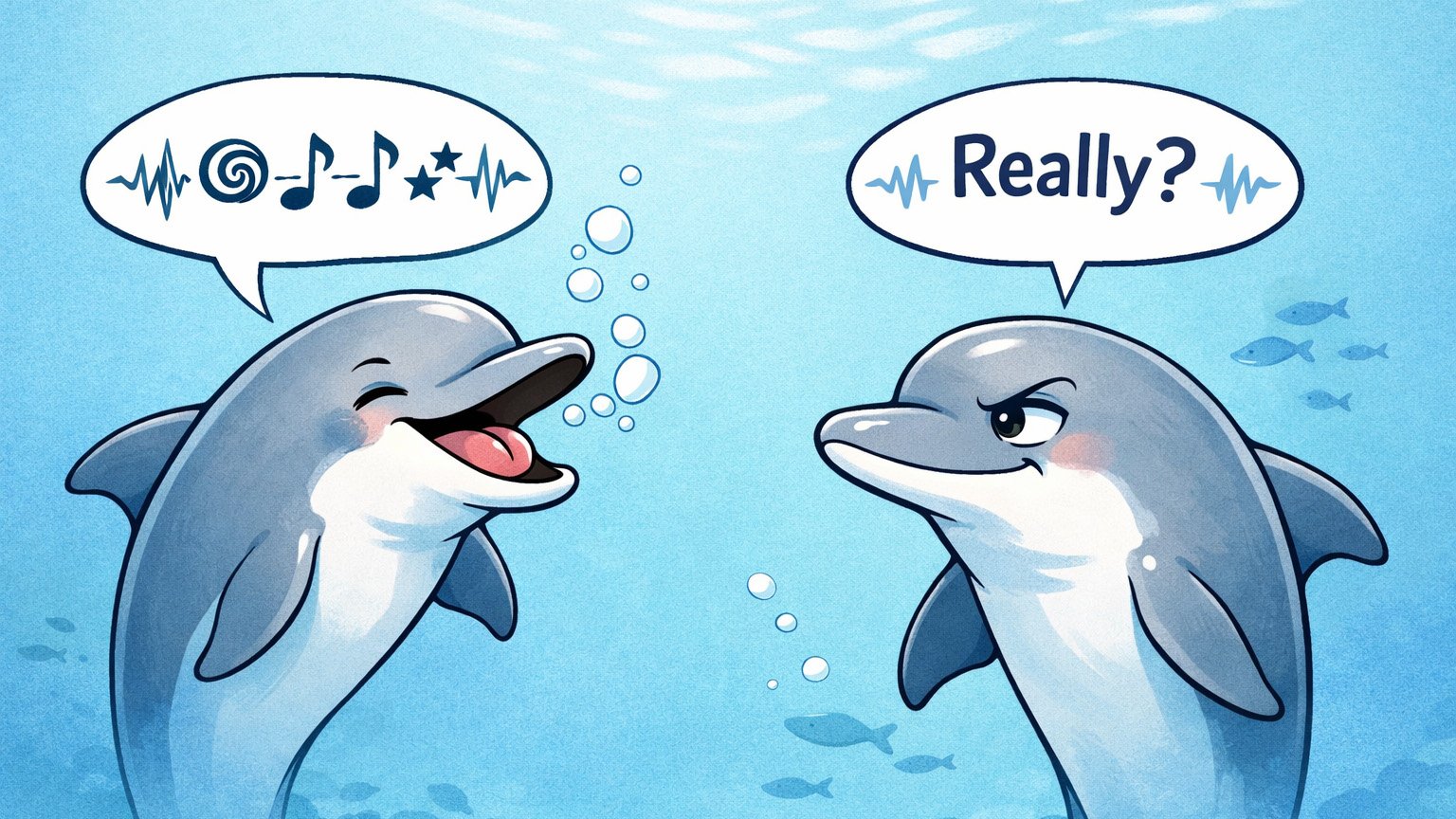
So, here’s a question that sounds like the start of a joke but absolutely isn’t: do dolphins have names for each other? Because it turns out, they do — and honestly, learning this should make every human feel simultaneously delighted and a bit humbled.
Let’s rewind to the 1960s, when researchers first started noticing something odd about the way dolphins communicate. Scientists recording bottlenose dolphins underwater kept picking up a particular type of whistle — one that each individual dolphin produced far more than any other. Not a random squeak, not a panicked click, but a stable, unique, personally identifiable sound. They called it a “signature whistle.” The name stuck. So did the mystery of what it actually meant.
Bottlenose dolphins develop individually distinctive signature whistles that they use to maintain group cohesion, and unlike identification signals in most other species, signature whistle development is strongly influenced by vocal learning — a skill these animals maintain throughout their entire lives. That’s rather extraordinary when you think about it. Most creatures are essentially stuck with whatever sounds evolution handed them. Dolphins, meanwhile, are out here essentially choosing their own names.
A dolphin’s signature whistle develops within the first year of life and rarely changes throughout adulthood. Laela Sayigh, a marine biologist at the Woods Hole Oceanographic Institution who has tracked the same community of wild dolphins in Sarasota Bay, Florida since the mid-1980s, has documented stable whistle call structure in individuals for at least a decade — in some cases considerably longer. Genuinely more consistent than some people’s mobile numbers. And the whistle isn’t just a passive sound dolphins emit because they can’t help it. A dolphin emits its signature whistle to broadcast its identity and announce its presence, allowing animals to identify one another over large distances — dolphin whistles can travel up to 20 kilometres, depending on water depth and frequency.
What really made scientists sit up straight, though, was the discovery that dolphins don’t just use their own signature whistle. They copy each other’s. Dr Stephanie King and Professor Vincent Janik, both marine biologists at the University of St Andrews Sea Mammal Research Unit, confirmed this through sound playback experiments with wild bottlenose dolphins — and what they found was oddly touching. Dolphins copy the signature whistles of loved ones, such as a mother or a close male companion, when the two are apart. These copied “names” were never used in aggressive or antagonistic situations, and were directed only toward individuals the dolphin genuinely cared about. So dolphins, bless them, only call out the names of those who actually matter to them. There’s a lesson somewhere in there for the rest of us.
The research involved the sort of experiment that sounds quite stressful to everyone involved. King’s team, working with acoustic recordings gathered through the long-running Sarasota Dolphin Research Program, captured pairs and groups of dolphins and held them separately in nets for around 108 minutes on average. During this time, the dolphins could not see each other but could hear each other, and they whistled at a high rate — sometimes 5.3 calls per minute. One pair of closely bonded males was recorded at the start of the project and then again 12 years later. Even after all that time, each dolphin still copied the fine details of the other’s whistle. That is, frankly, extraordinary loyalty.
Jason Bruck, a researcher at Stephen F. Austin State University, found that dolphins can remember the signature whistles of other individuals even after being separated for 20 years, pointing to long-term memory and strong social intelligence. Twenty years. Most of us can barely remember what we had for lunch on Tuesday.
Now, here’s where it gets even more interesting, because recent research suggests the naming system might be just the beginning. Sayigh and Janik, working together as lead authors on a 2025 paper published on bioRxiv, identified 22 “non-signature whistles” used by dozens of dolphins in the Sarasota Bay community — with two particular whistles used consistently across at least 25 and 35 different individuals respectively. One of those whistles seems to function as an alarm; the other has been described by the researchers as a “query” sound, something dolphins produce when something unexpected or unfamiliar turns up. The idea that dolphins may have a language dates back to the 1960s, though conclusive evidence has remained elusive. Given what’s turning up in 2025, the idea is looking considerably less far-fetched than it once did.
There’s a myth worth clearing up here, though, because this topic attracts a lot of enthusiastic oversimplification. Dolphin communication is not the same as human language. King and Janik are careful to point out that while signature whistles function like names in a meaningful, research-backed way, making the leap from “they have names” to “they’re essentially talking” is a stretch the data doesn’t yet support. What we can say with confidence, as Janik’s team established in a landmark paper in the Proceedings of the National Academy of Sciences, is that dolphins are the only animals other than humans shown to transmit identity information independent of the caller’s voice or location. That’s still a genuinely astonishing thing.
There’s also the small matter of what ocean noise pollution is doing to all of this. If dolphins rely on being able to hear each other’s names across kilometres of open water, then turning those kilometres into an underwater motorway poses a serious social problem — not just an environmental one. Sayigh has compared the effect of constant shipping noise on dolphin communication to trying to spot someone you know in a crowd through fogged glass.
Meanwhile, a 2023 study published in PNAS by Sayigh and her colleagues found that dolphin mothers modify their signature whistles in the presence of their calves, in a way strikingly similar to human “motherese” — that slightly softer, gentler version of our voice we instinctively use with babies. Dolphins do that too. Which is the kind of detail that makes you want to sit very quietly and think about what else is going on out there beneath the surface of the sea that we haven’t noticed yet.
So yes, dolphins have names. They choose them young, keep them for life, and use them selectively — only for the individuals who genuinely matter. Scientists are increasingly confident about that much. Whether there’s a whole lot more going on beyond the names is the question that’s keeping Sayigh, Janik, King, and their colleagues extremely busy in 2025. And honestly, good. Keep asking. Because however much we already know about dolphins, the ocean keeps suggesting it’s considerably more than we thought.
Post Comment
You must be logged in to post a comment.