Dolls’ Houses: The Homes Where Servants Never Complain
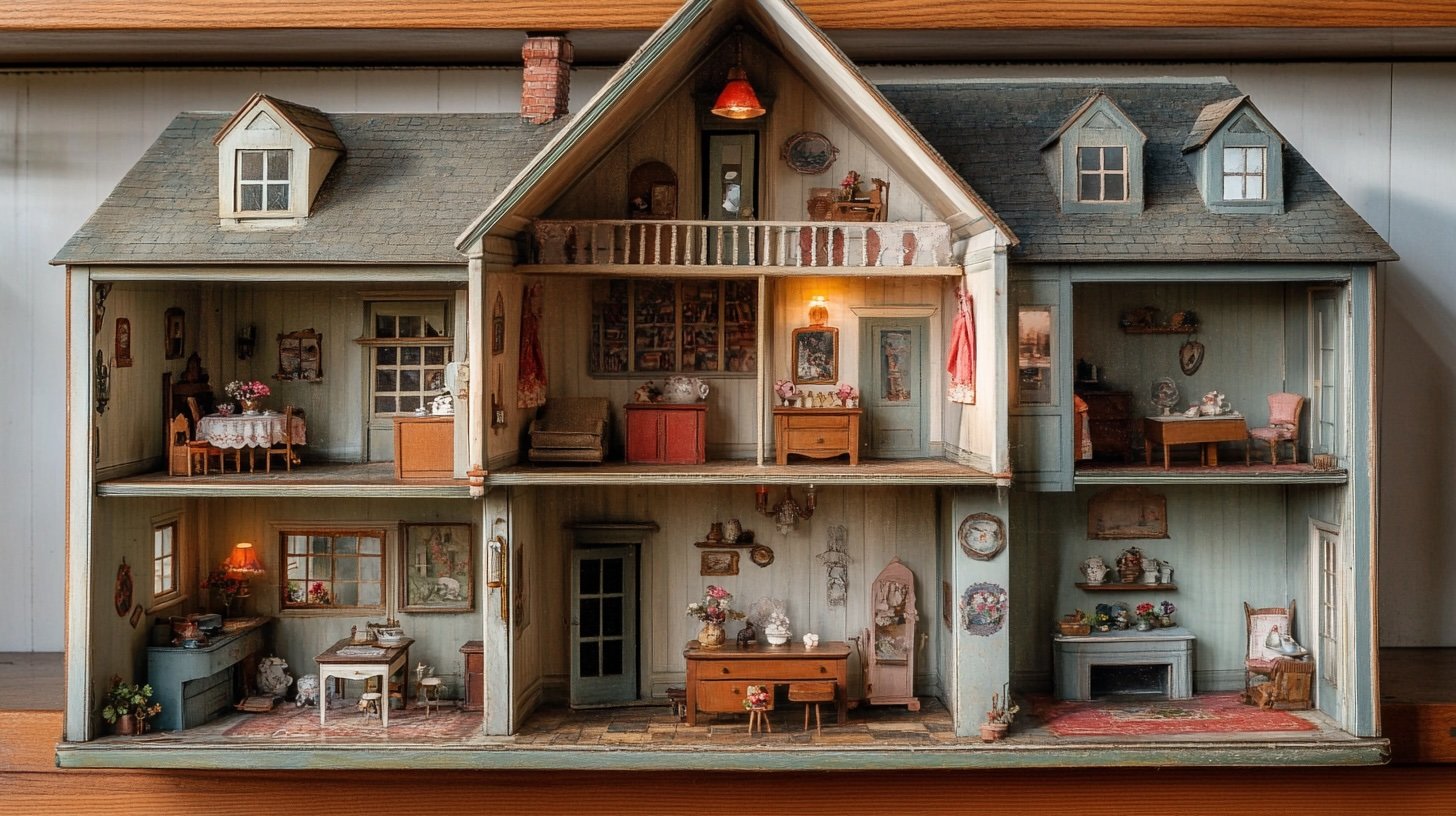
Dolls’ houses have a habit of charming their way into every generation, and they do it with a quiet confidence that suggests they know something we don’t. Perhaps they do. A tiny world behind glass always invites speculation. Who lived there? Who dusted the miniature mantelpiece? Why does the tiny stove have more elaborate detail than your actual cooker? The history of Dolls’ Houses stretches far beyond childhood play, weaving through social status, gender politics, architectural fantasies and the occasional bout of personal eccentricity. They started as showpieces, evolved into teaching tools, blossomed into toys and now sit somewhere between nostalgia and high craft.
The earliest Dolls’ Houses weren’t designed for sticky-fingered children. In the sixteenth-century German states, these miniature marvels were often called “baby houses,” though not for babies. They functioned as status cabinets for the wealthy, a compact stage where families could parade their best possessions in tiny form. Instead of pretending to run a household, the owners used Dolls’ Houses to show how terribly well they would run one, if ever required. The craftsmanship was astonishing. Cabinetmakers created multi-level wooden structures with decorative façades, and inside sat miniature porcelain, silver tableware and fine textiles. They weren’t toys; they were domestic museums. Visitors admired them the way we now admire high-end interior design on Instagram, only with more silk and less irony.
By the seventeenth century, the Netherlands adopted this pastime with particular enthusiasm. Dutch Dolls’ Houses became expressions of feminine taste and economic confidence. Wealthy women curated them with the same energy their husbands channelled into cabinets of curiosities. Petronella Oortman, perhaps the most famous of these Dutch collectors, spent decades assembling her house. Her creation still lives at the Rijksmuseum and looks like she commissioned an entire miniature civilisation. Hand-painted wall coverings, imported Chinese porcelain made to order in tiny scale, silver utensils that you could mistake for real ones if you squinted hard enough, and a library of miniature books all sit perfectly arranged. It cost as much as a real Amsterdam canal house, which must have given someone in the Oortman household palpitations.
Oortman’s contemporary Petronella Dunois took a more compact approach but no less impressive. Her cabinet house, also in Amsterdam, shows the earlier tradition in full command: taller than a person, filled with richly decorated rooms, leather wall panels, delicate furniture and more silver than a well-stocked dining room. The effort poured into these cabinets reveals something unspoken. These were fantasies of ideal domestic order. Spotless kitchens, immaculate linen rooms and perfectly laid tables served as reminders of how life should look, even if reality didn’t always cooperate.
Across Europe, the purpose of Dolls’ Houses slowly shifted. Germany gave the world the Nuremberg kitchen, a miniature cooking setup meant to educate young girls in domestic management. There’s a certain practical charm in using a toy kitchen to teach real cooking principles, though some of these sets included metal utensils and working burners, suggesting that health and safety regulations in the seventeenth century were an optimistic rumour.
By the eighteenth century in England, Dolls’ Houses began to resemble actual houses. Estate carpenters built replicas of family homes, sometimes with remarkable accuracy. At this stage they still belonged firmly to the elite, but the Industrial Revolution changed everything. New manufacturing techniques made small furniture and prefabricated miniature rooms cheaper to produce. Suddenly most middle-class children could receive a Dolls’ House for Christmas, and generations of parents learned to navigate the ritual of assembling it at midnight on Christmas Eve.
Victorian enthusiasm transformed Dolls’ Houses into beloved toys. They arrived with small furniture sets, tiny kitchen accessories, wallpaper printed in miniature patterns, and dolls stiffly poised as if unsure which room they belonged in. The Victorian home celebrated order, morality and good housekeeping, and the Dolls’ House offered a safe place to rehearse all of these ideals. Children arranged furniture, scolded invisible servants and redesigned entire rooms without anyone questioning their authority.
Despite this toy-based evolution, the artistic tradition never died. In fact, modern Dolls’ Houses often return to that spirit of craftsmanship. Miniaturists hand-carve furniture, paint murals with needle-fine brushes and wire tiny lamps with working bulbs. Some even build running-water systems and tiny flushing toilets, as if plumbing wasn’t difficult enough in full size.
The most dazzling example of this devotion to miniature perfection sits in Windsor Castle: Queen Mary’s Dolls’ House. Built between 1921 and 1924, it remains an unmatched celebration of craftsmanship. Architect Sir Edwin Lutyens treated the project as if he were designing a townhouse for exceptionally small aristocrats. No detail was too minor. The house boasts running water, flushing toilets, electric lighting, working lifts, and a fully stocked wine cellar complete with actual wine sealed into microscopic bottles. The garage holds a tiny Rolls-Royce with an engine that really functions. One imagines a mouse pulling up for valet service.
The library might be the true treasure. Leading writers of the time contributed original manuscripts in miniature format. Arthur Conan Doyle, Rudyard Kipling and A. A. Milne all submitted works, turning the Dolls’ House into a literary archive in pocket form. Queen Mary adored meticulous order and sent back items that did not meet her exacting standards. Curtains were replaced because their pleats sagged. Carpets were rewoven for better symmetry. Her vision was not whimsical; it was architectural, historical and slightly intimidating.
Elsewhere on the miniature map sits Titania’s Palace, crafted over fifteen years by Sir Nevile Wilkinson after his daughter claimed to see a fairy under a tree. Many parents would nod politely and suggest it was probably a leaf, but Wilkinson decided the fairies deserved a palace. The result includes over three thousand handcrafted items, from murals to tiny sculptures, and resembles the private quarters of an enchanted aristocracy. It toured globally to raise funds for children’s charities and now resides in Denmark, where it continues to bewilder visitors with its grandeur.
If Titania’s Palace embraces fantasy, Colleen Moore’s Fairy Castle in Chicago embraces Hollywood spectacle. Moore, a silent-film star, recruited designers and prop-makers to build a castle shimmering with miniature jewels, tiny murals and rooms themed after literary myths. There’s even a tiny piano that plays. The castle isn’t historically accurate, architecturally plausible or remotely practical, but that’s the joy of it. It looks like the place where doll-sized movie stars go to escape their publicists.
Then there’s the Astolat Dollhouse Castle, frequently described as the world’s most valuable Dolls’ House. Inspired by Tennyson’s Lady of Shalott, it features seven floors, twenty-nine rooms and over ten thousand artefacts. Each room bursts with detail: armouries, libraries, drawing rooms and a laboratory that could pass for the workspace of a very small alchemist. The craftsmanship pushes the boundary between hobby and high art, and collectors regard it with reverence usually reserved for Renaissance paintings.
Some Dolls’ Houses lean toward eccentrism, none more so than the Batty Dolls’ House built in the early twentieth century. Herbert E. Batty constructed a house featuring hand-painted windows, individually cut miniature slate tiles, intricate parquet flooring and carpets requiring hundreds of thousands of stitches. He installed electric lighting, hidden compartments and a wardrobe that doubled as a safe. Batty didn’t just build a Dolls’ House. He built a puzzle, a showpiece and possibly a warning to anyone who doubted the importance of hobbies.
What makes these creations so compelling is their ability to act as microcosms. Dolls’ Houses capture society in miniature. They reveal how people imagine ideal homes, perfect families and aspirational lifestyles. Whether functioning as social currency, educational tools or artistic marvels, they always reflect their time. The Dutch houses speak of global trade, domestic pride and refined taste. Victorian toy houses whisper about gender roles and moral expectations. Modern miniatures hint at nostalgia, craftsmanship and the desire to control something—anything—too small to rebel.
The charm of Dolls’ Houses also lies in their contradictions. They are tiny, yet often more detailed than the buildings they imitate. They are playful, yet historically serious. And, they are acts of imagination, yet rooted in domestic reality. Their inhabitants may be wooden or porcelain, but the worlds created around them feel surprisingly alive. A perfectly set dining table suggests conversation. A miniature kitchen implies activity. Even a silent bedroom, with its tiny bedspread folded neatly, suggests a life lived behind invisible doors.
Collectors find themselves drawn to these miniature worlds for all sorts of reasons. Some love the craftsmanship. Others cherish the nostalgia, remembering childhood afternoons spent rearranging furniture. And some simply enjoy the creative freedom of designing a house where nothing breaks unless you drop it. The market for handcrafted miniatures remains lively. Artisans around the world produce custom chandeliers, hand-stitched rugs, microscopic ceramic plates and tiny architectural mouldings. These miniature objects often require as much labour as their full-sized counterparts.
Museums continue to champion Dolls’ Houses as cultural artifacts. The Rijksmuseum’s cabinet houses showcase the height of seventeenth-century domestic aesthetics. Windsor Castle’s exhibition highlights a national moment of post-war pride in craftsmanship. Children’s museums display mid-century toy houses as windows into family life. Even contemporary art galleries occasionally feature miniature installations, reminding us that scale is a playful variable.
The world may grow louder and more chaotic, but a Dolls’ House remains a place where everything fits exactly where it should, provided you have tweezers and a steady hand. The tiny windows never crack in a storm. The miniature rugs don’t need vacuuming. No bills arrive through the tiny letterbox. It is domestic life distilled into pure imagination, reassu