Cutty Sark and the Wild Race Against Time
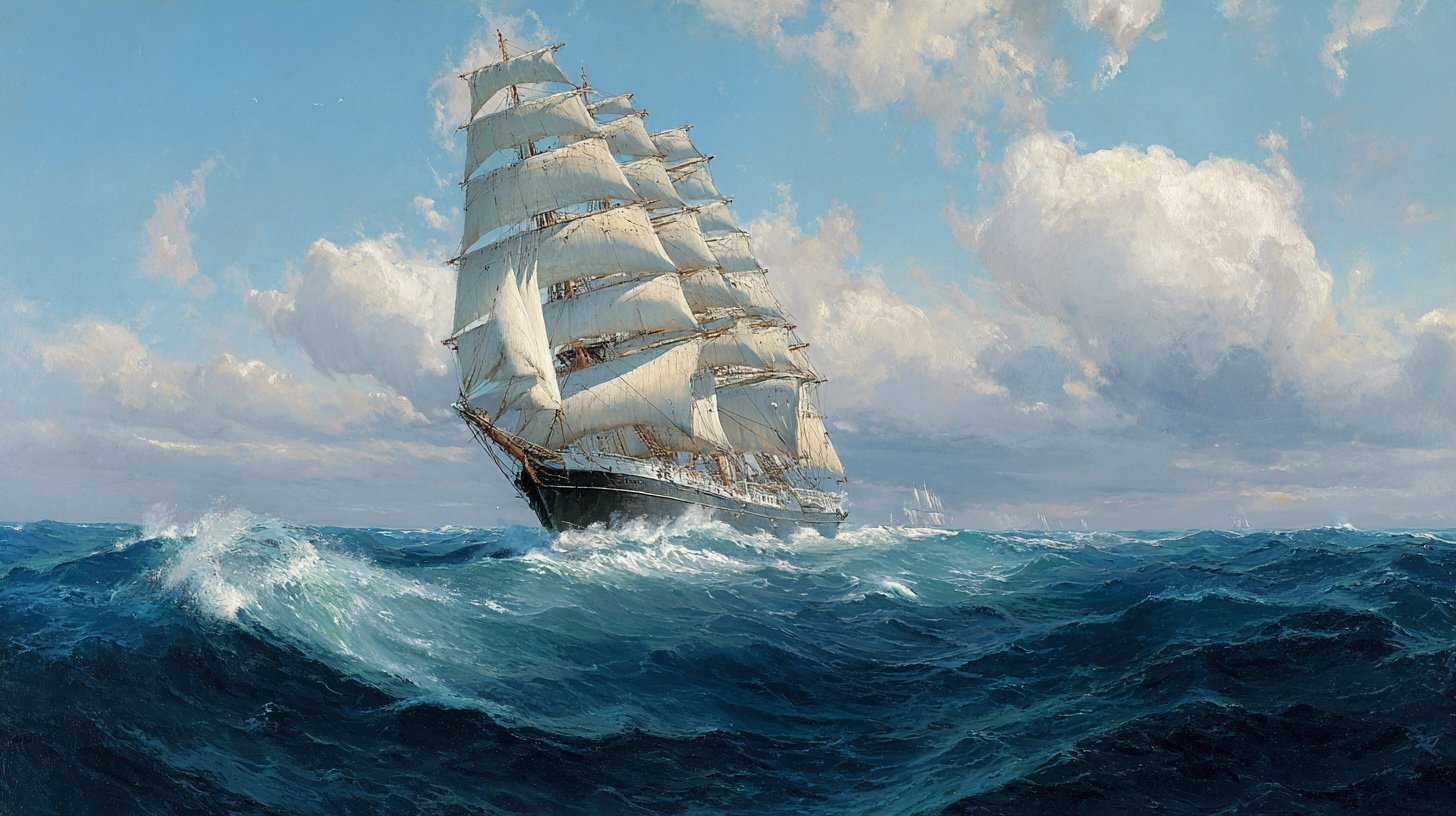
The Thames likes to pretend it has seen everything. It has watched Romans grumble about the damp, Victorians lay down railways with reckless confidence, and modern Londoners march along in trainers that cost more than a month’s rent in the 70s. Yet even the river seems to straighten up a little when the Cutty Sark appears in view, sitting there in Greenwich as if waiting for the wind to pick up. Ships rarely age well, but this one refuses to go quietly. Every plank whispers about speed, rivalry and a witch with an inconveniently short nightshirt.
Her story began in the 1860s, at the exact moment Britain thought speed could solve everything. The empire stretched across time zones; tea arrived from China as if poured through a very long funnel; and newspapers breathlessly reported which clipper docked first. Built in Dumbarton in 1869, she cut an unmistakable figure from the start. Hercules Linton designed her with a blend of iron and timber that looked elegant and slightly rebellious. She seemed made for movement before she ever touched water.
A curious name for such a creature. A cutty sark is nothing dignified; it’s a short chemise worn by a witch in a Robert Burns poem. Victorian sailors adored stories with witches, storms and moonlit chaos, so the name felt perfect. Nannie Dee, the poem’s energetic troublemaker, eventually became the ship’s figurehead. Her sculpted form still lunges forward today as if eager to chase a horse through Ayrshire fields. Visitors stand before her grinning, fully aware that this literary joke somehow built one of the most famous brands in maritime history.
The tea years looked glamorous from a distance. Newspapers called them “tea races”, but there were no starting pistols, cheering crowds or cups for the winner. The challenge simply involved leaving China and reaching Britain as fast as human skill and natural forces allowed. Her first voyage in 1870 showed she could hold her own. Yet she never quite seized the crown that popular myth insists she won. The most famous near-victory played out in 1872, when she and the Thermopylae embarked on what became a two‑ship drama. For weeks they swapped the lead like athletes who refused to tire. Somewhere near the Sunda Strait the sea snapped her rudder. The crew improvised one from spare spars, ropes and a collective refusal to lose. They sailed on, astonishingly fast for a ship patched together mid‑ocean. They arrived only a week behind, a moral victory if not a literal one.
Despite the romance, the clock was ticking. Steamships muscled their way through the Suez Canal and made the whole tea‑race tradition look quaint. The Cutty Sark had one great advantage left: she thrived in long open‑ocean crossings where steam still struggled. Australia’s wool trade turned into her new playground. Under Captain Richard Woodget, she stretched her legs. The man adored photography, dogs and wild weather, which probably explains why he looked so comfortable perched high on the yards during gales. His pictures of crew life survive and show young sailors clinging to rigging with an optimism that modern health and safety officials would faint in front of.
Her finest wool run took just 83 days from Newcastle in New South Wales to London. Other captains stared at the numbers in disbelief. Woodget pushed her so hard that she often overtook steamers when wind favoured her, provoking the kind of professional jealousy only sailors can manifest properly. She kept up that performance for years, slicing through the Southern Ocean with a hull so sharp it almost looked annoyed at the water getting in the way.
By the 1890s, change finally caught up. Sold to a Portuguese company, she gained a new name, Ferreira, and a barque rig designed for smaller crews. Some say she looked tired. Others say she simply adapted like any sensible working vessel. She hauled cork, coal and whatever else paid the bills. These decades would have faded into obscurity if not for a chance meeting in Table Bay in 1922, when a retired sea captain spotted her, recognised the lines beneath the paint, and felt something like shock. Wilfred Dowman became determined to bring her home, an act that baffled friends but delighted preservationists.
Brought back to Britain, she transformed again. Cadets trained on her decks. The ship that once raced for tea became a floating classroom. Young sailors peeled potatoes, holystoned the deck and learned knots that most people today only see in craft shops. Through the war she lay safely upriver, surviving bombs more by luck than design. After peace returned, plans grew for a permanent memorial to the age of sail. In 1954 she settled into a dry‑dock in Greenwich, becoming part museum, part icon and part survivor.
Time, however, never leaves ships alone. The decades in dry‑dock placed pressure on her hull that the original design never intended. Conservators fretted. Engineers paced. Eventually, restoration began on a scale that made traditionalists nervous. Then came the fire of 2007, an event that lit up news channels and produced photos dramatic enough to look staged. Early fear claimed the whole ship had gone. Later assessments calmed the panic: much of her planking had already been removed, waiting for conservation. Even so, the damage felt emotional. A second smaller fire in 2014 added an unhelpful sense of déjà vu. Yet each time she emerged renewed, refusing to give up her place on the Greenwich waterfront.
Today she floats above her dry‑dock as if levitating. The glass structure supporting her divides opinion. Some call it a triumph of modern engineering; others mutter that it feels like placing a Victorian masterpiece on a contemporary display shelf. Whatever one thinks, walking beneath her golden‑hued hull remains unforgettable. You stare up at a copper‑clad shape designed to sprint across oceans, and it dawns on you that human beings once built these things by hand and sent them into storms with complete confidence.
Inside, the ship tells her own story with a mix of charm and theatrical flair. Exhibits explain the tea trade, the rivalry with the Thermopylae, the wool years, the Portuguese detour and the poetry behind her name. Children take delight in spotting Nannie Dee, whose mischievous pose has lost none of its energy. Adults stand by the wheel imagining the feel of the ship under full sail. The figurehead gallery surprises many visitors; few expect an entire room dedicated to carved personalities that once graced the ocean’s highways.
The surrounding area adds to the experience. Greenwich offers a blend of maritime heritage, market stalls and the quiet pride of a place that has timed the world for centuries. One moment you sip coffee near the university buildings, the next you wander down to the river and find yourself face to face with a piece of Victorian ambition. The Cutty Sark sits among all this with the confidence of someone who knows they have earned their spot.
The ship’s cultural legacy stretches further than many realise. Her fame inspired a whisky brand in the 1920s. Artists sketched her lines endlessly. Novelists referenced her in passing moments that hinted at adventure. Part nostalgia, part engineering marvel, part literary in‑joke, she manages to represent both the last stand of sail and the beginning of modern global trade.
Standing on her deck today, you sense the ghosts of hands pulling ropes, the rush of cold morning air and the whisper of canvas just beginning to fill. You understand why she still captivates. She never completely shed the personality given to her at birth: fast, daring, slightly cheeky and prone to drama. Visitors leave with a strange combination of admiration and affection, as if they met someone charismatic and delightfully unpredictable.
Greenwich keeps many stories, yet few draw people in with the same magnetism. The Cutty Sark survived storms, competition, changing technology, foreign service, two fires and decades of neglect. She now floats above her dock like a triumphant comeback act. Ships rarely get second acts, let alone third or fourth. Somehow she managed them all, dressed in gleaming copper and topped with rigging that belongs to another century.
Anyone wandering through London looking for a glimpse of history that still feels alive should stop by. The ship waits with that same forward‑leaning energy she carried across oceans. She looks ready to break free at any moment, chasing winds that no longer exist. And perhaps that’s the reason she still matters. She embodies a type of human ingenuity that refused to slow down, believed in craft, trusted in canvas, and enjoyed a good story about a witch racing through the night.