Cuneiform, or How Accounting Created Writing
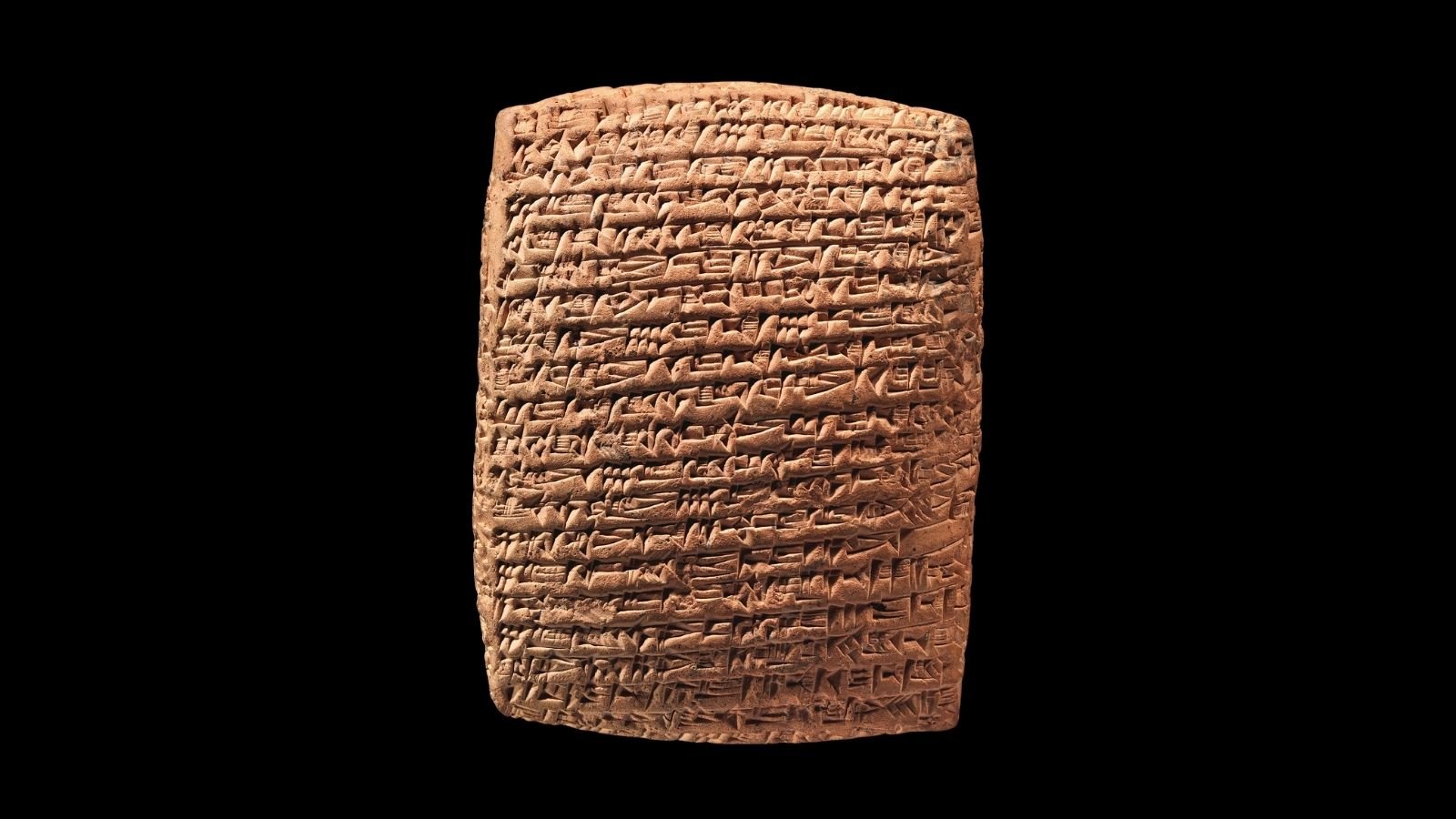
Cities do strange things to human brains. Put enough people, animals, grain, beer, taxes, priests, and warehouse managers into the same muddy river valley and suddenly memory stops working. Around 3200 BCE in southern Mesopotamia, the administrators of Sumer discovered a simple problem: nobody could remember who owed what to whom. Out of that administrative headache emerged one of humanity’s most revolutionary inventions—writing.
The earliest cities along the Tigris and Euphrates were not quiet agricultural villages. Uruk, one of the largest of them, may have held tens of thousands of people by the late fourth millennium BCE. Fields produced grain, shepherds delivered sheep and goats, brewers turned barley into beer, and labourers received rations from temple storehouses. Every transaction had to be recorded somehow. Otherwise chaos would follow.
Before anyone pressed a stylus into clay, Sumerian administrators used something much simpler: tiny clay objects called tokens. They looked almost like children’s game pieces—cones, spheres, disks, cylinders, and little pyramids. Each shape represented something specific in the economy. A cone might stand for a small measure of grain. A sphere could represent a larger measure. Cylinders symbolised animals such as sheep or goats, while other shapes corresponded to jars of oil or units of labour.
These tokens were not random curiosities. For thousands of years they formed a practical accounting system. Farmers delivered goods to temples, administrators counted tokens representing those goods, and the tokens served as a physical record of the transaction. Archaeological evidence suggests that such counting devices existed in the Near East as early as the eighth millennium BCE. Long before writing appeared, societies were already managing data in clay form.
However, as cities expanded, even tokens became cumbersome. Imagine a temple official responsible for hundreds of sheep, thousands of litres of grain, and dozens of workers receiving rations each week. Soon the official would need baskets filled with tokens simply to track inventories. Losing one token could mean losing a sheep on paper—or at least in clay.
At some point during the fourth millennium BCE, administrators tried a clever solution. Instead of storing tokens loose, they sealed them inside hollow clay envelopes known as bullae. Each envelope contained the tokens representing a transaction. The outside surface was stamped with the seal of an official or institution, guaranteeing authenticity. If anyone wanted to check the record, they simply broke open the envelope and counted the tokens inside.
This system solved one problem and created another. Breaking open the envelope destroyed the record. Moreover, officials still had to open it to verify the contents. Someone then had the obvious idea: before sealing the envelope, press each token into the soft clay surface. The impressions on the outside would show exactly what was inside.That small administrative shortcut changed history.
Once people began pressing tokens into clay, the tokens themselves started to look redundant. If the impression already recorded the information, why bother placing the token inside at all? Gradually, the physical tokens disappeared and the impressions remained. Two‑dimensional marks replaced three‑dimensional objects. In effect, accounting moved from clay objects to clay signs.
Around 3300 to 3200 BCE in the city of Uruk, scribes began producing the earliest known clay tablets with such impressions and drawings. These proto‑cuneiform tablets recorded deliveries of grain, counts of livestock, and lists of rations allocated to workers. Most of them had nothing to do with poetry, religion, or philosophy. They were spreadsheets in clay.
The earliest signs were pictograms. A simple drawing of a sheep meant a sheep. A jar symbolised oil or beer. A stylised head might represent a person. Scribes scratched these pictures into wet clay using a pointed reed stylus. The tablets were often arranged in columns and rows, almost like modern accounting sheets.
Even at this stage the system already displayed remarkable complexity. Some tablets recorded hundreds of transactions. Others listed labour allocations or distributions of food. Entire administrative departments must have existed simply to maintain these records. In many ways the earliest writing belonged not to poets but to accountants.
Meanwhile, the temples of Sumer played a central role in this bureaucratic world. Temples were not merely religious structures. They functioned as economic institutions, controlling land, labour, and production. Priests and administrators supervised agriculture, organised trade, and distributed rations to workers. Naturally, such an economy required reliable documentation.
Writing therefore emerged less as a cultural luxury and more as a practical administrative technology. It solved a management problem inside the temple economy. When thousands of goods moved through storehouses each year, memory alone could not guarantee fairness or accuracy.
As scribes continued using clay tablets, their pictograms slowly changed. Drawing detailed pictures with a stylus proved slow and awkward. Pressing the stylus at different angles was much faster. Over time the signs became more abstract and geometric.
Instead of drawing the outline of a sheep, a scribe could create a pattern of wedge‑shaped marks that everyone recognised as the same concept. The stylus itself shaped the writing system. Its triangular tip left wedge impressions in clay, producing the characteristic strokes that gave cuneiform its name—literally “wedge‑shaped writing.”
Gradually the pictorial origins faded. Signs rotated ninety degrees. Details disappeared. Complex drawings simplified into combinations of wedges. By the early third millennium BCE the script had become largely abstract, consisting of standardised signs made from a handful of wedge patterns.
At roughly the same time another conceptual leap occurred. Some signs began representing sounds rather than objects. Instead of meaning only “sheep,” a sign could represent a syllable used in spoken language. This phonetic shift allowed scribes to record names, grammatical forms, and eventually entire sentences.
The system expanded rapidly. Early proto‑cuneiform used hundreds of signs, perhaps more than a thousand in some lists. Over time the repertoire stabilised at several hundred symbols. Although complex, the script became flexible enough to record not only economic records but also stories, laws, prayers, mathematics, and scientific observations.
Yet the earliest tablets never forgot their bureaucratic roots. Many surviving examples from Uruk list quantities of grain, livestock counts, or distributions of bread and beer to workers. Some tablets even track the birth of animals within temple herds. Reading them today feels surprisingly familiar, as though looking at ancient inventory sheets.
One tablet, for example, records the rations allocated to different categories of labourers. Another lists officials responsible for various tasks within the city administration. Such documents reveal that the earliest writing developed inside organised institutions rather than private households.
Interestingly, the story of tokens evolving into writing remains partly controversial among scholars. The archaeologist Denise Schmandt‑Besserat famously argued that clay tokens formed the direct ancestor of written signs. According to her theory, thousands of years of counting objects gradually transformed into pictographic tablets and eventually into cuneiform writing.
Many scholars accept the general idea that accounting practices influenced the birth of writing. Nevertheless, some debate continues about whether tokens formed a single unified system or served multiple purposes beyond counting. Archaeological evidence sometimes places tokens in unexpected contexts, including burials and ritual deposits.
Despite these debates, the broader pattern remains clear. Writing did not appear suddenly as literature or philosophy. It emerged from everyday economic needs: counting sheep, measuring grain, distributing beer, and paying workers.
Ironically, once the technology existed, its uses expanded far beyond accounting. Within a few centuries scribes were recording myths, royal inscriptions, legal codes, and epic poetry. The famous Epic of Gilgamesh, one of the earliest surviving works of literature, was written in cuneiform many centuries after the first administrative tablets appeared.
Libraries eventually appeared across Mesopotamia. Kings collected tablets describing medicine, astronomy, mathematics, rituals, and stories. Entire archives filled palace rooms. The clay documents hardened over time, surviving fires and collapses that destroyed buildings around them.
Meanwhile the wedge‑shaped script itself spread across the ancient Near East. Akkadians adopted it for their Semitic language. Later Babylonians, Assyrians, Hittites, and others adapted the system to their own languages. Over the course of three millennia cuneiform became one of the most influential writing systems in human history. Yet its origin remained stubbornly humble.
The first scribes were not novelists or philosophers. They were administrators balancing accounts in temple warehouses. Their tablets recorded barley deliveries, labour rations, and livestock counts. No grand manifesto announced the birth of writing. Instead, a quiet technological evolution unfolded inside storehouses and offices.
If those early accountants could see the long chain of consequences, they might be astonished. Their clay impressions eventually made possible literature, law, diplomacy, science, and historical memory. Entire civilisations would document themselves through writing systems descended from these simple wedges.
In that sense, the birth of writing was not really about language at all. It was about administration. A growing urban society needed reliable records. Clay, tokens, and clever bureaucrats solved the problem. And somewhere in a temple office in ancient Uruk, a scribe pressing wedges into wet clay unknowingly changed the future of human communication.
Post Comment
You must be logged in to post a comment.