Code of Hammurabi: The First Attempt at Justice?
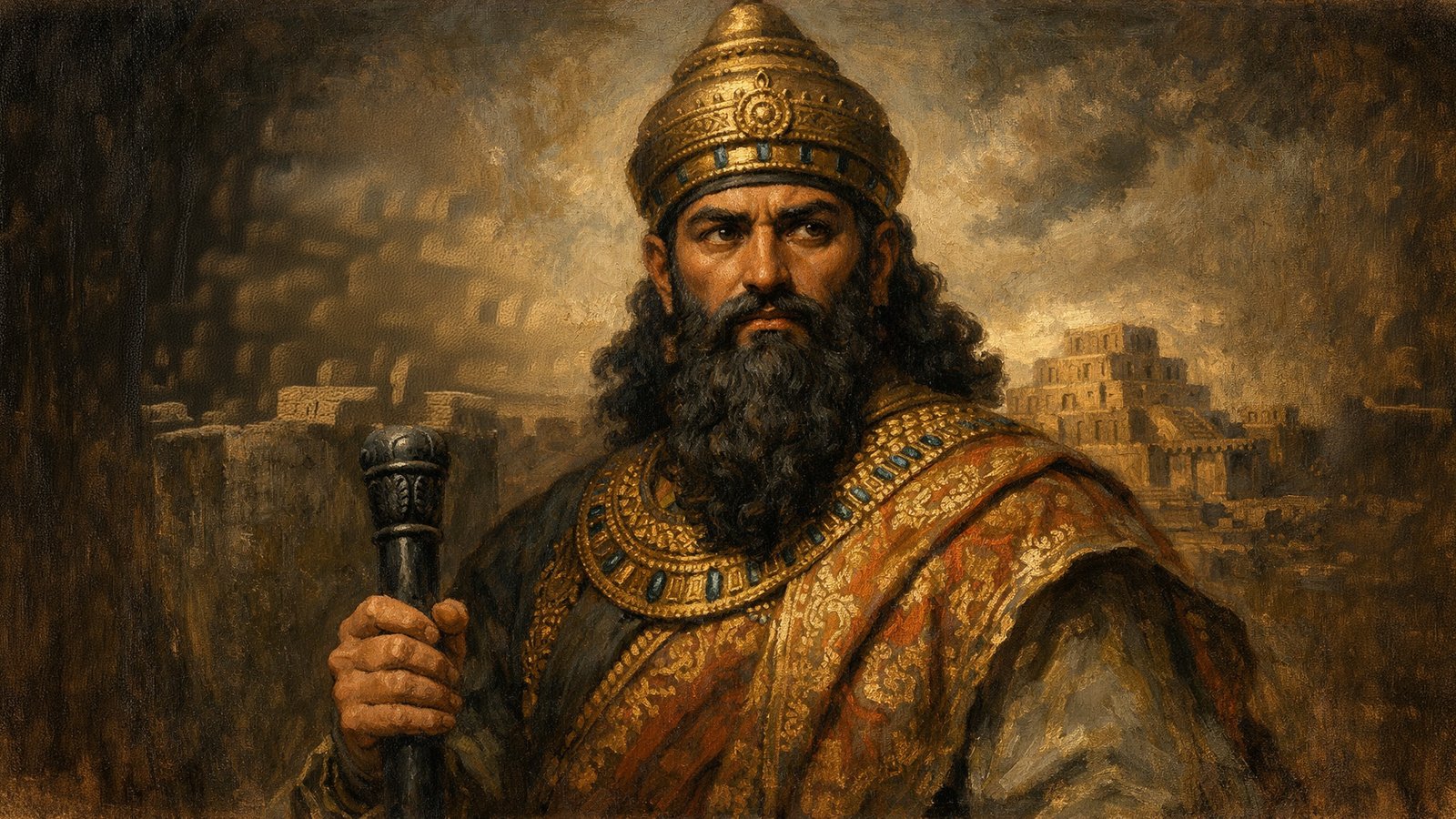
Was the Code of Hammurabi really the world’s first brave leap toward justice? That is the version people like to tell, usually with a tone suggesting that civilisation began the moment someone carved rules into a very large stone. It is a neat story. Too neat, probably. Because the famous Babylonian stele does show something important: a ruler trying to make law visible, memorable, and official. But it also shows something less flattering and far more human. It shows power dressing itself up as fairness.
Hammurabi ruled Babylon in the eighteenth century BCE, when Mesopotamia was already old enough to have bureaucrats, contracts, debt, lawsuits, and the sort of neighbourly arguments that make written rules suddenly feel essential. By the end of his reign, he had built Babylon into a serious regional power. That matters, because the code did not appear in a political vacuum. It arrived after conquest, expansion, and centralisation. In other words, once Hammurabi had the power to unify a patchwork of cities, he also had every reason to present himself not merely as a conqueror, but as the man who brought order to the mess.
That is where the stele becomes almost theatrical. At the top, Hammurabi stands before Shamash, the sun god associated with justice. This is not subtle. The image says, in effect, these laws do not come from ordinary politics, bickering, or expediency. They come with cosmic backing. A king is one thing. A king endorsed by divine justice is quite another. Even before anyone reads a single line, the monument has already made its first argument: power here is lawful, sacred, and above question.
Then come the laws themselves, hundreds of them, covering theft, debt, marriage, inheritance, contracts, labour, assault, building standards, and other matters that remind us ancient people were not abstractions in dusty textbooks. They worried about broken agreements, dishonest traders, collapsing houses, and family drama just as energetically as anyone today. That is part of the code’s lasting fascination. It feels remote, yet weirdly familiar.
Some provisions do look like an attempt to restrain chaos. If a builder constructs a house badly and it collapses, the consequences are severe. If someone brings an accusation without proof, that too can bring punishment. There is a clear interest in evidence, liability, and predictable outcomes. That predictability matters. One real function of law is not kindness but consistency. A harsh rule, once published, can still feel safer than the whim of an official, a local notable, or an angry ruler having a bad morning.
And yet this is where modern readers often get carried away. The code was not a charter of equality. It did not assume all people stood before the law in the same way. Punishments varied by status. The injury done to an elite man, a commoner, or an enslaved person did not carry the same legal weight. The famous eye-for-an-eye principle sounds almost democratic because it suggests balance, symmetry, proportion. In reality, Babylonian society was layered, and the law reflected that layering without embarrassment. Justice, yes, but justice sorted by rank.
So was it fair? In a limited, ancient, heavily qualified sense, sometimes. It recognised that the strong could exploit the weak. The prologue more or less says so. Hammurabi presents himself as the ruler who prevents oppression, protects widows and orphans, and makes the land live under right order. That was not meaningless rhetoric. A kingdom does need systems that curb private revenge, regulate trade, and settle disputes. Law can genuinely protect the vulnerable from arbitrary force. Even an empire understands that too much local bullying makes taxation, loyalty, and stability rather difficult.
Still, we should not confuse that with modern justice. The code did not ask whether hierarchy itself was fair. It assumed hierarchy as naturally as it assumed gravity. Fathers ruled households. Masters ruled enslaved people. Kings ruled everybody. The question was not whether power should exist. The question was how to organise it so that it looked legitimate, efficient, and divinely approved.
That is why the code can feel less like the birth of justice than the branding of authority. It takes power and gives it a script. It says: here are the rules, here is the king, here is the god behind the king, and here is why all sensible people should stop arguing. Even the fact that the laws were displayed on a monumental stele matters. This was public language in stone. Not private advice. Not a dusty filing system. A monument is never just information. It is performance.
There is also a delicious irony in the modern reputation of the code. People often call it the first legal code, which is not actually true. Earlier Mesopotamian law collections existed before Hammurabi. His version survives more completely, looks more impressive, and has much better publicity. So, in a way, its modern fame proves one of its ancient lessons: presentation matters. Put your authority on a dark, imposing monument under divine imagery, and thousands of years later people may still assume you invented the whole idea.
Scholars still debate how the stele functioned in practice. Was it really a handbook judges used line by line? Or was it more a royal statement of principles, a monument to ideal kingship, a way of advertising what just rule was supposed to look like? Probably it was never a simple codebook in the modern sense. Ancient legal life relied on contracts, local courts, custom, testimony, and administrative practice. The stele did not replace that world. It framed it. It told subjects, officials, and posterity that Hammurabi had imposed reason on society.
Which brings us back to the original question. Justice, or control? The irritating but honest answer is both. Control without any promise of justice becomes naked coercion and eventually invites resistance. Justice without control remains a lovely speech with no enforcement behind it. Hammurabi seems to have understood that successful rule required a blend of the two. He offered order, predictability, and a vision of the king as guardian rather than mere predator. At the same time, he strengthened hierarchy, sanctified authority, and made Babylonian power look not only strong but inevitable.
That may be the real brilliance of the Code of Hammurabi. It did not merely punish. It narrated. It told people what kind of world they lived in, who stood where inside it, and why that arrangement supposedly made sense. Law, from the very beginning, was never only about right and wrong. It was also about who gets to define both, carve them in stone, and call that civilisation.
Post Comment
You must be logged in to post a comment.