Casu Marzu: Why Sardinia’s ‘Forbidden’ Cheese Tastes So Good
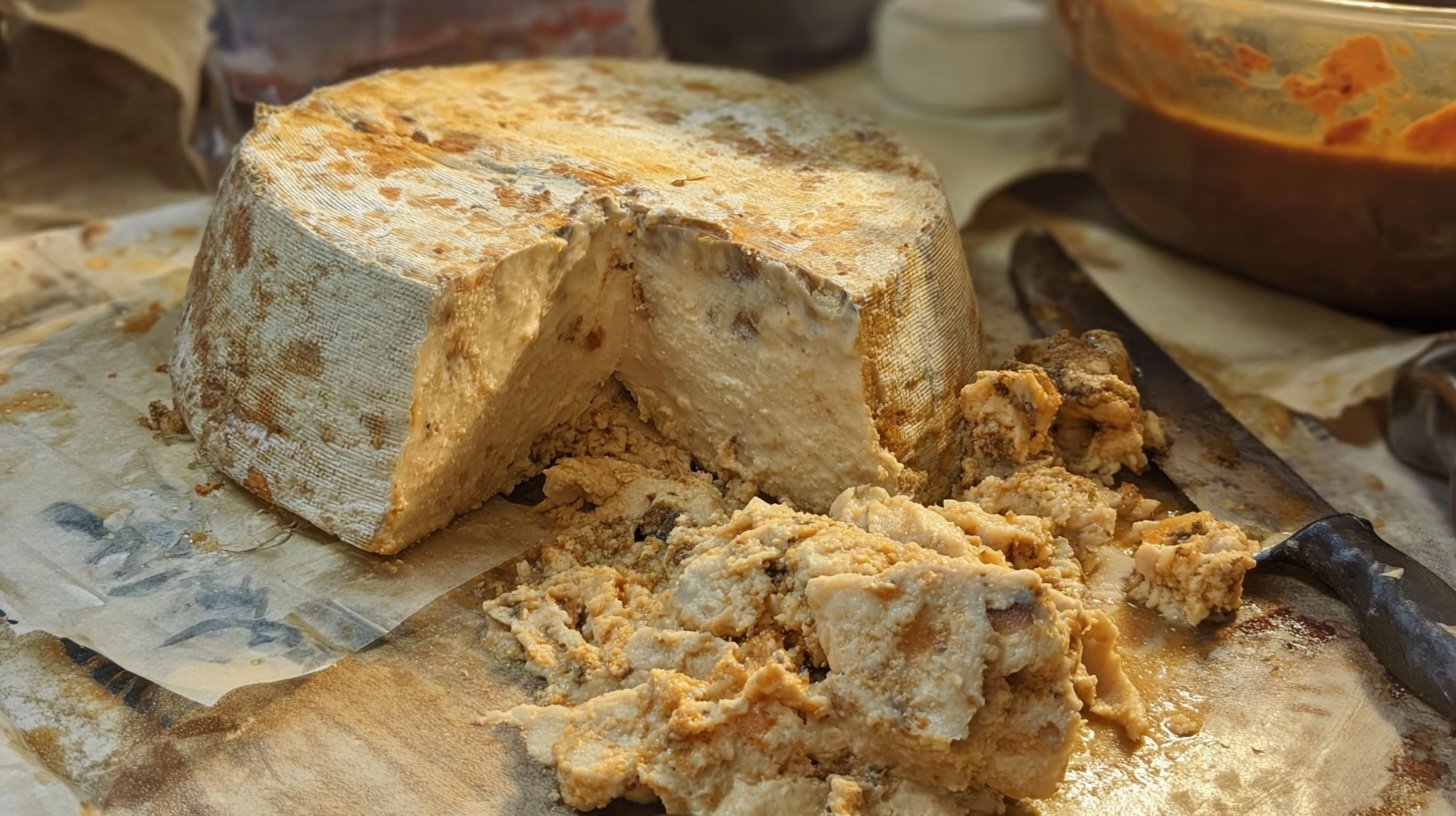
Casu marzu doesn’t bother easing you into the experience. Sardinians treat it as a point of pride, a rite of passage and, depending on who you ask, either the height of pastoral tradition or an act of culinary chaos. The name translates as “rotten cheese,” which already sets the mood, though locals prefer to frame it as a cheese that has simply lived a little. It starts life respectably enough as pecorino sardo, firm and salty and minding its own business. Then things escalate. The rind gets deliberately opened or cracked so that Piophila casei, the cheese fly, can slip in and do what nature trained it to do. The larvae nibble, digest and essentially remodel the interior until the once-solid wheel turns into a creamy, pungent paste that looks as though it’s plotting something.
People unfamiliar with the island imagine this happening in dark caves guarded by men with dramatic moustaches. In truth, it’s often a sunny, everyday farm process, done with years of accumulated practice and not a hint of gothic flair. Sardinia’s landscape shaped the habit long before tourism got wind of it. Shepherds depended on hardy sheep and hardy foods that could survive isolation, heat and less-than-gentle storage conditions. Pecorino responds predictably to heat and time, but once upon a day someone cracked a wheel, flies laid eggs, the larvae got busy and the result tasted astonishingly good. You can imagine the initial hesitation, followed by the moment someone dipped a piece of flatbread into the transformed cheese and thought, “Actually…” Tradition has a funny way of starting.
The flavour isn’t merely strong; it’s a whole emotional arc. It hits with sharp acidity, a breath of ammonia, a deep sheepy note and a silky richness that coats everything it touches. The larvae’s digestive enzymes break down fats and proteins far beyond what normal aging achieves. That’s why it becomes supremely spreadable, almost like a savoury custard with a rebellious streak. Locals say the fresher the wriggle, the better the taste, though some steady their nerves by brushing the little inhabitants aside. Others eat them without ceremony. Sardinia doesn’t judge.
Plenty of stories swirl around it. There’s the classic rumour that European authorities banned the cheese outright. In reality, Casu marzu simply doesn’t meet standard food safety criteria, because most regulations don’t include a box labelled “contains live maggots (intentionally).” It’s technically illegal to sell it commercially, but that hasn’t stopped small batches from appearing in private homes, village festivals and the more adventurous corners of rural markets. European bureaucracy rarely stands a chance against thousands of years of pastoral stubbornness.
The cheese carries enormous cultural weight. It fits neatly into the island’s identity as a place that values continuity, skill and a touch of daring. Shepherding shaped almost everything here: stories, landscape, even the rhythm of meals. Casu marzu grew into a celebratory food shared at weddings, baptisms and gatherings where guests needed a little nudge to prove their sincerity. Offering someone a spoonful functions as a friendly test: do you trust the host, the land and possibly your own digestive system? Many expatriate Sardinians bring a jar when visiting relatives abroad, even though customs officials probably don’t list it among recommended souvenirs.
People often ask how it feels to try it for the first time. The truth is that the anticipation is worse than the tasting. The mind screams, the tongue politely requests an update, and then the flavour lands with surprising elegance. The heat of the cheese, the soft crumble of traditional carasau bread and a sip of Cannonau wine pull the whole experience together. Cannonau works beautifully because its dark fruit and gentle tannins temper the cheese’s wild personality without drowning it.
Fame followed inevitably. Food shows, bloggers and ambitious travellers framed Casu marzu as an extreme dare, which bemused locals. They don’t regard it as stunt food. They call it a delicacy that requires craftsmanship, time and an understanding of conditions that are increasingly rare. Modern dairies keep flies out with near-military precision, so making authentic Casu marzu demands the right environment and people who know how to read a wheel from touch, sound and scent. Younger Sardinians view it with a mix of admiration and amusement; many grew up hearing that their grandparents swore by it as a tonic, even attributing energy or fertility boosts to it. Taste rarely travels without mythology.
Is there anything similar elsewhere? The global menu offers cousins, but none quite match Sardinia’s confidence. Sicily produces “formaggio con i vermi,” related in spirit but less famous. Corsica’s “casgiu merzu” belongs to the same extended family and uses the local brocciu cheese as the starting point. In the French Pyrenees, the old “brossat” sometimes attracted the same larvae-driven transformation, though the practice all but disappeared as dairy hygiene laws tightened. Norway once had a tradition of leaving cheese to ferment in ways that startled outsiders, but nothing retained live guests in quite the same deliberate fashion. In Iceland, certain fish preparations develop a similar enzymatic softness, though with fewer acrobatics.
People occasionally place Casu marzu next to Asian fermented specialities, despite the obvious differences. Some compare the intensity to Chinese stinky tofu or Korean hongeo, which suggests they haven’t met Sardinian larvae. The more apt comparison lies in the mindset: foods that embrace controlled decay and treat fermentation as an art form rather than an accident. Wherever people lived in rugged landscapes with limited resources, they learned to coax flavour from what others might discard. Sardinia simply kept the custom alive longer than most.
Every region develops ways to preserve abundance, and cheese is famously forgiving. Milk changes quickly in warm climates, so shepherds across the Mediterranean experimented with methods that slowed spoilage or, in the case of Casu marzu, leaned into it. Once the shock wears off, the logic becomes clear… The larvae create enzymes far more potent than those in regular ageing cultures, so the texture turns silky and the taste deepens in ways that conventional cheesemaking can’t replicate. Many modern chefs chase similar results using high-tech fermentation rooms. Sardinians achieved it with a cracked rind and patience.
Tourists often approach it like a dare, filming themselves grimacing bravely for social media. Locals roll their eyes. They know the cheese deserves more than a theatrical bite. It belongs to the island’s broader story of independence, resourcefulness and celebration. Many things in Sardinia seem carved out of stone: nuraghi, old shepherd huts, mountain ridges that look sculpted rather than natural. Casu marzu fits that same stubborn narrative. It refuses to evolve into something neater, tamer or PR-friendly.
One of the loveliest scenes unfolds during harvest season, when families gather for long lunches under vine trellises. A wheel of pecorino appears… Someone nods knowingly, and the table leans forward as the layer of crust lifts to reveal the creamy treasure inside. No one flinches. They talk about the weather, the olive yield, a neighbour’s sheepdog who ran off with someone’s sandals. Then the cheese makes its circuit like an honoured guest. It spreads across carasau, melts on warm potatoes, slides into pasta and even sneaks onto grilled vegetables. It turns into a communal moment that binds generations.
Visitors who fall in love with it wonder whether they can take some home. Not really. Most countries draw a hard line at live insects, even artisanal ones. A few determined fans try sneaking jars across borders, occasionally forgetting that airport security can spot almost anything. People never forget the sight of a customs officer lifting a lid, blinking at the interior and calling over a colleague for a second opinion.
Casu marzu sits at the crossroads of tradition and defiance. It embodies the landscape: wild, sun-baked, shaped by shepherds who made small, practical decisions that grew into local legend. It rewards the curious and intimidates the faint-hearted. And, it bridges ancient necessity with contemporary fascination. Above all, it tastes far better than any outsider expects when staring at a living, wriggling pudding of dairy history.