Candlemas: Why February Still Believes in Light
Candlemas arrives without drama. No countdown follows it. No fireworks announce it. And no retail campaign bothers to notice it. Instead, it sits calmly on 2 February, forty days after Christmas, asking a restrained question: is winter still fully in charge, or has the balance finally begun to tilt?
The date makes sense long before symbolism enters the conversation. In the biblical calendar, forty days after birth marked a clear transition. A firstborn child appeared at the Temple. At the same time, a mother completed ritual purification. As a result, time moved forward with ceremonial clarity. Christianity fixed Christmas on 25 December much later, yet Candlemas slipped neatly into place, inheriting the mathematics of an older system that cared deeply about thresholds.
In the Gospel of Luke, the scene unfolds quietly and without spectacle. Mary and Joseph bring the infant Jesus to Jerusalem. There, they encounter Simeon, an elderly man who has spent his life waiting for meaning to arrive. When it finally does, it looks distinctly unimpressive: a baby carried through a busy Temple. Nevertheless, Simeon’s reaction matters. He calls the child a light for all nations. From that moment, one metaphor begins to shape centuries of ritual.
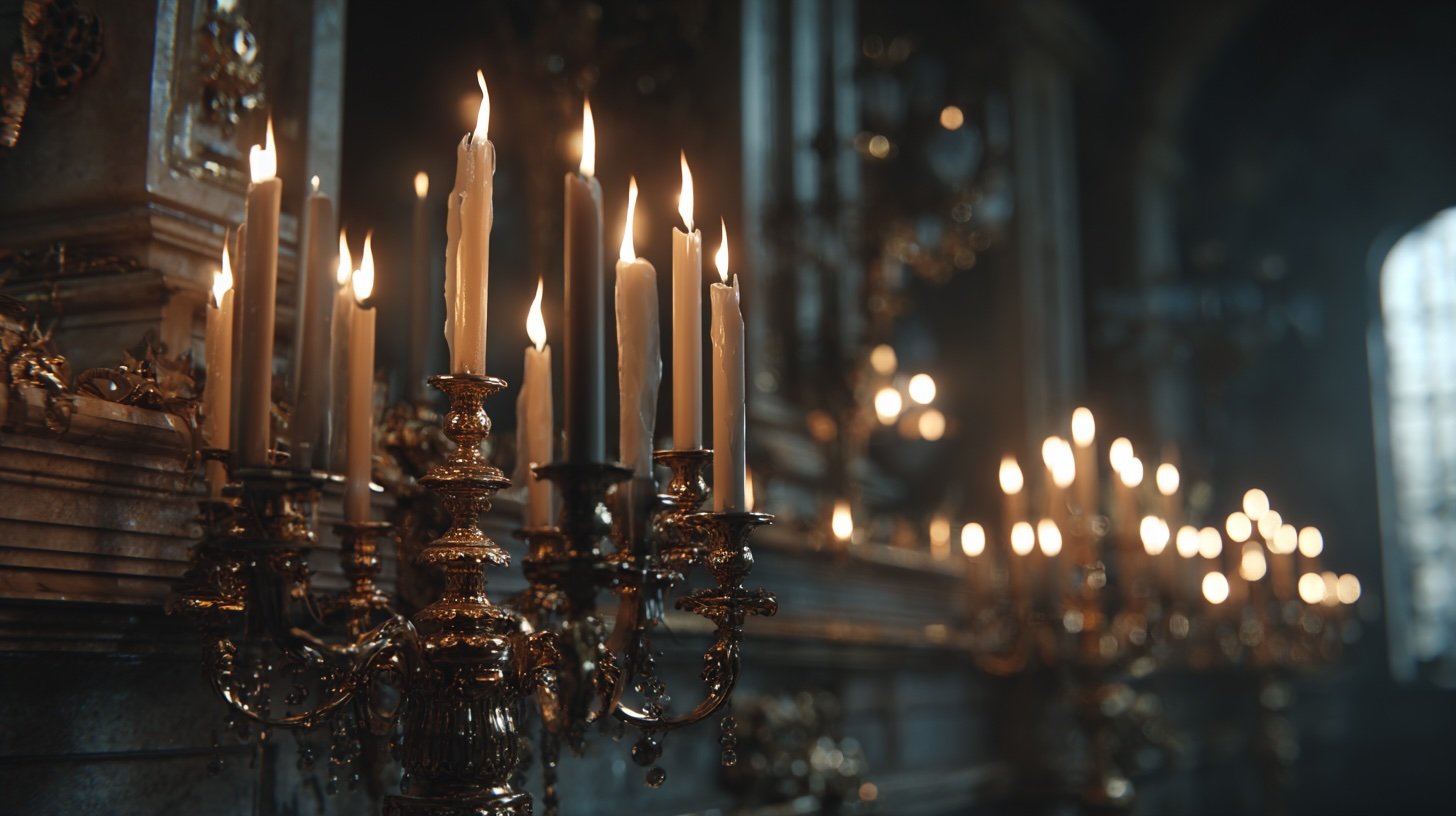
Light becomes the organising principle of Candlemas. Not abstract light, but physical, flame-based, smoke-producing light. By the fifth century, churches in Rome and Constantinople already hold candlelit processions on this day. Soon after, the practice spreads across Europe. Candles receive blessings. People carry them home. They store them carefully, often near birth records or family relics. These objects do not exist for decoration. Instead, they operate as insurance.
Before electricity, light carried authority. A candle could extend the working day. It could push back fear. It could make a storm feel survivable. Therefore, when a priest blessed candles on Candlemas, people believed the flame gained extra power. It protected homes from lightning. It softened illness. And it steadied women in labour. Even sceptical households hedged their bets and kept a blessed candle within reach.
At the same time, Candlemas occupied an uncomfortable point in the agricultural year. Winter stores ran low. Spring promised abundance but delivered nothing yet. Consequently, communities needed reassurance without illusion. Candlemas never declares that winter has ended. Instead, it asks whether winter has lost its monopoly. That careful framing explains its longevity.
Across medieval Europe, weather lore clustered around the day. Bright sunshine usually meant bad news. A clear Candlemas Day suggested that winter still had strength left. By contrast, grey skies, rain, or snow hinted that winter was beginning to weaken. These sayings appear in English, German, French, and Scots traditions, with small regional adjustments but identical logic. Nature, it seemed, preferred irony.
This belief travels easily. When European settlers carry their calendar across the Atlantic, the superstition goes with them. In North America, theology drops away and a groundhog takes centre stage. Yet the structure remains intact. A shadow means winter. No shadow suggests spring. Candlemas fades from popular memory, but its folk mathematics survives under a new name.
Long before Christianity, early February already carried meaning. Roman religion scheduled purification rituals at this point in the year. Meanwhile, the Celtic world marked Imbolc, associated with milk, fertility, and the first subtle signs of agricultural life returning. Fires, candles, and domestic thresholds mattered here too. Christianity does not erase these patterns. Instead, it translates them, folding older instincts into newer stories.
That translation explains Candlemas’s layered character. It never belongs to a single tradition. Rather, it behaves like a cultural crossroads where beliefs pass through, adjust their clothing, and continue onward. Light fits everyone’s narrative, so everyone keeps it.
In medieval Britain, Candlemas carried practical consequences as well. It functioned as a quarter day, when rents fell due and labour contracts shifted. Servants hired themselves out. Landlords collected payments. Tenancies changed hands. Alongside this, the blessed candle burned quietly in church. Light, in this context, symbolised order as much as hope.
Domestic rituals gathered around the day. Christmas greenery came down. Holly and ivy that lingered past Candlemas supposedly attracted misfortune. As a result, households treated removal seriously. Taking decorations down sealed the boundary between seasons. Leaving them up too long risked confusing the year.
Elsewhere, Candlemas developed regional flavours. In France and parts of Belgium, it became edible. Crêpes appear, thin and round, echoing the shape of the sun. People flip them while holding a coin, attempting to secure prosperity for the year ahead. The gesture feels playful. However, the logic remains serious. Food, light, and money belong together at moments of transition.
In Mexico, Candlemas closes the Christmas cycle altogether. Anyone who finds the figurine in the Epiphany cake becomes responsible for hosting a Candlemas meal. Tamales dominate the table. Consequently, the obligation binds households together, extending festive responsibility well into February. Candlemas here operates less as a date and more as a social agreement.
Eastern Christianity preserves Candlemas with particular solemnity. Known as the Meeting of the Lord, it emphasises encounter rather than ending. The infant meets old age. Promise meets patience. The world meets its reflection. Candle processions remain central, yet the tone stays contemplative rather than seasonal.
Despite these variations, Candlemas never competes with Christmas or Easter. It avoids spectacle. It resists climax. That restraint explains its quiet survival. It asks for attention without demanding celebration. In this way, it resembles winter itself, persistent rather than loud.
Modern life struggles to place Candlemas. It lacks commercial hooks. It refuses easy branding. Still, its ideas leak everywhere. Pancake Day borrows its calendar logic. Groundhog Day borrows its superstition. Even the phrase light at the end of the tunnel echoes this seasonal mindset.
There is also emotional honesty at the heart of Candlemas. It does not pretend that hope arrives fully formed. Instead, it suggests endurance matters more. Light exists, but only as flame rather than flood. Coats remain necessary. Patience still applies. The year stays unfinished.
For that reason, Candlemas feels unexpectedly contemporary. It understands that reassurance works best when it stays modest. Rather than promising transformation, it promises direction. Darkness will not last forever, even if it refuses to leave immediately.
In the end, Candlemas functions less as a feast and more as a quiet agreement between people and time. We acknowledge where we stand. We recognise what has passed. Then we prepare for what might come, carrying a small light, not to defeat winter, but to remember that it cannot win outright.