Buying a €1 House in Italy: Dream or Disaster?
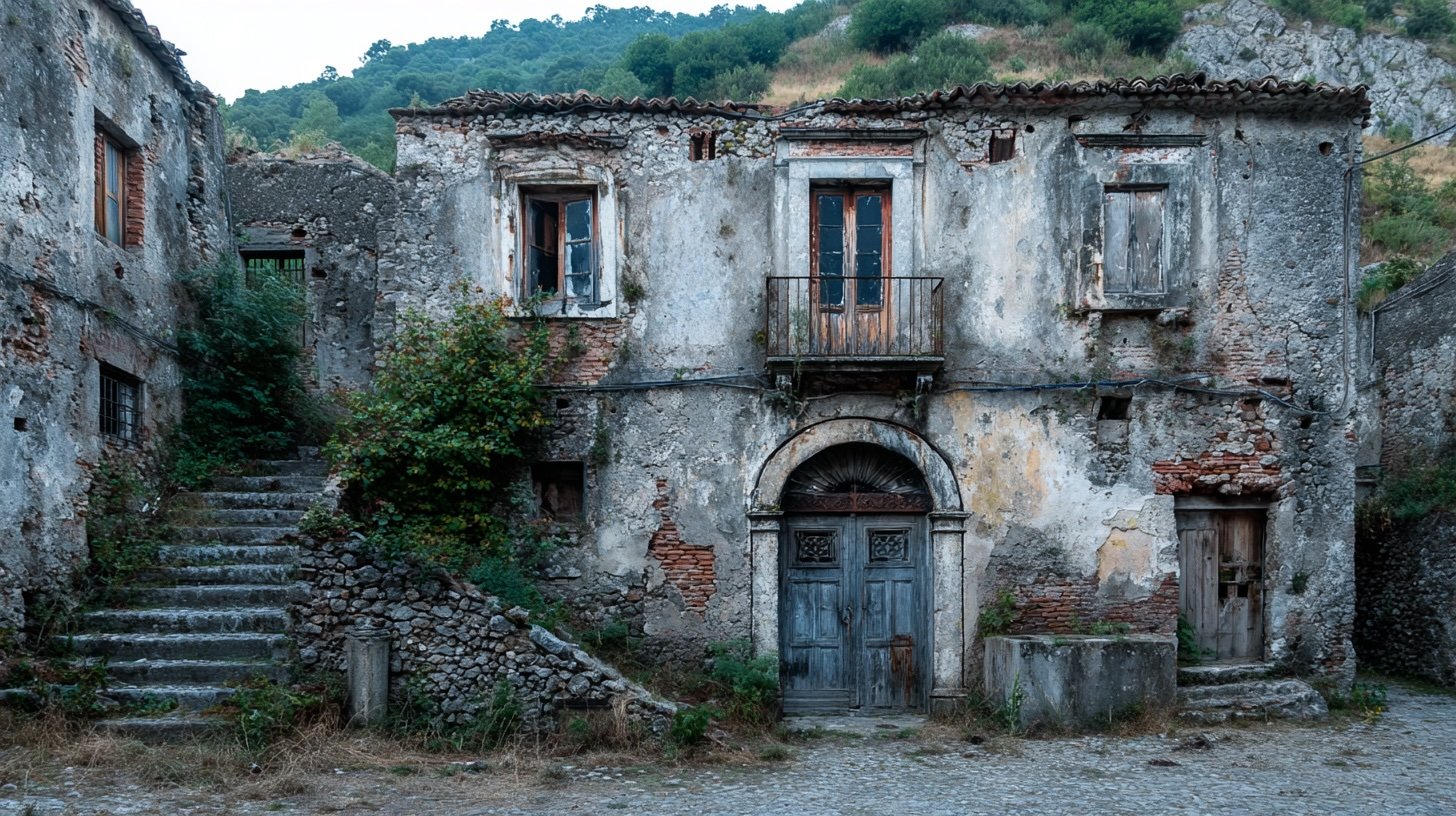
The idea sounds like a joke someone tells after their second glass of wine. A house in Italy for one euro. Stone walls, a small balcony, maybe a church bell nearby. Buying it on a lunch break feels imaginable, with the rest of the afternoon reserved for choosing paint colours. The price reads like a typo, which makes it irresistible. That reaction is exactly the point. Italian €1 house schemes exist because hundreds of small towns face a slow, practical problem rather than a romantic one. Over decades, people moved away. Buildings emptied. Roofs collapsed. Streets went quiet. To counter this, the symbolic euro acts like a flare shot into the international imagination. Suddenly a place most people couldn’t point to on a map receives emails from New York, London, Sydney, and São Paulo.
What you buy is not cheap property. Responsibility arrives with the keys. These programmes sell obligation wrapped in optimism, and once that is clear, the whole idea becomes far more interesting and far less disappointing.
Across many towns, the houses involved have been abandoned for decades. In some cases, heirs do not want them. In others, legal limbo keeps doors shut. Occasionally, a building stands one storm away from becoming rubble. Left alone, such houses cost the town money and create risk. Once restored, they bring life back to the historic centre. That exchange defines the scheme.
The euro itself is theatre. Renovation does the real work. Most schemes follow the same broad logic even though the details change from town to town. Buyers commit to restoring the property within a fixed timeframe, often around three years. Soon after purchase, a renovation plan usually follows. To demonstrate intent, a deposit or bond is required. Miss the deadlines and penalties arrive quietly but firmly.
Those conditions explain the photos. Cracked walls, missing roofs, vegetation inside the living room. None of these are cosmetic fixer-uppers. Instead, they are structural problems wearing nostalgia as a costume.
Local authorities understand this reality well. That awareness shapes how selective the process feels. A mayor running a €1 scheme does not want dreamers who disappear once the social media post is done. Instead, the search focuses on builders, planners, and people stubborn enough to finish something slowly.
That tension explains the rules that feel unfriendly at first glance. Deposits can seem unnecessary. Timelines may feel rushed. Paperwork often feels excessive. From the town’s perspective, this filters for commitment rather than charm.
Buying one of these houses still involves a normal Italian property transaction, minus the normal price. A notary handles the deed. Fees apply. Documents get stamped. The euro does not magically bypass the system. In fact, the process becomes more visible because there is no large purchase price to distract from it.
Then comes the renovation, where fantasies negotiate with physics. Old Italian houses behave like old Italian relatives. They have strong opinions. Uncover one problem and three more appear behind it. Roof beams reveal rot. Wiring belongs in another century. Floors slope with confidence. Moisture does what moisture always does. None of this is unusual. Preparation, emotional and financial, makes the difference.
Costs vary wildly by region and condition. A house that needs a roof, new floors, plumbing, electrics, and structural reinforcement does not care that it cost one euro. Builders price labour and materials, not symbolism. Some schemes hint at minimum renovation budgets. Others simply insist the house becomes safe and habitable. Either way, the maths always wins.
What often surprises buyers is not the final figure but the rhythm of spending. Renovation money leaves in bursts. When a permit arrives, decisions suddenly pile up. Materials must be ordered. Labour needs booking. Delay costs money. Absence costs money too.
Distance soon becomes a character in the story. Managing a renovation from the UK requires more than good intentions and WhatsApp. Someone local must understand the language, planning rules, and unspoken habits of contractors. A geometra or architect often becomes the hinge between dream and completion. Without that hinge, things sag.
The most successful buyers tend to fall into one of two categories. Some simplify aggressively, choosing small houses with modest ambitions. Others immerse themselves, spending long stretches on the ground and treating renovation as a part-time job. Both approaches work. Pretending to do neither rarely does.
Another misunderstanding appears again and again. Buying a house, even one collapsing romantically, does not grant the right to live in Italy full-time. Immigration rules sit in a separate universe. Property ownership can support a life plan, but it does not replace visas, permits, or timelines. Anyone serious about moving must plan those tracks in parallel.
The towns running these schemes are not naïve about attention. Some embrace it. Others become overwhelmed by it. Hundreds of enquiries arrive. Staff answer emails patiently until they cannot. Delays creep in. Expectations drift. This creates the impression that programmes are chaotic, when often they are simply human-scaled systems hit by global curiosity.
Criticism follows naturally. Observers argue some schemes function more as marketing than transformation. A few towns announce projects, gain headlines, then see only a handful of renovations completed. Elsewhere, tensions arise between locals and outsiders, especially where holiday homes start to outnumber permanent residents. These concerns are not imaginary. Outcomes depend heavily on how each town manages the aftermath.
Yet there are places where the strategy works quietly. Houses reopen. Streets regain lights at night. A café survives because customers return. Success rarely looks cinematic. More often, it looks incremental.
For anyone researching this seriously, the order of thinking matters. Lifestyle comes first. Uncomfortable questions help early on. Tolerance for remoteness matters. Travel frequency during construction also matters. Levels of uncertainty vary from person to person. Administrative patience, or the lack of it, becomes decisive. Together, these answers shape everything that follows.
Region comes next. Sicily attracts attention because prices remain lower and several towns have run schemes. Abruzzo appears because of quieter towns trying different approaches. Sardinia and parts of mainland Italy also feature, though conditions vary. Tuscany shows up occasionally, but expectations and competition rise quickly.
Only after that does it make sense to examine individual schemes. Official municipal pages matter more than headlines. Conditions deserve slow reading. Deadlines, deposit requirements, proof-of-funds rules, and restoration standards all matter. If something sounds vague, assume clarification will arrive later, in Italian, by email.
Then comes the practical check. Visit if possible and stand inside the building. Find out what happens if costs rise. Clarify what qualifies as completion. Ask how many past buyers actually finished. Those questions feel awkward only until they save years.
Money needs its own reality check. Buying costs still apply, even when the house costs one euro. Renovation requires contingency. Travel and time also belong in the budget. Tax incentives should feel like optional upside rather than structural support. Incentives change. Walls do not.
The emotional profile matters too. This is not a fast project. It does not reward impatience. Stubbornness, curiosity, and tolerance for ambiguity help far more. People who enjoy the process often say the same thing afterwards: the house taught them more than expected.
Others simply expected something else. The honest pitch would never go viral. It would say this. You can buy a house in Italy for one euro. After that, money, time, and energy prove whether you deserve it. A place reveals itself through negotiation rather than consumption. At the end, you either have a restored home and a complicated affection for scaffolding, or a cautionary tale.
Both outcomes exist. Only one is worth choosing deliberately. The euro opens the door. Everything after that depends on whether you keep pushing it open, slowly, with both hands.