Bishan-Ang Mo Kio Park: The Rewilding Project That Brought a River Back to Life
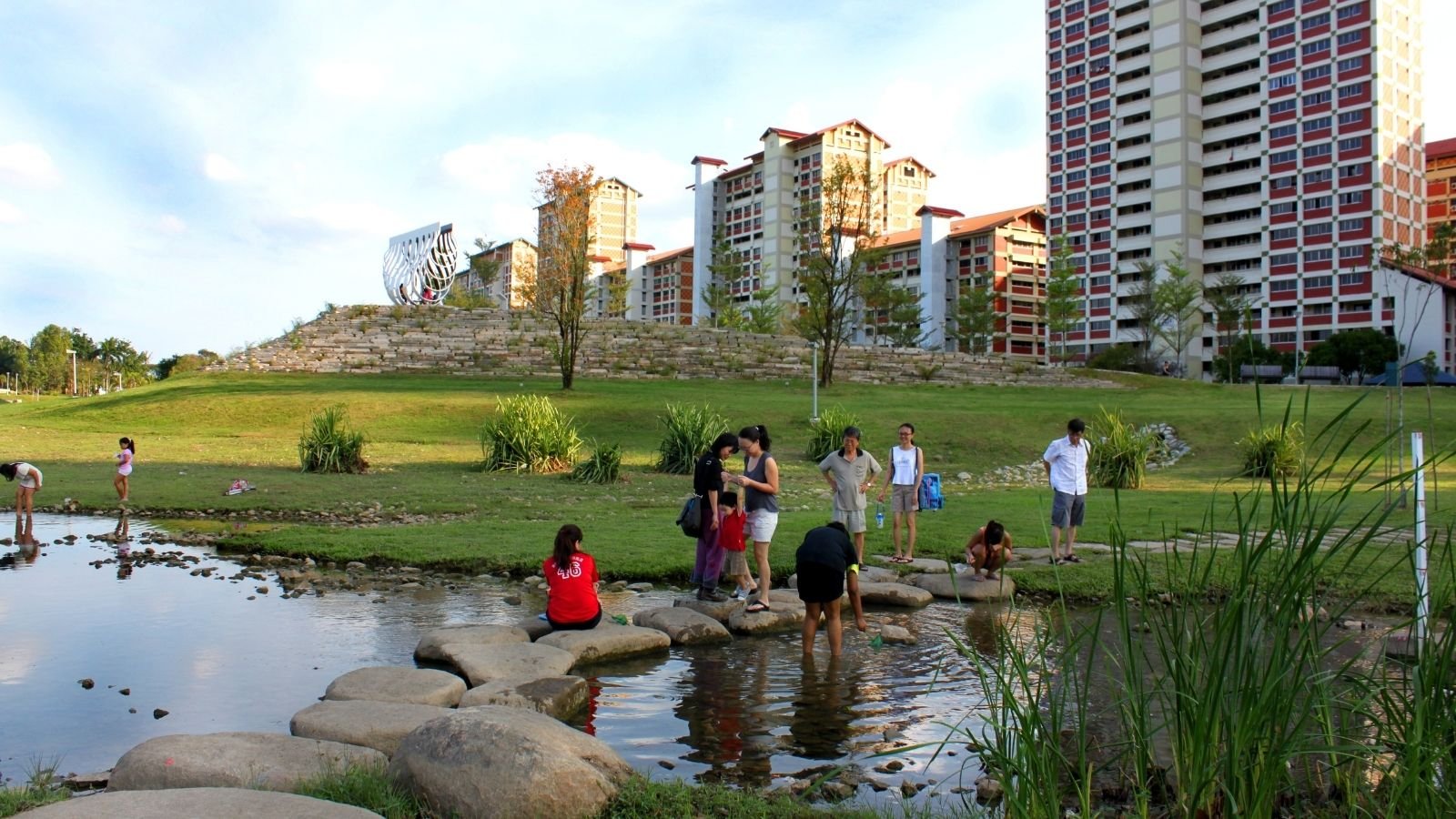
Bishan-Ang Mo Kio Park was once the sort of place that tried very hard to be practical. A perfectly straight concrete canal hurried stormwater through the landscape as if sprinting for an appointment, and the surrounding lawns displayed the usual “nothing to see here” tidiness of parks designed for predictability rather than pleasure. Singapore built it that way because the city had to move water fast, safely and without fuss. Then the world shifted. Suddenly everyone started caring about rivers that felt alive, not managed like industrial conveyor belts.
The park’s rewilding story starts with that concrete canal, which spent decades dutifully performing its drainage job while offering zero romance. People jogged beside it with the enthusiasm of commuters rushing past a motorway barrier. Birds rarely bothered stopping by. Even the water looked like it was trying to escape as quickly as possible. Engineers knew it wasn’t ideal, especially during heavy rain when the canal transformed into a raging torrent that no one could approach.
So when Singapore’s national water strategy evolved, planners saw an opportunity hiding in plain sight. The idea sounded almost rebellious for a city famous for efficiency: take the canal apart and let the river behave like a river. Not a wild mountain torrent, obviously, but something curved, textured, and alive. Something that didn’t need to pretend it was a giant concrete gutter. People raised eyebrows. Swapping a perfectly obedient canal for a wandering stream felt risky, expensive and a little whimsical. Yet the city committed.
The transformation unfolded under the Active, Beautiful, Clean Waters Programme, which treats waterways less like plumbing and more like civic assets. Landscape architects and engineers walked into the project with spades, plant lists and a surprising amount of optimism. They carved out a meandering channel that wove through the park instead of slicing along its edge. They built floodplains wide enough to breathe during storms. Then they softened the banks, planted riparian vegetation and coaxed the river back into a shape that looked as though nature had drawn it.
The new river didn’t merely exist; it behaved. During fair weather it drifted gently within a narrow channel, clear enough to reflect sky. When tropical storms arrived, the floodplain soaked up the drama, expanding the river without turning it into a hazard. Instead of forcing water to flee as fast as possible, the design slowed it, settled it and let it do the ecological housekeeping that engineered canals never allow.
The results surprised even the optimists. Biodiversity rose by around thirty percent within two years. Dragonflies and damselflies flocked back as if someone had sent out engraved invitations. Birds began treating the place as a regular haunt. Plants rooted themselves along the new banks with enthusiastic disregard for human timetables. What had once been a sterile concrete corridor became a functioning ecosystem in record time.
Residents responded just as quickly. People love water when it isn’t threatening, fenced off or rushing away like it has better places to be. Families started sitting on the gentle grassy slopes, watching the stream wander by. Joggers rerouted their runs so they could follow the river’s curves instead of the old rigid line. Photographers arrived, delighted by how many things fluttered, glimmered or perched within view. The river became a social spine, quietly knitting neighbourhoods together.
Of course, the rewilding didn’t pretend to be wilderness. Singapore doesn’t do laissez-faire nature. Every bend, bank and wetland cell was engineered with intent. Soil-bioengineering stabilised the edges. Specific plant species were chosen to handle floods, cleanse runoff and survive tropical moods. Maintenance crews still make regular rounds. It’s natural in form and function, yet supported by careful stewardship—rewilding with a seatbelt.
Water quality was one area that needed persistence. Urban runoff still arrives loaded with nutrients and sediments, especially after storms, and the wetlands work hard to filter what they can. Even with improvements, managing an urban catchment always requires negotiation with reality. The project never hid that. Instead it showed how a landscape can improve ecological conditions while acknowledging that cities rarely offer purity, only progress.
As a flood-management system, the restored river performs better than the canal ever did. It offers roughly forty percent more capacity and reduces the risk of sudden surges by slowing and spreading the flow. Ironically, by abandoning total control, engineers gained better control. The park now works with water rather than against it, and the city benefits every time the skies open.
Beyond numbers and engineering, something subtler happened. The park changed how people think about water in a city notorious for balancing scarcity with tropical downpours. Instead of treating rivers as hazards that must be hidden or tamed, Bishan-Ang Mo Kio Park turned one into a central character in everyday life. The river invites curiosity, lingering, play and even a bit of wonder—rare commodities in dense urban environments.
It also sparked a broader conversation about what rewilding means in a place where land is precious and every square metre usually has a job description. Here, rewilding isn’t abandonment. It’s a strategic redesign that uses natural processes to achieve goals that concrete alone cannot. It’s an argument that engineered systems can become richer, more resilient and more liveable when they borrow from ecological intelligence.
Urban planners from abroad visit the park and see a hopeful blueprint. Cities wrestling with ageing infrastructure, climate-driven storms or sterile public spaces study it with a mixture of admiration and envy. The project demonstrates that you can take a monotonous water channel and, with thoughtful intervention, turn it into a river that supports biodiversity, offers recreation, attenuates floods and sparks joy—all within one of the most densely built countries on Earth.
For locals, though, the transformation feels simpler. It’s a nicer place to walk. A greener slice of the city. A reminder that even in a meticulously organised landscape, something gently untamed can thrive. On a quiet morning, mist sometimes curls along the water, dragonflies hover like tiny helicopter scouts, and the river glides through its soft banks with serene confidence. Nothing about it hints at the concrete straightjacket it once wore.
Visitors who knew the old canal often struggle to reconcile their memories with the present view. The contrast is almost theatrical. One day the park was an obedient piece of drainage infrastructure; the next it discovered personality. People joke that the river had a midlife crisis and reinvented itself. If so, it chose its new identity well.
The park’s success comes from collaboration as much as design. Agencies worked together rather than in silos: water engineers, ecologists, park managers and landscape architects co-authored a shared vision. They created a model where infrastructure isn’t hidden underground or fenced off but integrated into the city’s daily texture. This kind of cooperation doesn’t just build projects; it builds resilience.
Perhaps the most striking element is how quickly life returns when given the slightest chance. A concrete canal can sit barren for decades, but swap it for meanders and marsh plants and creatures respond almost instantly. It’s a small ecological miracle tucked inside a meticulously planned city.
The rewilded river now anchors the entire park. It shapes the paths people walk, the views they linger over and the wildlife they encounter. It proves that urban spaces don’t need to choose between beauty, safety and functionality. They can weave all three into a landscape that feels effortless even though it’s anything but.
Bishan-Ang Mo Kio Park’s rewilding didn’t just restore a river. It restored a sense of possibility—that even in dense, demanding cities, nature has room to breathe when we make room for it. And once nature returns, people inevitably follow, grateful for a place that finally looks and behaves like it belongs to life rather than machines.
Photography: Atelier Dreiseitl