Before Banks, Before Governments: When Temples Ran the World
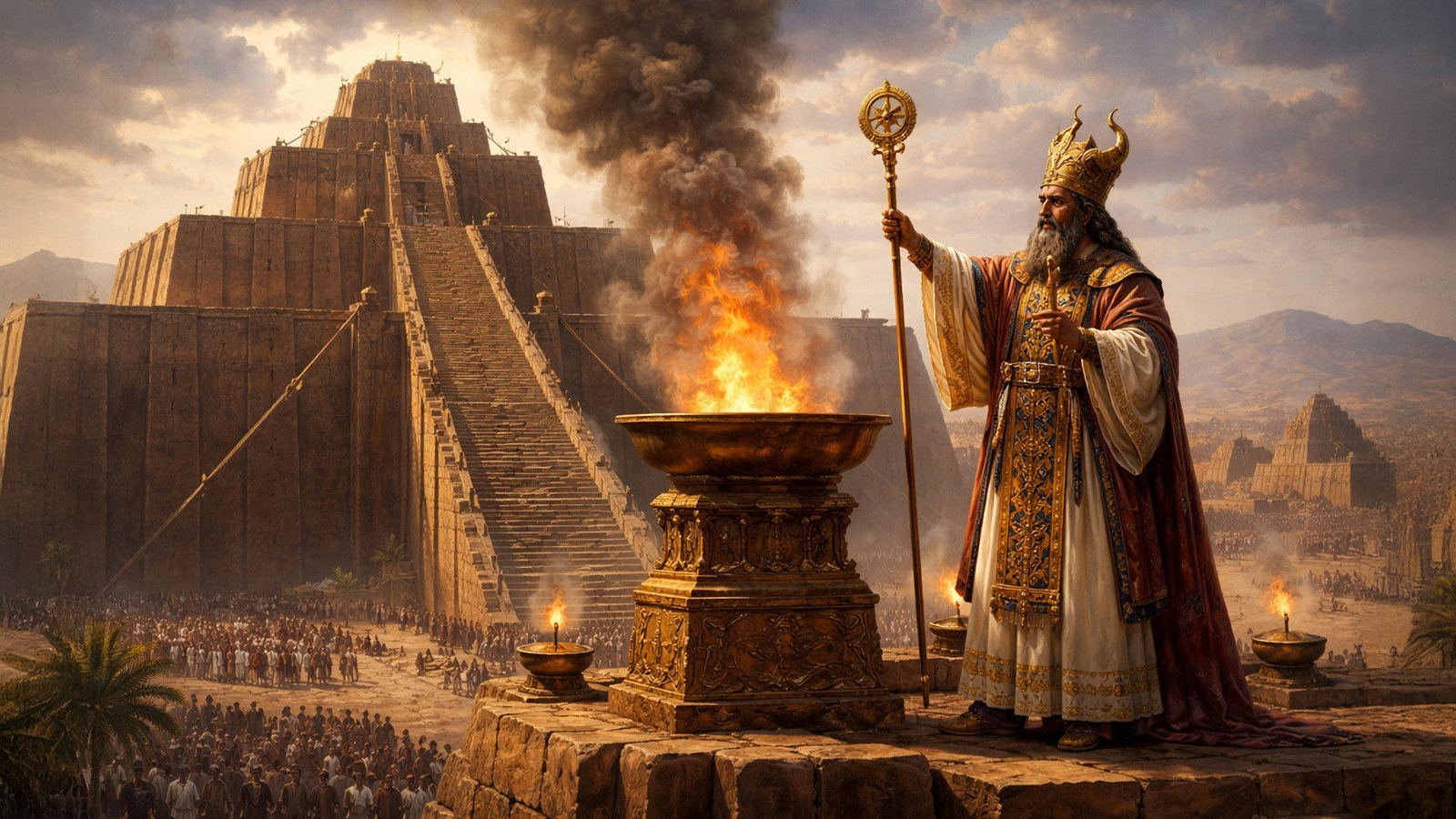
Picture this: you’re standing in ancient Uruk around 3300 BCE, watching workers haul sacks of barley into a massive temple complex. The irony? They’re not preparing for some grand ritual. Instead, they’re clocking in for work. Because before temples became houses of prayer, they were something far more practical—and far more powerful. Essentially, they were the world’s first corporations.
We tend to imagine ancient temples as purely spiritual spaces, filled with incense and whispered prayers. Yet when archaeologists dig through the ruins of early Mesopotamian cities, they keep finding something peculiar. Storage rooms dwarf the sanctuaries. Administrative offices outnumber the ritual chambers. Moreover, clay tablets pile up by the thousands, and not a single one contains prayers. Rather, they’re receipts. Inventory lists. Payroll records. In fact, the earliest writing humanity ever produced wasn’t devoted to myths or hymns—it was accounting.
That’s because temples solved a problem that had nothing to do with the afterlife. Around 5,000 years ago, farming communities in southern Mesopotamia started producing more grain than they could eat. Consequently, surplus changed everything. Suddenly, someone needed to store those mountains of barley. Someone had to decide who got what. Additionally, someone needed to track who owed whom. Markets didn’t exist yet. Neither did kings. But temples did.
Religious authority made temples uniquely trustworthy. People believed gods lived there, protected by priests and guards. Therefore, when farmers brought their extra grain for safekeeping, they weren’t just dropping it off at a warehouse. Rather, they were placing it under divine protection. Furthermore, temples didn’t die, didn’t flee, didn’t vanish overnight like a merchant might. Those stone walls promised permanence. As a result, trust followed.
Soon enough, temple administrators realised something clever. All that grain sitting in storage wasn’t doing anyone much good. Why not lend some to farmers who needed seed for the next planting season? They could pay it back after harvest—with interest. Yes, interest. Millennia before capitalism, Mesopotamian temples were charging fees on loans. Indeed, the Code of Hammurabi, from around 1750 BCE, sets legal limits on interest rates, which means lending had already become standard practice by then.
These weren’t small operations either. By the time Uruk reached its peak, temple complexes controlled vast agricultural estates, herds of thousands of sheep and cattle, and workshops producing textiles, beer, bread, and metal tools. Specifically, the Temple of Inanna at Uruk employed weavers, brewers, potters, metalworkers, scribes, accountants, and labourers on irrigation projects. Payment rarely came as coin—coins didn’t exist yet. Instead, workers received rations: grain, beer, oil, and wool. Consequently, the temple functioned as Mesopotamia’s largest employer, running what scholars now call a redistributive economy.
Here’s where it gets interesting. Writing itself emerged from this economic machinery. In fact, the earliest proto-cuneiform tablets from Uruk, dating to around 3200 BCE, aren’t literary masterpieces. They’re not even particularly religious. Rather, they’re grain tallies. Livestock inventories. Labour lists. Delivery receipts. Clearly, bureaucracy came before literature. Writing was invented because temple administrators needed to track obligations over time, manage deferred exchanges, and prevent fraud amongst their own staff. The god didn’t need writing. The accountants did.
Across the Mediterranean, Egypt followed a similar pattern, though with tighter integration into state power. Major temple complexes—particularly those associated with Amun at Karnak—controlled enormous agricultural estates, thousands of workers, warehouses, treasuries, and river transport fleets. During the New Kingdom, the priesthood of Amun controlled roughly one-third of all land in Egypt. Consequently, their economic weight rivalled the pharaoh himself. The relationship between throne and temple often grew tense, with priests accumulating enough wealth and influence to challenge royal authority. Some historians suggest Akhenaten’s religious reforms in the 14th century BCE were less about genuine spiritual renewal and more about breaking the economic stranglehold of the Amun priesthood.
Egyptian temples weren’t just landlords. They operated as centres of learning, with libraries known as Per-Ankh (Houses of Life) preserving medical texts, astronomical records, and historical documents. Priests doubled as physicians, astronomers, and historians. They managed not only temple estates but also provided community services: education, medical care, legal arbitration. Additionally, temples collected taxes in kind, redistributed food during shortages, and funded massive construction projects. Meanwhile, priestly offices became so lucrative that they sparked court battles lasting years. Being a priest in ancient Egypt wasn’t about spiritual calling—it was about economic power.
Back in Mesopotamia, the system worked because of a psychological innovation: moralised accounting. Debt wasn’t just owed to another person. Instead, it was owed to a god who saw everything. Breaking a contract with a temple wasn’t merely a legal violation—it risked divine punishment. This moral framing stabilised complex economic systems long before courts, police, or modern states existed. Ultimately, sacred authority became economic enforcement.
Yet this raises uncomfortable questions. Were temples benevolent redistributors, smoothing out seasonal shortages and protecting the vulnerable? Or were they exploitative landlords, extracting surplus from peasants who produced the wealth but received only minimal rations in return? Scholars still argue about emphasis, not existence. Some characterise early Mesopotamia as a “temple-state economy,” dominated entirely by religious institutions. Others insist private enterprise always existed alongside temple operations, pointing to evidence of independent merchants and landowners.
The truth seems messier than either extreme. Temple economies certainly participated in redistribution and wealth accumulation on a massive scale. However, they didn’t suppress markets—they enabled them. By the Early Dynastic period in Mesopotamia, a parallel market economy emerged. Merchants who worked for temples were allowed to trade privately on the side. Craftsmen engaged in “cottage industries,” selling their wares independently. Moreover, land sales between individuals were recorded on clay tablets from the mid-third millennium onwards. Private enterprise and temple operations coexisted, sometimes in competition, sometimes in cooperation.
What’s undeniable is that in many early societies, temples predated palaces. Kingship often emerged later, sometimes by absorbing temple functions, sometimes by imitating temple bureaucracy. This suggests organised religion wasn’t merely spiritual cover for political power. Instead, it functioned as a proto-institutional framework, solving problems of scale, coordination, and legitimacy before secular governance existed. Religion provided the organisational infrastructure that made complex societies possible.
Then something shifted. Over time, political power consolidated. Kings built palaces, raised armies, and claimed portions of the economy that might otherwise have flowed to temples. The relationship between temple and palace varied across periods and regions, sometimes cooperative, sometimes antagonistic. In some eras, temples maintained independence. In others, they became extensions of royal power. What remained constant was their economic significance. Even when palaces dominated politically, temples retained massive landholdings, workforces, and treasuries.
Later religious texts obscure these economic origins. Myths present temples as houses for gods, centres of sacrifice, cosmic symbols linking heaven and earth. The administrative core fades into the background, buried under layers of ritual meaning. Yet archaeology keeps betraying the truth: storage rooms remain larger than sanctuaries. Accounting tablets outnumber hymns. The sacred aura survived precisely because it worked. Once prayer became central, the economic machinery was already embedded, too essential to abandon.
This matters because it reframes religion itself—not as belief first, but as organisation first. Faith followed structure. Prayer followed accounting. Before priests led worship, they managed warehouses. Before temples housed gods, they housed grain. The spiritual dimension didn’t replace the economic function; it legitimated it. Religion provided the ideological framework that made massive wealth accumulation acceptable. Consequently, divine ownership justified human inequality.
Consider the bevelled-rim bowls found throughout Mesopotamia and beyond—simple, mass-produced clay bowls in standardised sizes. These weren’t ritual objects. Instead, they were ration containers, holding a fixed amount of grain for workers attached to temple estates. Thousands upon thousands of these bowls survive, evidence of an industrial-scale redistribution system. We’re not talking about small charitable operations. Rather, we’re talking about feeding armies of labourers, coordinating production across multiple workshops, managing supply chains that stretched hundreds of kilometres.
The scale of these operations is staggering. Archaeological excavations at Uruk reveal textile workshops employing thousands of female workers. Corporate smelting facilities. Stone-working operations. Ceramic production centres. These weren’t cottage industries. Rather, they were factories, organised and managed by temple bureaucracies centuries before the Industrial Revolution. The economic sophistication rivals anything seen before the modern era.
What happened to this system? Gradually, it declined. As secular governance strengthened, temples lost their monopoly on economic organisation. Markets expanded. Private banking emerged. By the Roman period, temples in Mesopotamia still operated as deposit institutions and made loans, but they competed with private argentarii (money-changers) and other financial operators. The sacred monopoly had broken.
Nevertheless, the legacy persisted. Greek temples at Delos made loans at 10% annual interest well into the 2nd century BCE. Similarly, Roman temples stored wealth, exchanged currency, and validated coins. The habit of depositing valuables in temples for safekeeping continued for millennia. Even Jewish and Christian prohibitions against usury (lending at interest) acknowledged the practice by condemning it—you don’t ban something that isn’t happening.
Walking through the ruins of ancient temples today, tourists see religious monuments. They imagine priests conducting elaborate rituals, worshippers bringing offerings, gods dwelling in stone sanctuaries. All of that happened, certainly. But those massive temple complexes were also administrative centres, economic powerhouses, and proto-corporations managing resources on a scale most modern businesses would envy. The accounting offices, storage facilities, and workshops—those were the heart of the operation. The rituals sanctified the system.
That’s the uncomfortable genius of it. By fusing economic power with religious authority, ancient societies created institutions that were simultaneously spiritual and material, sacred and pragmatic. The gods owned the land, but priests managed it. Offerings fed the divine, but they also paid salaries. Temples redistributed wealth whilst accumulating it. Ultimately, the system worked because it operated on multiple levels simultaneously: economic efficiency justified by cosmic necessity.
Understanding temples as economic institutions unsettles modern assumptions about the separation of church and state, about the purity of religious motivation, about the origins of writing and bureaucracy. Yet it explains why religious buildings were often the most durable, wealthiest, and administratively sophisticated structures of the ancient world. They weren’t just houses of worship. Rather, they were the engine rooms of civilisation, the places where surplus was stored, redistributed, and transformed into power. Before there were banks, before there were governments, before there were corporations—there were temples. And they invented the machinery that still runs the world.