Bayanzag and the Flaming Cliffs Fossil Rush
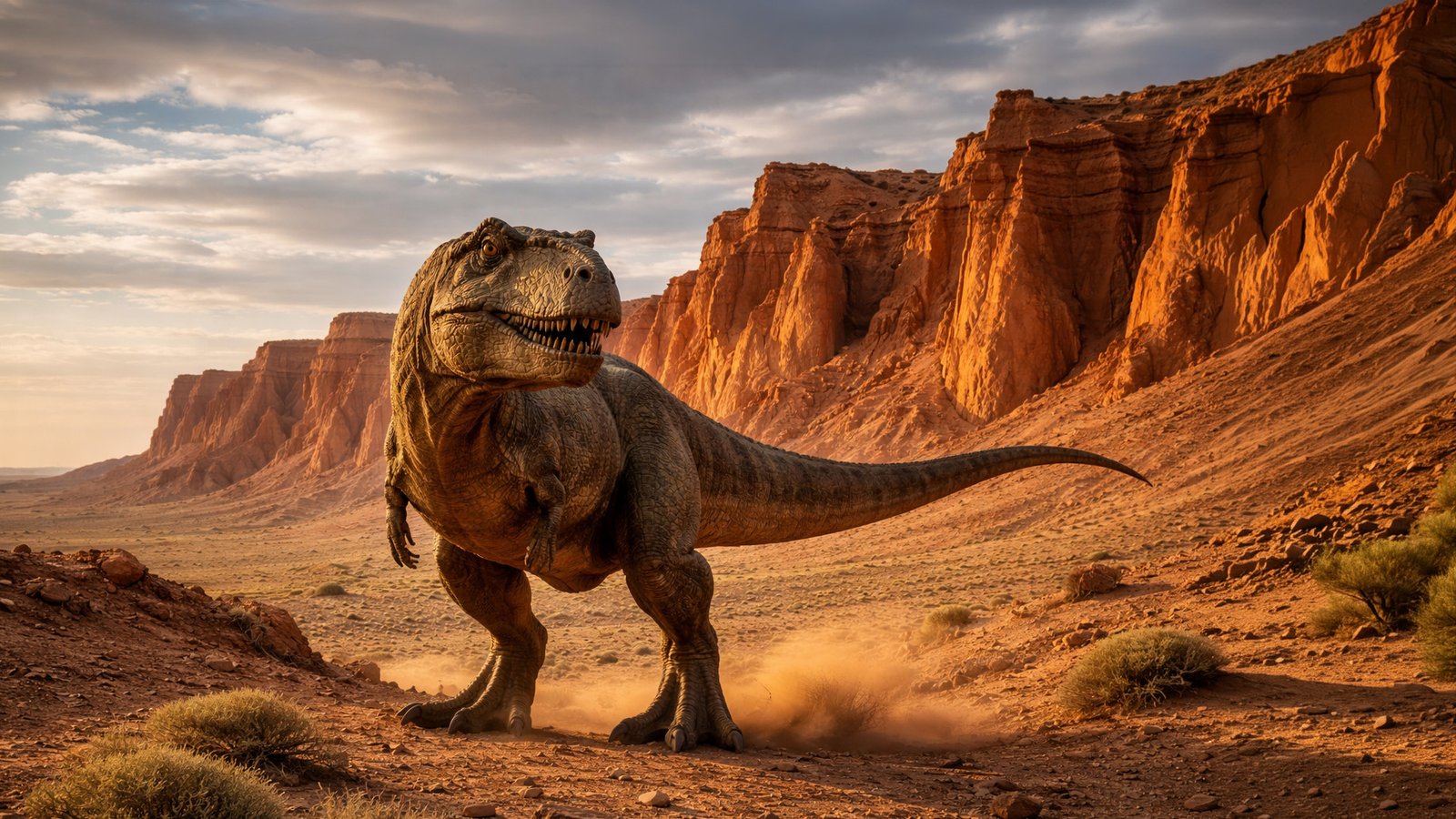
At first glance, Bayanzag does not look like the sort of place that would humiliate half the world’s museums. Instead, it stretches out as burnt-orange cliffs in the Mongolian Gobi, baked by sun and scraped by wind, quietly confident about what it hides. Roy Chapman Andrews thought so too when he brought his American Museum expeditions there in the 1920s. He gave the place its dramatic English nickname, the Flaming Cliffs, because subtlety was clearly not invited. Meanwhile, the local name, Bayanzag, feels quieter and more rooted. It refers to the saxaul shrubs that grow there, which feels less cinematic and more sensible.
Then, quite suddenly, the fossils started appearing, and quiet good sense left the scene. In 1923, Andrews’s expedition pulled from the cliffs something that jolted palaeontology like a slapped table: dinosaur eggs. Real ones. Not a vague bone fragment requiring three arguments and a cigar to interpret, but eggs in nests. Suddenly, dinosaurs were no longer just giant thunder-lizards stomping through imagination. Instead, they had breeding grounds, nesting habits, and a much messier domestic life than Victorian fantasies allowed. As a result, Bayanzag did not merely add another dinosaur to the list. It changed the questions scientists were asking.
That alone would have secured its place in science history. Yet the Gobi was not finished showing off. The Flaming Cliffs and nearby beds produced a parade of Cretaceous celebrities. Protoceratops turned up in abundance, which mattered because it gave scientists a fuller picture of a small horned dinosaur. Meanwhile, Velociraptor also came from these formations, though cinema later turned a lean predator into a giant Hollywood problem. At the same time, the wider South Gobi kept producing extraordinary fossils across the twentieth century. For instance, the famous Fighting Dinosaurs specimen, discovered by Polish-Mongolian teams in the 1970s, looked less like a display and more like a prehistoric crime scene.
Naturally, the rush to the Gobi became a contest. At first, the story had an American flavour. Andrews and the American Museum of Natural History wanted spectacular finds, public attention, and prestige. Museums in that era did not merely collect fossils. Instead, they competed for them with the energy of department stores fighting over Christmas windows. Mongolia’s fossil beds offered something irresistible: dramatic discoveries from a landscape that still felt remote enough to feed the adventure myth. Andrews himself later became wrapped in his own legend, somewhere between scientist, explorer, and prototype for fictional archaeologists.
However, politics soon changed the map. After the American expeditions ended, later decades brought Soviet and Polish-Mongolian work into the Gobi, especially from the 1960s onward. These expeditions were serious, systematic, and deeply productive. At the same time, they were shaped by the Cold War world, when science moved through alliances and access. Western culture often leaves the impression that dinosaur glory in Mongolia began and ended with charismatic Americans. In reality, some of the most important later work came from Mongolian, Polish, and Soviet scientists.
That is where the rivalry becomes more interesting. Rather than a loud confrontation, it unfolded as a slower academic competition. Access, publication, naming rights, and institutional prestige became the battleground. American expeditions had the early headlines. Meanwhile, Cold War-era teams had staying power on the ground. Mongolian palaeontologists, especially Rinchen Barsbold, helped shift the centre of expertise closer to the source. As a result, the story became less about outsiders and more about local scientific authority.
The eggs added another twist, because the first great Bayanzag egg story turned out to be wrong. For decades, scientists thought the elongated eggs found at the Flaming Cliffs belonged to Protoceratops. Nearby lay a dinosaur that seemed caught red-handed, so it was named Oviraptor, literally egg thief. That is an impressively rude thing to call an animal on limited evidence. Later discoveries, including embryos found in similar eggs, showed that the supposed thief was probably brooding its own nest. So one of the Gobi’s most famous fossils did not just reveal dinosaur parenting. It also revealed that palaeontologists can, when excited, create a slander that lasts for generations.
The myths did not stop there. People still imagine the Gobi as an empty wasteland, which suits dramatic writing but ignores reality. In fact, Bayanzag sits within a living desert landscape with plants, wildlife, and local communities. The place did not begin existing when foreign scientists arrived with notebooks. Instead, it became visible to Western science at that moment. That distinction matters.
So do the controversies. Fossil poaching has haunted Mongolia for years, because the Gobi’s riches attract smugglers as well as scientists. A spectacular skeleton can fetch enormous sums abroad, which turns science into crime with depressing efficiency. Consequently, Mongolia has spent years fighting for repatriation. Returned specimens now form part of a broader argument about heritage, ownership, and who profits from deep time.
Even tourism creates tension. Visitors come for the sunset glow and the thrill of standing where famous eggs emerged. However, footprints, vehicles, and casual collecting do not mix well with fragile fossil ground. The site therefore needs visitors, protection, local stewardship, and funding all at once. That is not an easy combination anywhere. In a place as exposed as Bayanzag, it becomes a constant balancing act.
Still, the deeper reason the Gobi became ground zero for dinosaur science is not just luck. The rocks preserve ancient ecosystems with remarkable clarity, while erosion keeps revealing new material. Bones, eggs, nests, and even moments of behaviour survive in these sediments. Because of that, the Gobi produces not merely dinosaurs, but stories about dinosaurs.
That may explain why Bayanzag still feels magnetic. It is not only a fossil site. Instead, it acts as a stage where science became theatre and knowledge competed for authority. First, it gave the world dinosaur eggs. Then, it delivered decades of discoveries, revised old mistakes, and exposed the politics wrapped around scientific glory. Not bad for a place that, at sunset, mostly just glows red and pretends none of this is its fault.
Post Comment
You must be logged in to post a comment.