Bad Air, Good Luck: The Rise and Fall of Miasma Theory
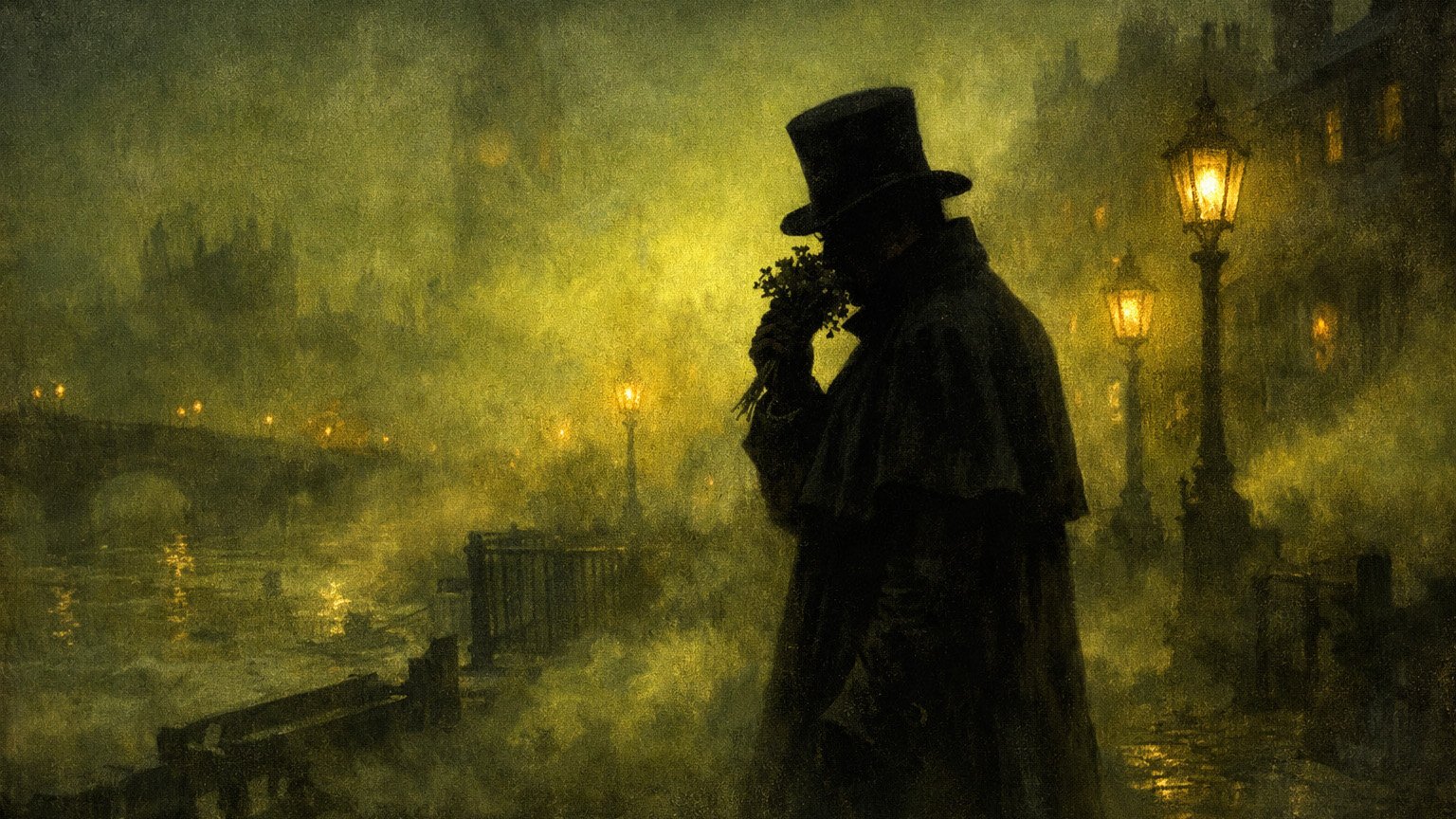
Let’s talk about the most confidently wrong medical theory in human history. For roughly two thousand years, the smartest people on the planet were absolutely convinced that bad smells caused disease. Not metaphorically. Not poetically. Literally. You catch a whiff of a rotting marsh on a Tuesday morning, and by Thursday you’re dying of plague. That was the going wisdom. That was medicine.
The theory had a name, of course — miasma. It came from the ancient Greek word for “pollution,” and it was the brainchild of Hippocrates, the father of medicine himself, back in the fifth century BC. His basic argument was that foul air from decomposing matter wafted into the body and caused pestilence. It was later turbo-charged by the Roman physician Galen, who connected it to every ailment he could think of, from tuberculosis to skin disease. So the idea had serious intellectual pedigree. This wasn’t fringe thinking — it was the mainstream, the consensus, the thing you said if you wanted to be taken seriously.
Interestingly, the word “malaria” is basically a monument to this theory. It comes straight from the Italian — mala aria — which means, you guessed it, bad air. The disease had nothing to do with air, naturally. But the name has stuck around for centuries as a rather embarrassing reminder of where we went wrong.
For most of history, people were understandably terrified of night air, swamps, and anything that smelled unpleasant. Consequently, they shut their windows at dusk, avoided marshes, and clutched bunches of flowers to their noses when walking through cities. The flowers were called nosegays — basically the Victorian equivalent of a face mask. Utterly ineffective at stopping disease, but at least they gave people something to do with their hands. Meanwhile, across medieval Europe, physicians blamed bad air for everything from the Black Death to bad moods.
What makes the story genuinely brilliant, though, is how miasma theory accidentally produced real results. By the mid-19th century, Edwin Chadwick — Britain’s most committed miasmatist — was running around Parliament bellowing “all smell is disease!” He genuinely believed it. As a result, he pushed relentlessly for cleaner streets, better drainage, and proper sewers. The science was spectacularly wrong, but the intervention worked. They were solving the right problem for the wrong reasons, which is frankly a more common occurrence in history than anyone likes to admit.
Then came 1858 and the moment the theory reached its glorious, ridiculous peak: the Great Stink of London. That summer, a brutal heatwave turned the Thames into something between a sewer and a compost heap. Two million people’s worth of waste, industrial chemicals, and slaughterhouse runoff had been cooking in the sun for weeks. The smell was so catastrophically bad that Parliament — which sat right on the riverbank — had to soak its curtains in lime to function. The government, naturally, panicked. In just eighteen days, they found the money to commission an entirely new sewerage system. Nothing motivates politicians like a smell that follows them to work.
Engineer Joseph Bazalgette designed a network of tunnels and intercepting sewers that became one of the engineering wonders of the Victorian age. They built it to keep the miasma at bay. What it actually did was stop contaminated water from reaching the drinking supply. The great stink, paradoxically, saved London from cholera.
Of course, there was a man who had figured this out years earlier — and nobody wanted to hear it. Dr John Snow, an anaesthetist from London, had spent years methodically proving that cholera spread through contaminated water, not air. During the 1854 Soho outbreak, he famously traced the epidemic back to a single water pump on Broad Street. He removed the pump handle. The outbreak stopped. Snow presented his findings and was largely dismissed as a crank with odd ideas about water. He died in 1858, still fighting for his theory to be taken seriously. History, mercifully, vindicated him — but not until long after he was in a position to appreciate it.
Even more wonderfully, the Great Stink proved miasma theory wrong in real time without anyone noticing. No major outbreak of disease followed the stench of 1858, despite the whole city being submerged in what should have been the world’s most lethal miasma. At that point, a more scientifically rigorous generation might have said: hang on. Oddly, nobody did.
Perhaps the most entertaining twist in the whole saga is Florence Nightingale. The celebrated nurse, the pioneer of modern healthcare, the woman whose data visualisations were genuinely ahead of their time — she was a true believer in miasma. She spent the Crimean War improving hospital sanitation and ventilation because she was convinced that bad air was killing the soldiers. Remarkably, the death rate fell sharply as a result. She had, again, done the right thing for the wrong reason. It gets better, though. Even after cholera was conclusively proven in 1891 to be waterborne, Florence held firm. She went to her grave in 1910 convinced that foul air was the enemy. You have to respect the commitment, if not the science.
By the 1880s, Louis Pasteur and Robert Koch had settled the matter with germ theory, and miasma finally shuffled off into medical history. Nevertheless, its legacy is oddly positive. Modern London’s sewer system — still largely Bazalgette’s work — was born of the theory. Public health legislation, clean water acts, and sanitation reforms all emerged from a two-thousand-year belief that smelly things would kill you. Which, in a roundabout way, wasn’t entirely untrue.
Some early 19th-century academics extended miasma theory to non-infectious conditions too. One professor suggested that a butcher’s wife became obese through regularly inhaling the odour of meat. You cannot make this up. The smell of a Sunday roast, apparently, was a genuine health hazard. Germ theory has a lot to answer for, taking away the excuse of blaming one’s waistline on proximity to a kitchen.
For two millennia, a completely incorrect idea about disease drove people to clean up their cities, drain their swamps, build sewers, and open their windows. The smell wasn’t the killer — but chasing it away certainly saved lives. It is one of history’s more generous ironies: a grand mistake that accidentally kept us alive long enough to figure out the truth.
Post Comment
You must be logged in to post a comment.