Asado: Argentina’s Slowest, Loudest, Most Serious Meal
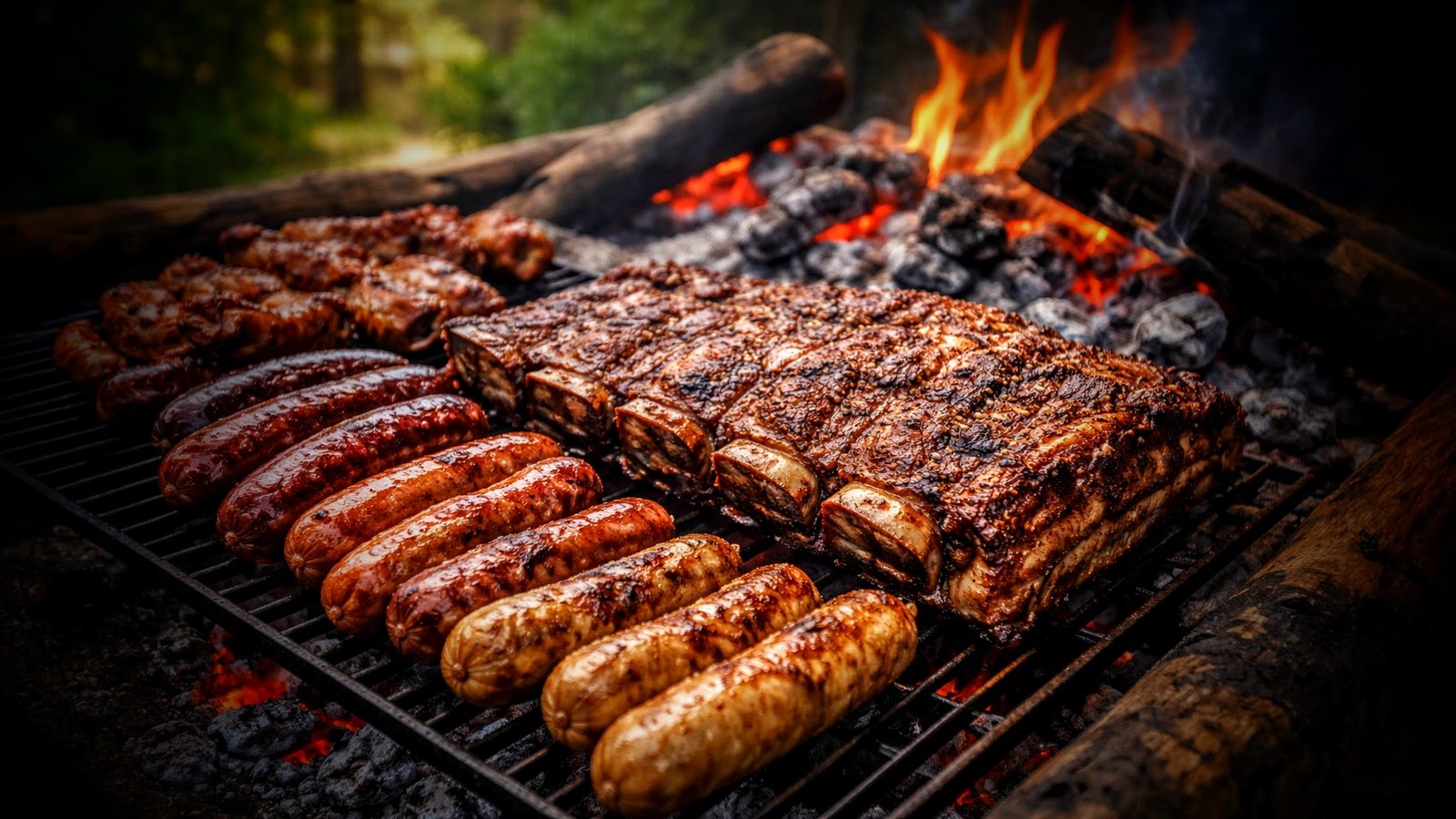
In Argentina, cooking meat has never been a side activity. It sits at the centre of the day. Everything else quietly rearranges itself around the fire, including time, conversation, and minor political disagreements. Asado does not rush, apologise, or multitask. Instead, it claims the afternoon and then casually spills into the evening.
On paper, the whole thing looks disarmingly simple. Meat. Fire. Salt. Yet anyone who has witnessed a proper asado knows it operates on a different level. This is not a barbecue. Rather, it is a ritual with rules, pauses, hierarchies, and a very long memory for past mistakes.
The day usually begins long before hunger makes an appearance. Someone, often a man but not always, announces that they will handle the fire. That announcement matters. From that moment on, they become the asador. The role is temporary, yet it carries absolute authority. Advice rarely lands well. Commentary survives only when it flatters the fire management.
Fire always comes first. Logs or charcoal burn down slowly until they stop behaving like flames and start behaving like embers. Flames feel nervous and impatient. Embers feel calm and grown-up. People watch this transformation with the seriousness usually reserved for weather systems. If the fire looks wrong, the entire afternoon feels unstable.
The grill itself, the parrilla, looks deceptively mechanical. Most traditional versions rise and fall on a crank, which allows the asador to control heat without touching the meat. That detail matters because asado avoids fuss. Meat should not be flipped constantly. Instead, it should sit, absorb smoke, and get on with things quietly.
Fat drips away through angled grates rather than igniting into drama. As a result, smoke stays dry and aromatic. Burning signals failure. Slow browning signals competence.
Seasoning remains almost aggressively minimal. Coarse salt appears and little else follows. Marinades rarely enter the picture. Sugar and elaborate spice rubs raise eyebrows. Good beef, Argentinians insist, needs no disguise. Adding too much feels like admitting doubt.
This confidence comes from history. For generations, Argentine cattle grew fat on grass rather than feedlots. As a result, beef tasted rich without intervention. That legacy still shapes expectations, even as modern agriculture complicates the reality. The myth survives largely because it continues to work.
Sauces exist, but they wait patiently. Chimichurri arrives on the table rather than on the grill. It tastes sharp, herbal, and slightly argumentative. Some people love it. Others barely touch it. Pouring it directly onto meat without tasting first feels impatient and, to some, faintly disrespectful.
Eating does not begin when the main cuts finish cooking. Instead, it starts earlier and almost casually. Sausages and smaller items arrive first, keeping hunger under control while the serious meat takes its time. Chorizo appears sliced or tucked into bread, becoming choripán, which nobody pretends is refined.
Morcilla follows soon after. Outsiders hesitate. Locals do not. Its soft texture and deep flavour feel comforting rather than extreme. Provoleta sometimes joins the sequence as well, a thick disc of cheese melting into itself, bubbling gently, and disappearing fast.
Only later do the headline cuts appear. Asado de tira, ribs sliced across the bone, release a smell that travels beyond the garden. Vacío cooks patiently, developing flavour through endurance rather than speed. Entraña arrives briefly, cooks quickly, and vanishes even faster.
Each cut carries social meaning. Knowing their names signals respect. Confusing them suggests innocence at best. Argentine butchers think differently, and their logic reflects how meat meets fire rather than how it sits on a supermarket tray.
Throughout this process, the asador remains standing. Sitting too early feels wrong. Plates circulate in loose patterns. Meanwhile, wine flows without ceremony. Bottles open and empty without comment. Malbec often dominates, although nobody insists.
Conversation drifts as the afternoon stretches. Politics appear, retreat, and then return. Football arguments flare and cool. Children wander in and out, half-fed and half-ignored. The fire anchors everything. Time stretches because nobody tries to compress it.
This slowness matters. Asado resists efficiency by design. It does not reward speed or optimisation. Instead, it rewards patience, trust, and shared waiting. Guests surrender control. The asador carries responsibility. Everyone accepts the imbalance without complaint.
Historically, this arrangement made sense. Gauchos cooked meat outdoors because they had no alternative. Fire and beef structured daily life on the pampas. Techniques evolved around open space, shared labour, and minimal tools. That legacy still shapes modern gatherings, even in city gardens and cramped courtyards.
Occasionally, someone prepares asado al asador, cooking whole animals or large cuts beside the fire on iron crosses. These moments feel theatrical and almost ceremonial. At the same time, they feel ancient, linking the present table to a rural past that still exerts influence.
Modern Argentina experiments quietly. Vegetables appear more often. Fish sometimes joins the grill. Nevertheless, tradition holds firm. Vegetarian asados exist, usually framed carefully to avoid sounding ideological. Tofu, however, remains a step too far.
What keeps asado alive is not nostalgia. It survives because it solves a problem modern life keeps creating. By design, it slows people down together. Roles become clear without discussion, and responsibility settles where it should. Just as importantly, it creates long pauses where nothing needs to happen at all, except talking.
In a country accustomed to economic instability, that reliability matters. Fire behaves predictably when treated properly. Meat responds honestly. People gather, eat, argue, and leave full. The ritual resets the week.
Asado does not promise perfection. Sometimes meat overcooks. Sometimes the fire sulks. Even so, the structure holds. Everyone understands the rules, even when they bend them.
Ultimately, asado feels less like a meal and more like a shared agreement. Everyone agrees to wait. One person earns full trust with the fire. The rest eat slowly and accept that the day will last longer than planned.owly. We will stay longer than planned. In the end, the real seasoning is time. Everything else remains optional.