Ancient Greek Daily Life Hygiene: Oils, Strigils and Social Baths
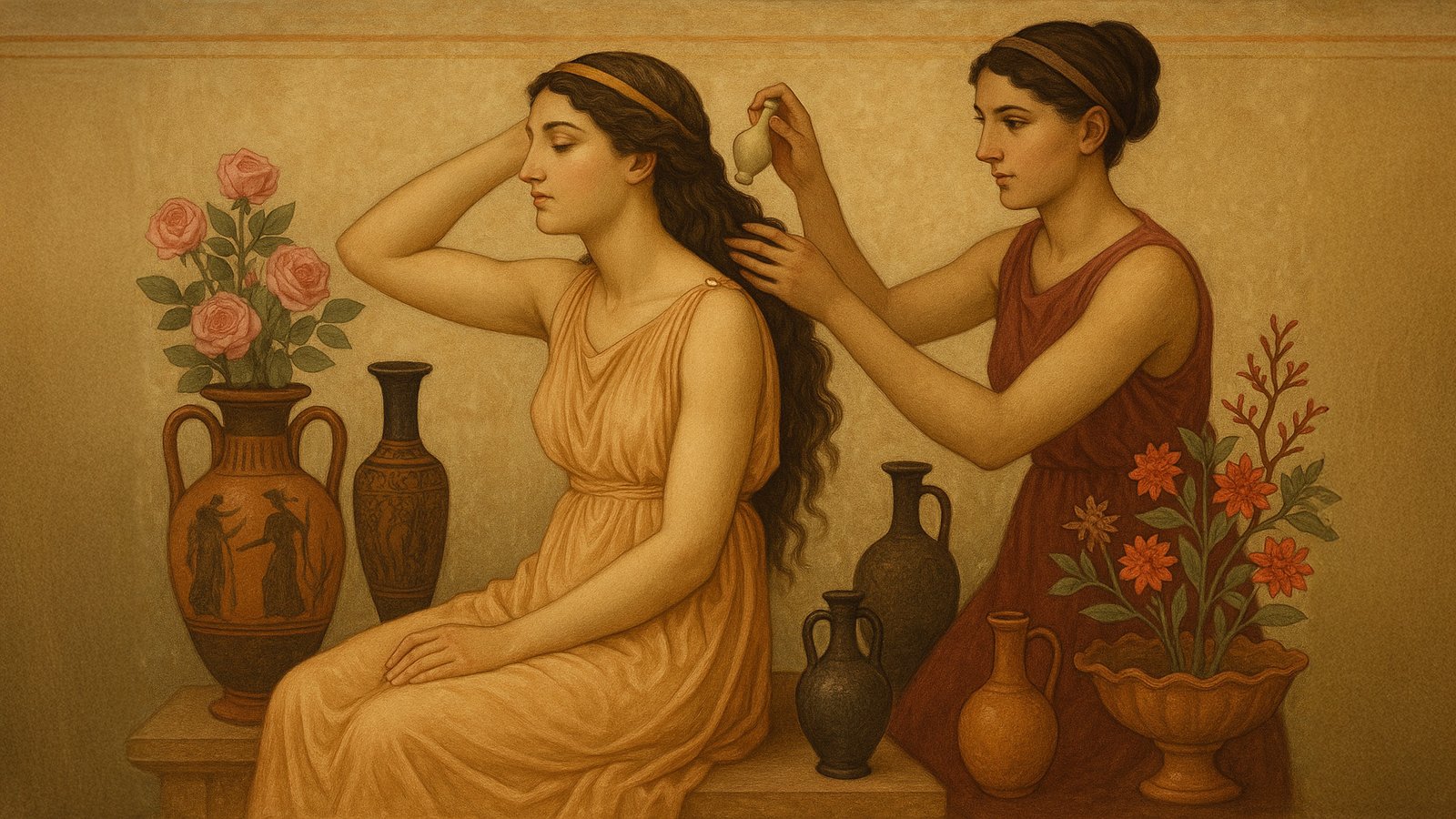
Ancient Greek daily life hygiene combined practicality, ritual, and quiet spectacle in ways that feel strikingly unfamiliar today. This was a civilisation without soap in the modern sense, yet deeply invested in cleanliness as a sign of order and civilisation. Greeks did not chase sterility. Instead, they aimed for balance, fragrance, and visible self-control, all played out in public rather than behind closed doors.
A typical morning began with olive oil. Homer already treats olive oil as a marker of civilisation in the Odyssey, contrasting oil-rubbed bodies with the roughness of the uncultured world beyond Greece. Men and women rubbed the oil directly onto the skin, letting it bind sweat, dust, and grime. Only then did the strigil come into play. This curved scraper, usually bronze, dragged the oil away along with whatever it had collected. Vase paintings from the fifth century BCE show athletes scraping themselves after training, their discarded oil forming small piles on the floor.
Strigils appear everywhere archaeologists dig. At Olympia, hundreds have been recovered from athletic contexts, many stamped with owners’ names. Some belonged to professional athletes whose bodies were their livelihoods. Others were made of silver, signalling wealth rather than sport. In a society obsessed with visible excellence, even hygiene tools carried social meaning.
Water followed scraping, but usually in moderation. Full immersion baths existed, yet most washing involved basins, pitchers, and shared pools. Private bathing rooms appear in wealthy houses at places like Olynthus, but the majority of Greeks relied on communal facilities. These baths often stood beside gymnasia, reinforcing the connection between physical care and civic life.
The gymnasium itself was central. Plato repeatedly refers to it as a place where bodies and minds were trained together. In works such as the Laws, he treats physical discipline as preparation for citizenship. At Athens, gymnasia like the Academy and the Lyceum doubled as intellectual centres. Aristotle taught while students exercised nearby, scraped oil from their limbs, and argued about ethics between bouts of wrestling.
Bathing facilities attached to these spaces could be surprisingly sophisticated. Excavations on Delos reveal complex water systems with terracotta pipes, drainage channels, and heated rooms by the Hellenistic period. On Crete, the city of Gortyn built public baths that served both locals and travellers. Hygiene was infrastructure, not an afterthought.
Scent mattered as much as cleanliness. Greeks adored perfumed oils, importing ingredients from across the Mediterranean. Rose oil from Rhodes, myrrh from Arabia, and cinnamon from the Near East all circulated through Greek markets. Theophrastus even wrote a treatise on smells, cataloguing how scents affected mood and behaviour. A fragrant body signalled refinement and control, even when water remained scarce.
These oils travelled in small pottery flasks known as aryballoi. Decorated with scenes of athletes, gods, and heroes, they appear constantly in athletic contexts. One aryballos found in an athlete’s grave at Corinth suggests that scent followed a man beyond life. Identity, body, and smell remained inseparable.
Dental hygiene lagged behind other practices, although concern still existed. Hippocrates recommended rinses made from vinegar, salt, and alum to strengthen gums. Wine, diluted or otherwise, doubled as mouthwash. Skeletal remains from Classical cemeteries show worn enamel and abscesses, yet the use of aromatics may have masked the worst effects socially.
Clothing hygiene required heavy labour. Linen chitons and woollen himations were washed with alkaline substances such as ashes or fullers’ earth. At Olynthus, basins containing residue of soda ash suggest organised laundering within households. Clothes were beaten on stones, rinsed repeatedly, and dried under the sun. Clean garments mattered because appearance shaped reputation.
Much of this labour fell on enslaved people. While free citizens debated philosophy in gymnasia, enslaved workers scrubbed clothing, heated water, and prepared oils. Hygiene revealed inequality as clearly as wealth did. Refinement depended on invisible effort.
Cleanliness also carried moral weight. Herodotus famously contrasts Greek washing practices with those of peoples he labels barbarians, using hygiene as shorthand for civilisation itself. To smell foul or appear unkempt risked social judgement. Clean bodies reflected ordered souls.
Religion reinforced these expectations. Before entering temples, worshippers washed at stone basins called perirrhanteria. Examples survive at Delphi and Eleusis, positioned deliberately at sanctuary entrances. Purification removed ritual pollution rather than physical dirt alone. One did not approach Athena or Apollo unprepared.
Athletics amplified hygiene rituals further. Competitors at the Olympic Games oiled themselves before events, scraped afterwards, and sometimes dedicated the scrapings to physicians or gods. The body produced substances that demanded management and respect. Even sweat held meaning.
From a modern perspective, Greek hygiene feels incomplete. Shared baths, limited water, and scraping instead of soap challenge contemporary assumptions. Yet within its own framework, the system worked. It prioritised visibility, scent, and balance over sterility. Public perception outweighed private comfort.
Soap did exist elsewhere in the ancient world, particularly among Celtic groups, yet Greeks largely ignored it. Olive oil connected hygiene to agriculture, economy, and ritual. Scraping it away symbolised renewal as much as cleanliness.
Over time, Roman bathing expanded scale rather than principle. The Greek link between bodily care, moral order, and civic life survived. Bathing remained public, social, and performative.
Standing beneath a modern shower surrounded by bottles promising purity and escape, it is easy to forget how recently cleanliness became private and foam-based. The Greeks lived differently. They scraped rather than scrubbed. They scented rather than sterilised. And they washed together rather than alone.
Their approach reminds us that hygiene is never just technical. It reflects values, power, and identity. For the Greeks, a clean body was not merely washed. It was ordered, scented, and ready to step into the public world.